

What Is a Stand Up Pouch, and When Should You Use One?
Learn what a stand up pouch is, how it's built, key formats and closures, and when to use one for food, pet, or household products in this informational guide.
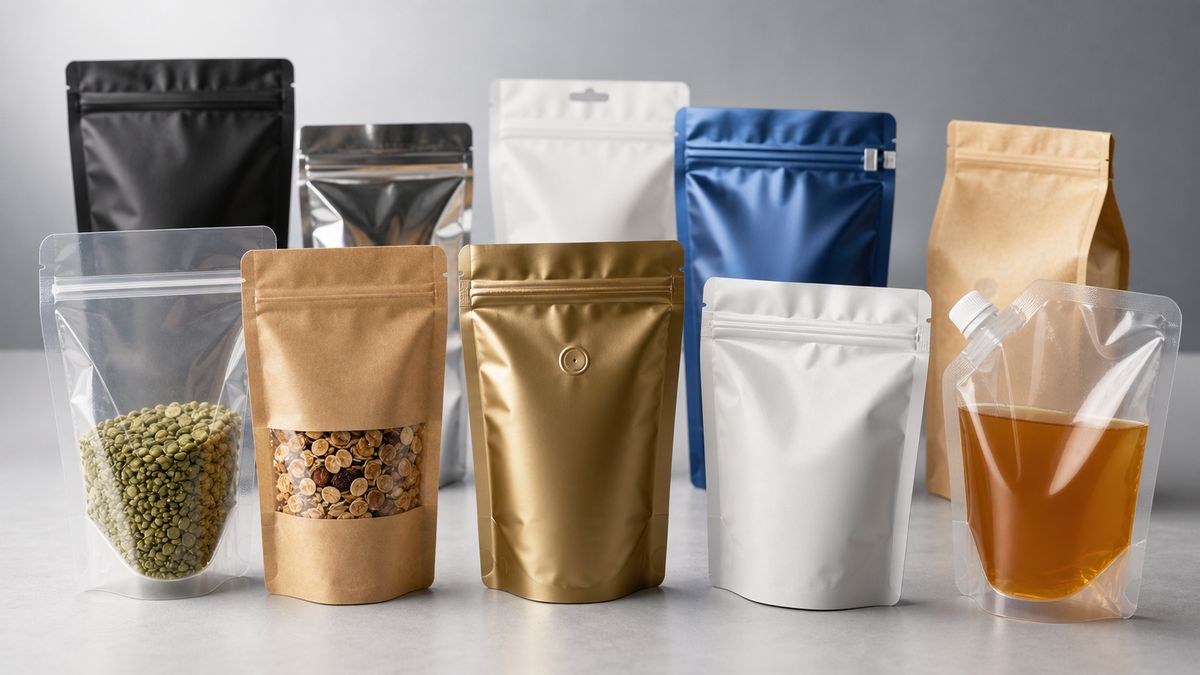
Flexible packaging has fundamentally transformed how products are presented, protected, and transported to consumers. Across virtually every category, from premium roasted coffee and functional snacks to pet treats and household goods, brands are moving away from rigid containers toward formats that deliver better performance at lower cost and weight. Among the many flexible packaging formats available, the stand up pouch has emerged as a defining solution, one that balances shelf impact, product protection, operational efficiency, and consumer convenience in a way that few other formats can match.
The growth of this format is not accidental. Retail buyers increasingly demand packaging that maximizes shelf billboard space. Ecommerce fulfillment operations require formats that resist damage in transit without adding unnecessary weight. Consumers expect resealable, easy-to-use packaging that fits their daily routines. The stand up pouch addresses all of these pressures simultaneously, which explains its rapid adoption across snack packaging, pet packaging, specialty coffee, nutritional supplements, and dozens of other categories.
This guide is written for packaging managers, product developers, and operations leads who need a precise, practical understanding of what a stand up pouch is, how it is built, and when it is the right choice. It is structured to build from the fundamentals of anatomy and materials through to formats, design, sustainability, operations, and procurement, so that by the end, you have a complete framework for evaluating this format against your specific product and business requirements.
What Is a Stand-Up Pouch? Understanding Its Anatomy and Function
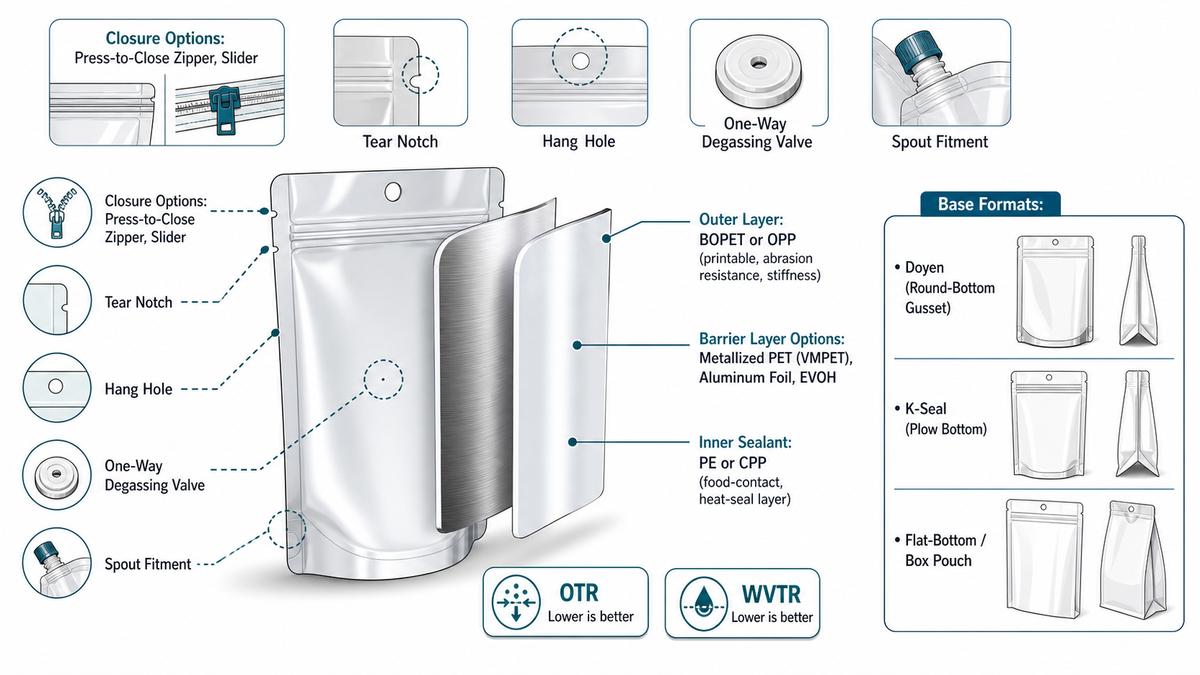
A stand up pouch is a type of flexible packaging that is engineered to stand upright on its own base when filled. Unlike flat pouches or pillow bags, which require external support or a secondary container to remain upright, the stand up pouch achieves self-stability through a structural feature called a gusset. The gusset is a folded panel at the base of the pouch that unfolds when the package is filled, creating a stable footprint. This seemingly simple innovation is what distinguishes the stand up pouch from other flexible formats and underpins its widespread commercial success.
The most common base structure is the Doyen gusset, also known as a round-bottom gusset. In this design, the bottom panel is a separate piece of film that is sealed in a curved arc to the front and back panels. When the pouch is filled, this arc unfolds into a roughly elliptical base. The K-seal, or plow-bottom gusset, achieves a similar effect using diagonal seals at the lower corners of the pouch rather than a separate bottom panel. Both designs are highly effective for lightweight to medium-weight products. For applications requiring maximum stability and a premium retail presence, the flat-bottom pouch, sometimes called a box pouch, uses a completely flat base panel combined with side gussets. This creates a rectangular footprint and five distinct printable panels, making it a favored format for specialty coffee, premium pet food, and high-end snack brands.
Understanding the multilayer film construction of a stand up pouch is just as important as understanding its physical structure. A single layer of plastic cannot simultaneously provide printability, structural rigidity, barrier protection, and heat-sealability. Instead, pouches are built from laminates, which are multiple layers of different materials bonded together through adhesive or extrusion processes. Each layer in the structure serves a specific and deliberate purpose.
The outer layer is typically a high-clarity or printable film such as Biaxially Oriented Polyethylene Terephthalate (BOPET) or Oriented Polypropylene (OPP). This layer provides the surface for printing, contributes to the overall stiffness of the pouch, and offers puncture and abrasion resistance. The middle layers function as the barrier, and their composition depends entirely on the sensitivity of the product inside. The inner layer is the sealant web, the material that comes into direct contact with the product and that forms the heat-sealed seams of the pouch. This layer must be food-safe, compatible with the product, and capable of forming strong, consistent seals under the temperature and pressure conditions of the filling line.
Two critical performance metrics govern barrier selection: Oxygen Transmission Rate (OTR) and Water Vapor Transmission Rate (WVTR). OTR measures how much oxygen passes through the film per unit area per day, and a lower number indicates better oxygen protection. WVTR measures the same for water vapor. Products that are sensitive to oxidation, such as roasted nuts, coffee, or meat snacks, require films with very low OTR values. Products sensitive to moisture, such as dry powders, spices, or freeze-dried items, require films with very low WVTR values. The barrier layer is selected specifically to meet these targets.
Beyond the structural and barrier components, stand up pouches incorporate user features that enhance the consumer experience. Tear notches are small cuts or perforations in the side seals that allow consumers to open the pouch cleanly without scissors. Hang holes allow the pouch to be merchandised on pegboard displays, expanding retail placement options. Specialized fitments, including one-way degassing valves and resealable spouts, add functional value for specific product categories.
When Should You Use a Stand Up Pouch? A Practical Decision Framework
Selecting the right packaging format is a multi-dimensional decision that must account for the physical characteristics of the product, the conditions it will encounter throughout its lifecycle, and the commercial environment in which it will be sold. A stand up pouch is a highly capable format, but its suitability is not universal. The following framework provides a structured approach to evaluating whether a stand up pouch is the right choice for a given application.
The starting point is product fit. Stand up pouches perform exceptionally well for dry goods, including nut packaging, dry fruit packaging, spice packaging, and popcorn packaging. They are equally effective for semi-moist products like beef jerky and meat snacks, provided the barrier and seal integrity are appropriately specified. Liquid products, including sauces, purees, and beverages, can be packaged in stand up pouches when the design incorporates a spout fitment and reinforced seals. The physical form of the product, whether it is a fine powder, a granule, a chunk, or a liquid, directly influences the required puncture resistance, seal width, and closure type.
Shelf life requirements are the second major consideration. The anticipated shelf life of the product, combined with its sensitivity to oxygen, moisture, light, and aroma loss, determines the barrier specification of the pouch. A product with a 24-month shelf life and high oxygen sensitivity will require a fundamentally different film structure than a product with a 6-month shelf life that is relatively inert. Getting this specification right is critical, as under-specifying the barrier leads to premature product degradation, while over-specifying adds unnecessary cost.
The third dimension is the commercial and operational context. In retail, the stand up pouch's large front panel provides exceptional billboard space, and its ability to stand without a secondary display fixture reduces retail setup costs. For ecommerce and direct-to-consumer brands, the lightweight and flexible nature of pouches reduces dimensional weight charges and minimizes the risk of breakage during transit, a significant advantage over glass or rigid plastic containers. Operationally, the choice between premade pouches and rollstock for form-fill-seal systems affects throughput, changeover time, and capital requirements, a topic explored in detail later in this guide.
Stand Up Pouch Suitability Matrix
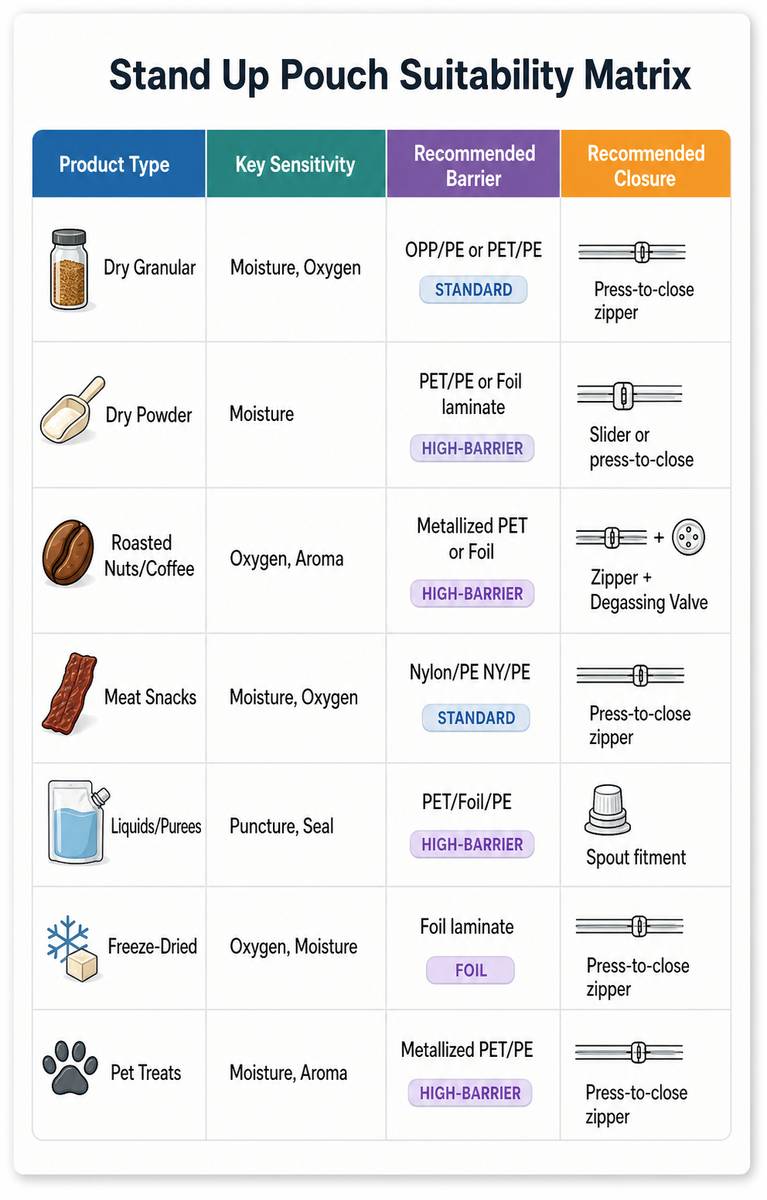
Product TypeKey SensitivityRecommended BarrierRecommended ClosureExample CategoryDry GranularMoisture, OxygenOPP/PE or PET/PEPress-to-close zipperSpices, Granola, SeedsDry PowderMoisturePET/PE or Foil laminateSlider or press-to-closeProtein Powder, CoffeeRoasted Nuts/CoffeeOxygen, AromaMetallized PET or FoilZipper + Degassing ValveCoffee, NutsMeat SnacksMoisture, OxygenNylon/PE (NY/PE)Press-to-close zipperJerky, Meat TreatsLiquids/PureesPuncture, SealPET/Foil/PESpout fitmentSauces, Baby FoodFreeze-DriedOxygen, MoistureFoil laminatePress-to-close zipperFreeze-Dried MealsPet TreatsMoisture, AromaMetallized PET/PEPress-to-close zipperDog Treats, Cat Snacks
What Materials and Barrier Options Are Right for Your Stand Up Pouch?
The material structure of a stand up pouch is the single most consequential technical decision in the packaging development process. The right structure protects the product, supports the brand's sustainability goals, and fits within the cost parameters of the business. The wrong structure can lead to premature spoilage, failed seals, or unnecessary expense.
Standard film structures are appropriate for the majority of food and consumer goods applications. A PET/PE laminate, for example, provides a clear, stiff outer layer with a reliable sealant inner layer, making it suitable for products with moderate barrier needs and a desire for product visibility. OPP/PE structures are similar but offer a slightly softer hand feel and are often used for snack applications. For brands seeking a natural or premium aesthetic, kraft paper laminates are available, typically structured as Kraft/PE or Kraft/Foil/PE, where the inner polymer layers provide the necessary sealability and barrier that paper alone cannot deliver.
When standard films are insufficient, the specification must move to high-barrier options. Metallized PET (VMPET) is produced by depositing a thin layer of aluminum onto the PET film through a vacuum deposition process. The result is a film with dramatically improved OTR and WVTR performance compared to unmetallized PET, while remaining lighter and more flexible than foil. VMPET is the workhorse of the high-barrier flexible packaging industry, used extensively for coffee, pet food, and snack applications. Aluminum foil laminates represent the highest level of barrier protection available in flexible packaging. Foil provides an essentially impermeable barrier to oxygen, moisture, and light, making it the preferred choice for the most demanding shelf-life requirements. The trade-off is that foil is opaque, heavier, and more susceptible to flex-cracking than polymer-based barriers.
EVOH (Ethylene Vinyl Alcohol) offers a compelling middle ground. It is a clear, high-performance oxygen barrier that can be incorporated into a laminate structure to provide excellent OTR performance while maintaining transparency. This allows brands to use a window in the pouch design without sacrificing barrier performance. EVOH is commonly used in structures for frozen food packaging, retort applications, and premium snack formats.
For specialty applications, material selection becomes even more specific. Retort pouches, designed to withstand the high temperatures of commercial sterilization processes, require structures that include nylon (polyamide) for heat resistance and puncture resistance. Hot-fill applications similarly require films with elevated temperature tolerance. Freezer applications demand films that remain flexible and do not become brittle at sub-zero temperatures, which typically points toward specific grades of PE or PP.
Indicative Barrier Performance by Material Class
Material StructureTypical OTR (cc/m2/day)Typical WVTR (g/m2/day)Primary ApplicationOPP/PE1,500 - 3,0005 - 10Snacks, Low-Sensitivity Dry GoodsPET/PE100 - 2003 - 8Moderate-Barrier Food, Personal CareMetallized PET/PE (VMPET)1 - 50.5 - 2Coffee, Pet Food, SnacksNylon/PE (NY/PE)30 - 805 - 15Meat, Cheese, Puncture-Sensitive ProductsPET/Foil/PELess than 0.01Less than 0.01Maximum Barrier, Long Shelf LifePET/EVOH/PE0.5 - 32 - 6Clear High-Barrier, Frozen, Premium Snacks
Note: Values are indicative ranges and vary by film grade, thickness, and lamination method. Always validate with your supplier's specific data sheets.
Which Pouch Format and Closure System Best Fits Your Product?
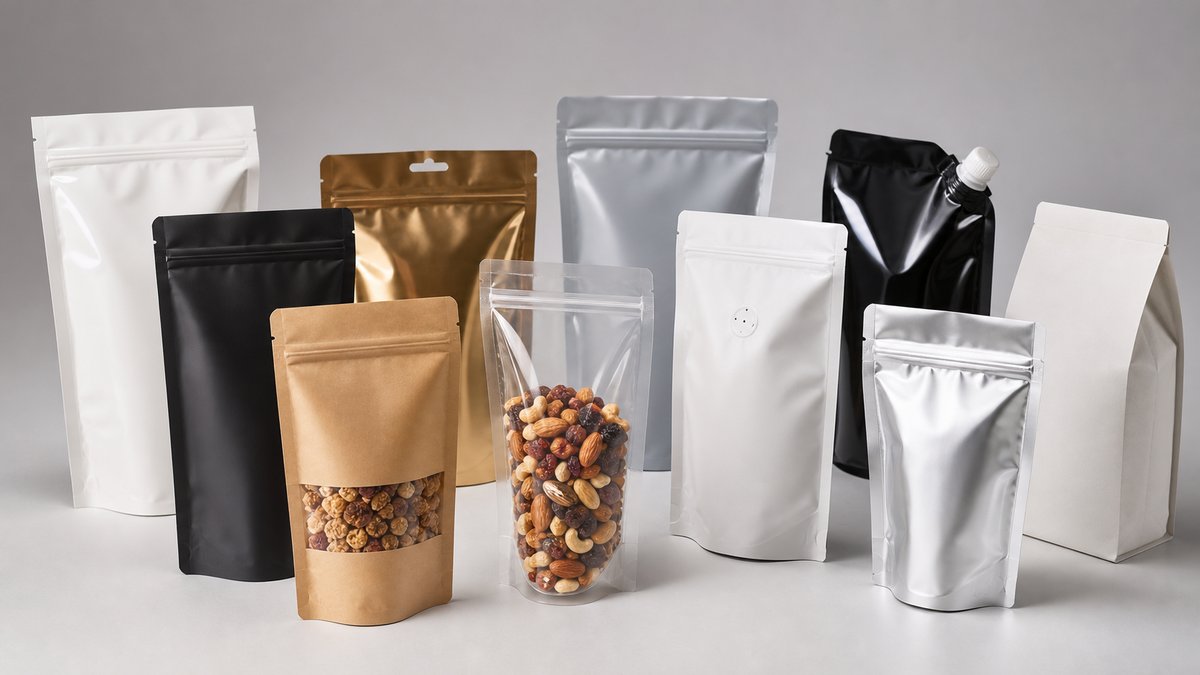
The format of a stand up pouch defines its physical structure, while the closure system governs how the consumer interacts with it. Together, these choices shape the product's shelf presence, usability, and suitability for the filling line. Exploring the full range of custom pouch configurations available is an essential step in the development process.
The standard Doypack, or round-bottom stand up pouch, remains the most widely used format globally. Its cost-effectiveness, stability for lightweight products, and compatibility with a wide range of filling equipment make it the default choice for many applications. The Custom Stand Up Pouch is a natural starting point for brands entering the flexible packaging space. For applications requiring greater structural rigidity or a more premium shelf presence, the K-style and plow-bottom variants offer enhanced stability through their corner seal designs.
The flat-bottom pouch, or box pouch, represents the premium tier of stand up pouch formats. Its completely flat base and side gussets allow it to stand with exceptional stability, even when only partially filled. The five printable panels provide a canvas for comprehensive branding and regulatory information. This format is particularly favored for specialty coffee, premium pet food, and high-end snack brands that want their packaging to communicate quality and sophistication on the retail shelf. The Custom Flat Bottom Pouches combine this premium structure with a highly functional dog-bone zipper closure.
For liquid and viscous products, Custom Fitment and Spout Pouches provide a functional and consumer-friendly solution. The rigid spout and cap allow for controlled dispensing and reliable resealability, making them ideal for sauces, purees, beverages, and baby food. One-way degassing valves are a specialized fitment used primarily for freshly roasted coffee. As coffee beans off-gas carbon dioxide after roasting, the valve allows this gas to escape while preventing oxygen from entering, preserving freshness without the need for nitrogen flushing.
Closure systems are a critical element of the consumer experience and product protection. Press-to-close zippers are the industry standard for resealable stand up pouches. They are cost-effective, reliable, and compatible with a wide range of products. Slider closures offer a more intuitive user experience, particularly for larger pouches or products that may contaminate a standard zipper track, such as fine powders or sticky confections. For products requiring restricted access, Custom Child Resistant Pouches incorporate specialized closure mechanisms that meet regulatory requirements for household chemicals, certain supplements, and cannabis products.
How Does Pouch Design Affect Shelf Presence and Brand Recognition?
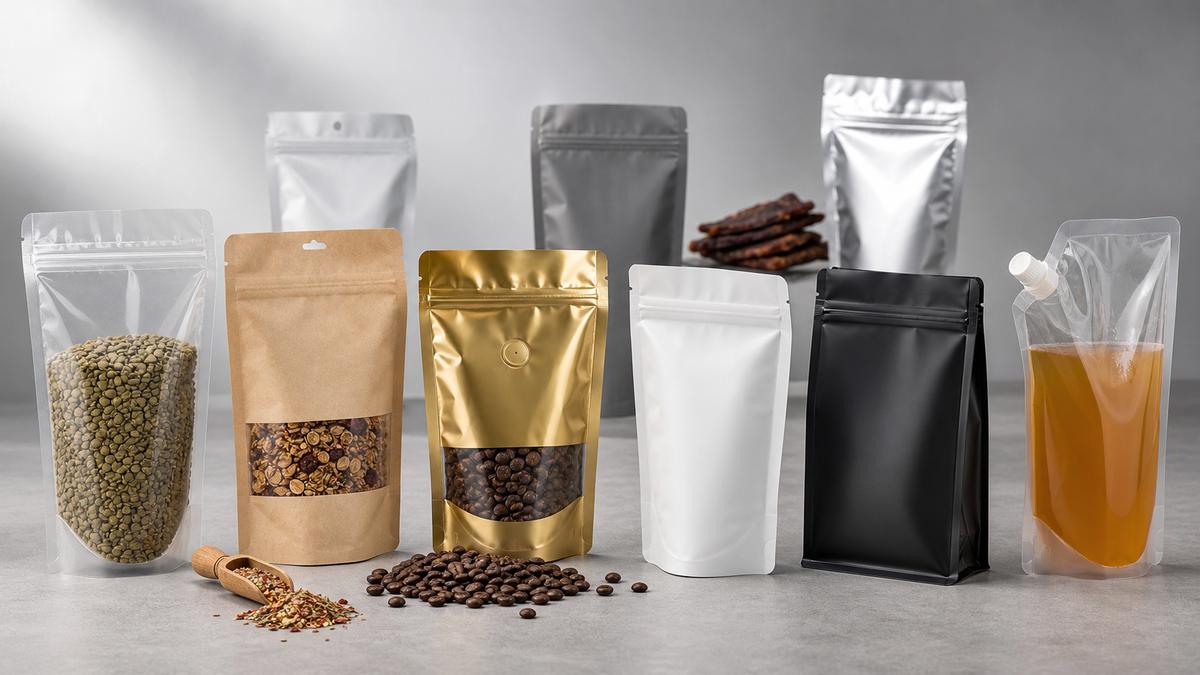
The large, continuous printable surface of a stand up pouch is one of its most commercially valuable attributes. In a crowded retail environment, packaging is the primary point of communication between the brand and the consumer. Understanding how to leverage print methods, finishes, and structural design elements is essential to maximizing this opportunity.
The selection of a printing technology is a strategic decision that balances quality, cost, and speed. Rotogravure printing delivers the highest image quality and the most precise color reproduction. It uses engraved cylinders to transfer ink, producing exceptionally consistent results across very large print runs. However, the cost of manufacturing the cylinders is substantial, making rotogravure economically viable only for high-volume production. Flexography uses flexible photopolymer plates and is a highly versatile method suitable for medium to large runs. It offers excellent color consistency and is compatible with a wide range of substrates. Digital printing has transformed the economics of short-run packaging by eliminating the need for physical plates entirely. It enables rapid prototyping, small-batch production, and variable data printing, making it ideal for new product launches, seasonal variations, and market testing. For a comprehensive comparison of these methods, the article on Printing Technologies for Packaging provides an in-depth analysis.
Surface finishes add another dimension of brand differentiation. Matte finishes create a soft, tactile quality that communicates premium and natural positioning. Gloss finishes maximize color vibrancy and visual impact. Spot UV coatings can be applied selectively to create contrast between matte and gloss areas, drawing attention to logos or key design elements. Metallic inks and holographic effects add visual complexity that is difficult to replicate, serving as both a brand differentiator and a deterrent to counterfeiting.
Transparent windows are a powerful tool for building consumer trust by allowing the product to be seen before purchase. However, the placement and size of windows must be carefully considered in relation to the barrier film structure. A window in a metallized or foil pouch requires a clear section, which inherently reduces the barrier performance in that area. The structural implications of window placement must be evaluated against the product's shelf-life requirements. Effective packaging design also requires careful planning for regulatory compliance, ensuring that nutrition facts, ingredient lists, allergen declarations, and required warnings are clearly legible and correctly positioned. For guidance on preparing artwork for production, the article on How Should Brands Prepare Artwork Files for Pouch Printing is an essential resource.
What Are the Sustainability and End-of-Life Realities of Stand Up Pouches?
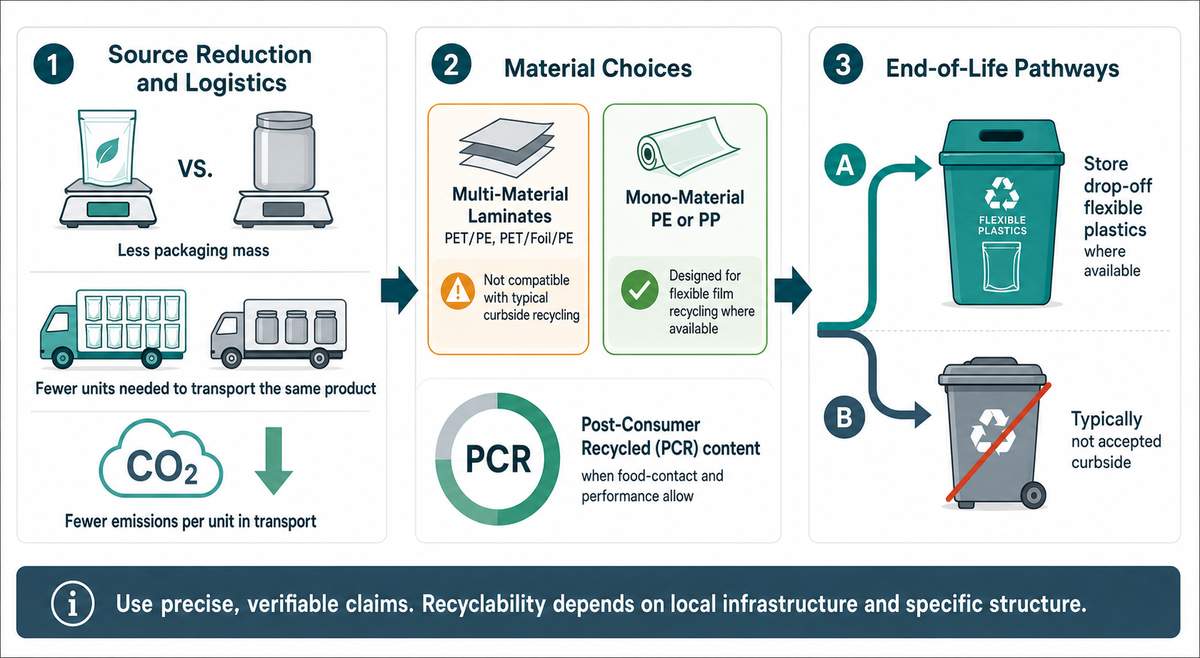
Sustainability is a central consideration in modern packaging strategy, and stand up pouches present a nuanced picture. They offer genuine environmental advantages in some areas while presenting real challenges in others. An evidence-led, transparent approach to sustainability claims is essential for maintaining brand credibility and meeting evolving regulatory expectations.
The most straightforward environmental advantage of flexible packaging is source reduction. A stand up pouch requires significantly less material by weight than a rigid container of equivalent volume. This reduction in material use translates directly to lower energy consumption in manufacturing and a smaller carbon footprint per unit. The lightweight and compressible nature of flexible packaging also delivers substantial transport efficiency gains. More units can be loaded per truckload compared to rigid containers, reducing fuel consumption and greenhouse gas emissions across the supply chain.
The end-of-life picture is more complex. Traditional multi-material laminate structures, such as PET/Foil/PE or PET/Metallized PET/PE, are composed of different polymer types that are incompatible with standard recycling streams. These structures are technically difficult and economically unviable to recycle at scale with current infrastructure. As a result, the industry is actively developing and commercializing mono-material structures, where all layers are composed of a single polymer family, typically polyethylene (PE) or polypropylene (PP). Mono-material PE pouches, for example, can be recycled through store drop-off programs for flexible plastics where such infrastructure exists. For brands committed to reducing their environmental footprint, eco-friendly stand up pouches and compostable stand up pouches represent the leading edge of sustainable flexible packaging development.
Post-Consumer Recycled (PCR) content is another dimension of the sustainability conversation. Incorporating PCR resins into the film structure reduces the demand for virgin plastic and supports the circular economy. However, the use of PCR content must be carefully managed to ensure that the material meets food-contact safety standards and does not compromise the barrier performance or sealability of the pouch.
Clarity in sustainability claims is paramount. The terms "recyclable," "compostable," and "made with recycled content" have distinct and specific meanings, and using them interchangeably or without qualification misleads consumers and risks regulatory scrutiny. Brands should provide clear, specific, and verifiable claims, referencing applicable standards and providing practical disposal guidance to consumers.
How Do Filling, Sealing, and Quality Control Affect Pouch Performance?
The operational aspects of stand up pouch packaging are as consequential as the material and design decisions. A well-designed pouch with an appropriate material structure will still fail if the filling and sealing processes are not properly calibrated and validated. Understanding the key operational variables and quality control requirements is essential for ensuring that the packaging performs as intended throughout the supply chain.
The foundational operational decision is whether to use premade pouches or a form-fill-seal (FFS) system. Premade pouches are supplied as fully formed, empty packages that are loaded onto a filling machine, which opens, fills, and seals the top of the pouch. This approach offers significant flexibility, as changing formats or sizes requires only a changeover of the filling machine tooling rather than a complete rollstock change. Premade pouches are well-suited for operations with diverse product lines, lower production volumes, or frequent format changes. For a detailed comparison of these two approaches, the article on Rollstock Packaging vs Pre-Made Pouches provides a thorough operational analysis.
Form-fill-seal systems, by contrast, create the pouch from a continuous roll of custom rollstock film, filling and sealing it in a single integrated process. Vertical Form-Fill-Seal (VFFS) machines are commonly used for dry goods, while Horizontal Form-Fill-Seal (HFFS) machines are used for a broader range of product types. FFS systems offer higher throughput and lower per-unit material costs but require significant capital investment and more complex setup procedures. For a comprehensive comparison of VFFS and HFFS systems, the article on VFFS vs HFFS: How to Choose the Right Form-Fill-Seal System is an invaluable reference.
Seal integrity is the most critical quality parameter in flexible packaging. The heat seals are the primary barrier against contamination and the primary structural element holding the package together. Sealing parameters, including temperature, pressure, and dwell time, must be precisely calibrated to the specific film structure. Insufficient heat or pressure results in weak seals that may fail in transit. Excessive heat can cause the film to burn, delaminate, or create channel leaks, which are microscopic gaps in the seal that compromise the hermetic barrier without causing visible structural failure.
Quality control protocols must be systematic and documented. Burst testing applies internal pressure to the sealed pouch until failure, providing a quantitative measure of seal strength. Drop testing simulates the impacts a pouch may experience during palletizing, transit, and retail handling. Vacuum chamber testing submerges the sealed pouch in water under a vacuum, revealing any leaks through the appearance of bubbles. These tests should be conducted at defined intervals during production runs and whenever filling parameters or materials are changed.
What Are the Cost, Logistics, and Procurement Fundamentals for Custom Pouches?
A complete understanding of the economics and procurement process for custom stand up pouches is essential for responsible planning and budget management. Unit costs, minimum order quantities, lead times, and documentation requirements all interact to determine the total cost of ownership and the operational risk profile of the packaging program.
Unit cost is driven by several interacting factors. The material structure is the primary cost driver, with high-barrier films commanding a significant premium over standard structures. The complexity of the pouch format, including the number of panels, the type of gusset, and the inclusion of features like zippers, spouts, or valves, adds to the cost. Print complexity, including the number of colors, the ink coverage, and the use of specialty finishes, also influences the price. For traditional printing methods like rotogravure, the cost of manufacturing the printing cylinders is a substantial upfront investment that is amortized over the print run. Digital printing eliminates this cost but typically carries a higher per-unit cost for large volumes.
Cube efficiency is an often-overlooked cost factor. The ability of filled pouches to pack efficiently into corrugated shippers and onto pallets directly affects warehousing and freight costs. Flat-bottom pouches, for example, pack more efficiently than round-bottom Doypacks due to their rectangular footprint, which can offset their higher unit cost in high-volume applications.
Minimum order quantities (MOQs) and lead times are critical procurement parameters. Custom printed pouches require a minimum order volume to justify the setup costs of printing and lamination. These minimums can represent a significant inventory commitment, particularly for new product launches or seasonal items. Accurate demand forecasting is essential to balance the per-unit cost benefits of larger orders against the risk of inventory obsolescence if formulations or branding change. Lead times for custom printed pouches vary by supplier and print method, ranging from a few weeks for digital printing to several months for rotogravure, which requires cylinder production.
Documentation and traceability are non-negotiable requirements for food and regulated product applications. A complete specification document should define the material structure, dimensions, tolerances, and performance requirements. Food-contact declarations and certificates of analysis confirm that the materials comply with applicable regulations. Lot traceability, linking each production run of pouches to specific raw material batches, is essential for managing quality issues and potential product recalls efficiently.
Conclusion: How to Make a Confident Stand Up Pouch Decision
The stand up pouch is a remarkably versatile and commercially powerful packaging format, but realizing its full potential requires a disciplined, integrated approach to decision-making. The choices made at each stage, from material structure and format selection to closure systems and print methods, are interconnected. A decision made in isolation can create problems downstream, whether in the form of inadequate shelf life, seal failures on the filling line, or unsustainable unit economics.
The framework presented in this guide is designed to help packaging managers and product developers navigate these decisions with clarity. Start with the product: understand its physical form, its sensitivities, and its required shelf life. Use those requirements to define the barrier specification, which in turn drives the material structure. Select the format and closure system based on the product's usage pattern, the retail environment, and the filling line capabilities. Evaluate sustainability options within the constraints of performance and cost. And plan procurement with a clear understanding of MOQs, lead times, and documentation requirements.
Before committing to full-scale production, invest in pilot runs, shelf mockups, and small-batch trials. These steps reveal real-world performance gaps that are far less costly to address at the development stage than after a full production run. The goal is to arrive at a packaging solution that is validated across all dimensions, one that protects the product, represents the brand, and performs reliably in the hands of the consumer.
For brands ready to take the next step, exploring the full range of custom stand up pouches and custom pouch configurations available is the natural starting point. And for those evaluating their broader packaging strategy, the guide on The Strategic Fundamentals for Custom Packaging Buyers provides a comprehensive framework for making packaging decisions that align with long-term business goals.
Frequently Asked Questions
What Is the Difference Between a Doypack and a Flat-Bottom Stand Up Pouch?
A Doypack uses a round-bottom gusset, where a separate curved bottom panel is sealed to the front and back of the pouch. This creates a stable but rounded base, ideal for lightweight to medium-weight products. A flat-bottom pouch, or box pouch, uses a completely flat base panel combined with side gussets, creating a rectangular footprint and five printable panels. The flat-bottom format offers superior stability for heavier products and a more premium shelf presence, but it carries a higher unit cost. The right choice depends on the product weight, the desired retail aesthetic, and the budget.
Which Materials Are Food-Safe for the Inner Layer of a Stand Up Pouch?
The inner sealant layer of a stand up pouch must comply with applicable food-contact regulations, such as FDA 21 CFR in the United States. Polyethylene (PE) in its various grades (LDPE, LLDPE, HDPE) and Cast Polypropylene (CPP) are the most widely used and broadly approved food-safe sealant materials. The specific grade and formulation must be confirmed with the film supplier through a food-contact declaration or certificate of compliance.
Can Stand Up Pouches Be Used for Liquids or Hot-Fill Applications?
Yes. Stand up pouches are highly effective for liquids and semi-liquids when equipped with spout fitments and reinforced seals. For hot-fill applications, where the product is filled at elevated temperatures (typically above 85 degrees Celsius), the film structure must include materials with sufficient heat resistance to prevent delamination or seal failure. Retort pouches, designed for commercial sterilization, require specialized nylon-based structures capable of withstanding temperatures above 121 degrees Celsius.
How Long Do Products Stay Fresh in a Stand Up Pouch, and What Affects Shelf Life?
Shelf life in a stand up pouch is determined by the interaction between the product's sensitivity and the barrier properties of the film. A product with high oxygen sensitivity packaged in a foil laminate pouch can achieve shelf lives of 18 to 24 months or more. The same product in a standard PET/PE pouch might achieve only 3 to 6 months. Other factors include the headspace oxygen level at the time of sealing, the storage temperature, and the integrity of the seals.
Are Stand Up Pouches Recyclable, and What Does Mono-Material Mean?
Traditional multi-material laminate pouches are generally not recyclable in curbside programs due to the incompatibility of their constituent materials. Mono-material pouches, made entirely from a single polymer family such as polyethylene (PE) or polypropylene (PP), are designed to be recyclable through store drop-off programs for flexible plastics where such infrastructure exists. The recyclability of any specific pouch depends on the local recycling infrastructure and the specific material structure.
What Closure Should I Choose: Press-to-Close Zipper or Slider?
Press-to-close zippers are the most cost-effective and widely used closure for resealable stand up pouches. They are suitable for the majority of dry and semi-moist applications. Slider closures offer a more intuitive user experience and are recommended for larger pouches, products intended for consumers with limited dexterity, or products like fine powders that may foul a standard zipper track. The choice should be driven by the target consumer, the product type, and the cost parameters of the packaging program.
When Is a Degassing Valve Necessary for Coffee or Similar Products?
A one-way degassing valve is essential for freshly roasted coffee. Immediately after roasting, coffee beans emit significant quantities of carbon dioxide. If the beans are sealed in a pouch without a valve, the accumulating gas will cause the pouch to inflate and potentially burst. The one-way valve allows CO2 to escape while preventing oxygen from entering, preserving the freshness and aroma of the coffee without the need for a pre-degassing period. Similar valves may be used for other products that off-gas after processing.
What Tests Verify Pouch Seal Integrity and Leak Resistance?
The primary quality control tests for seal integrity include burst testing, which measures the pressure required to rupture the seals; drop testing, which simulates transit impacts; and vacuum chamber testing, which identifies microscopic leaks by submerging the pouch in water under a vacuum. Dye penetration testing can also be used to identify channel leaks in heat seals. These tests should be conducted according to established standards (such as ASTM F1140 for burst testing) and performed at regular intervals during production.
What Are Typical MOQs and Lead Times for Custom Printed Stand Up Pouches?
MOQs and lead times vary significantly by supplier, print method, and pouch complexity. Digital printing typically allows for lower MOQs (sometimes as low as a few thousand units) and faster lead times, often within two to four weeks. Traditional methods such as flexography and rotogravure require higher MOQs (often 25,000 to 100,000 units or more) and longer lead times, ranging from 8 to 16 weeks, due to the time required for plate or cylinder production and setup. Always confirm specific MOQs and lead times directly with your packaging supplier.
How Do I Choose Between Premade Pouches and Form-Fill-Seal Rollstock?
Premade pouches are the better choice for operations with diverse product lines, lower production volumes, or a need for frequent format changes. They require lower capital investment and offer simpler changeovers. Form-fill-seal rollstock is more appropriate for high-volume, single-format production runs where the lower per-unit material cost and higher throughput of FFS equipment justify the capital investment and setup complexity. For a detailed operational comparison, the article on Rollstock Packaging vs Pre-Made Pouches provides a thorough framework for this decision.