
Rollstock Packaging vs Pre-Made Pouches: A Practical Guide To Speed, Cost, And Customization
For packaging engineers, operations managers, and procurement teams in the CPG, food, and pet care sectors, selecting the right flexible packaging method is a critical decision that impacts throughput, unit cost, and speed to market. Flexible packaging teams frequently weigh the benefits of rollstock packaging (formed on-site) against pre-made pouches (delivered ready to fill).
This article provides a clear, neutral framework covering throughput, cost per unit at different volumes, setup and changeover requirements, design flexibility, and lead times. The goal is to help you select a production path that perfectly aligns with your volume, budget, and timeline, ensuring your product stands out on the shelf while optimizing operational efficiency.
What Is Rollstock Packaging And How Does Form-Fill-Seal Work?
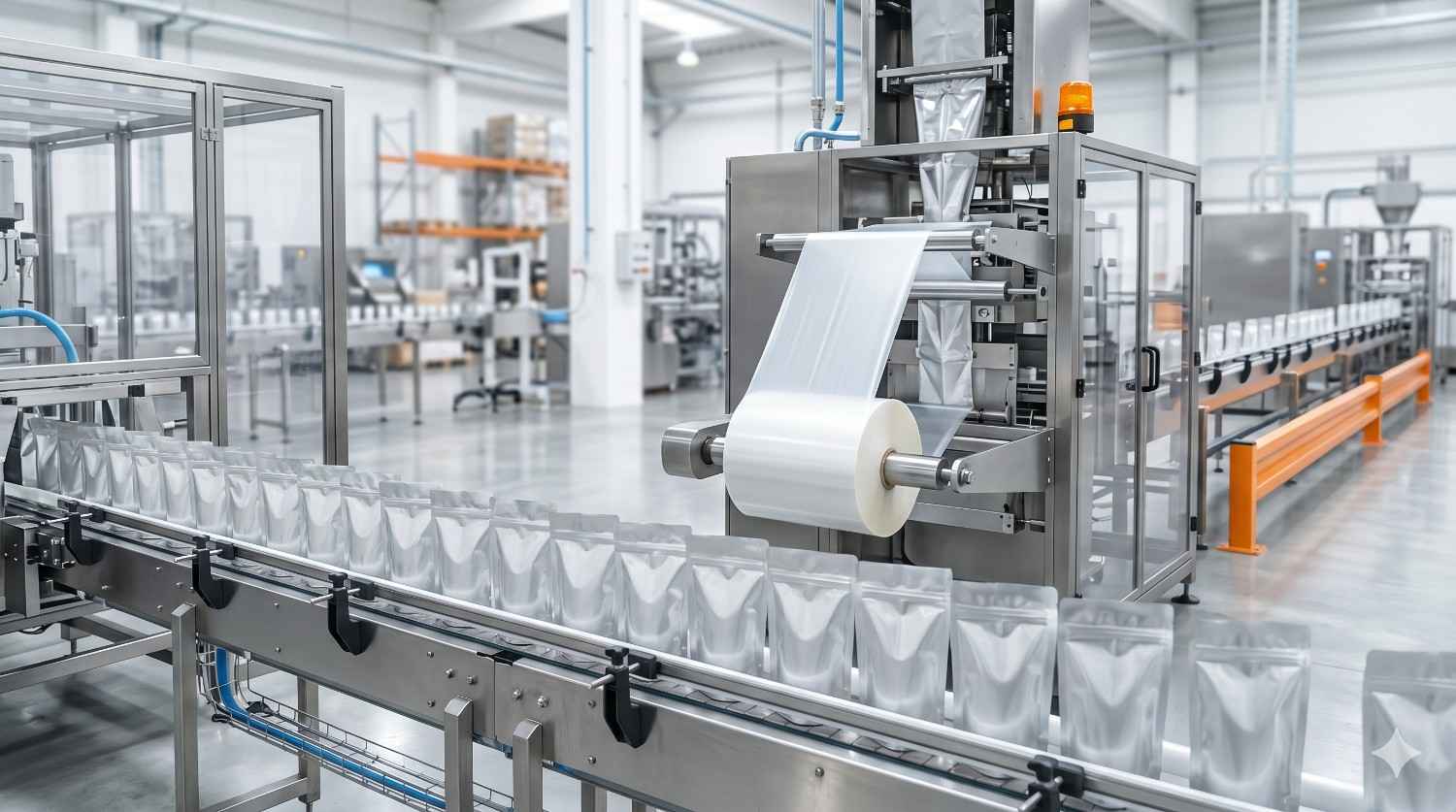
Rollstock packaging refers to flexible packaging film supplied on rolls, which is then formed, filled, and sealed on form-fill-seal equipment. This method integrates the creation of the pouch and the filling process into a single, continuous operation on the packaging line.
HFFS vs VFFS Systems
Form-fill-seal machines generally fall into two categories: Horizontal Form-Fill-Seal and Vertical Form-Fill-Seal. HFFS systems run the film horizontally and are often used for solid items, single-serve stick packs, and products requiring complex pouch shapes. VFFS systems pull the film vertically downward, making them ideal for loose, granular, or liquid products that rely on gravity for filling. VFFS machines typically have a smaller footprint compared to HFFS equipment.
Film Structures And Barriers
The success of rollstock packaging depends heavily on the film structure. Common options include PET/PE laminations for general use, nylon/PE for puncture resistance, and metallized films for high oxygen and moisture barriers. Increasingly, mono-material options are being adopted to meet sustainability goals.
In-Line Features
Modern FFS equipment can integrate various features in-line, including zippers, tear notches, hang holes, and gussets. A typical workflow involves the film unwinding, passing over a forming collar to create a tube, sealing the bottom and sides, filling the product, and finally sealing and cutting the top. Settings and tooling adjustments drive both the output speed and the changeover time.
What Are Pre-Made Pouches And What Are Their Best Use Cases?
Pre-made pouches are manufactured off-line by a flexible packaging converter and delivered to the brand or co-packer ready to be filled. They are typically run on semi-automatic or fully automatic pouch filling lines.
Common Formats
Pre-made pouches are available in a wide variety of formats, including stand-up pouches (Doyen style), flat pouches, quad-seal pouches, spouted pouches, and child-resistant designs.
Where Pre-Made Excels
Pre-made pouches excel in scenarios involving short production runs, high SKU counts, and designs requiring complex, high-decoration features. Because the pouch is already formed, the filling line only needs to open, fill, and seal the top, simplifying the operation for certain product types.
Filling Considerations
When using pre-made pouches, operational considerations shift toward the filling process. Gripping and opening the pouch reliably, handling dust or liquid splashing during filling, and accommodating specific nozzle or spout options become the primary focus for maintaining line efficiency.

How Does Packaging Changeover Time Impact Production Speed?
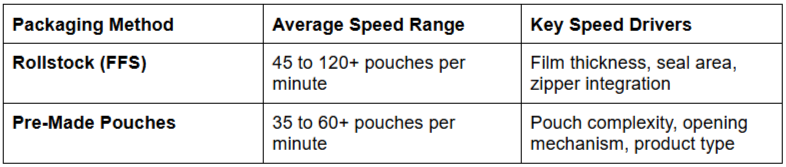
When evaluating rollstock packaging vs pre-made pouches, it is crucial to compare practical output and the impact of changeover frequency on daily throughput, rather than just looking at nameplate machine speeds.
Nameplate vs Realized Speeds
While an FFS machine might boast a high nameplate speed, realized rates are affected by product flowability, pouch size, and the dwell time required for a secure seal.
Changeover Components
Changeovers on FFS equipment involve swapping forming collars, adjusting jaw sets, modifying timing, and threading new film. In contrast, changing a pre-made pouch line often only requires adjusting the magazine and grippers to accommodate a new pouch size.
SKU Complexity Impacts
Frequent format changes penalize FFS throughput more significantly than pre-made lines. If a plant runs many different SKUs requiring different pouch sizes, the accumulated downtime from FFS changeovers can negate the speed advantages of the equipment.

What Is The Cost Per Unit For Packaging At Different Volumes?
Understanding the cost structure and break-even points is essential for choosing between rollstock and pre-made pouches. The fixed and variable costs differ significantly between the two methods.
Cost Elements
The total cost of goods sold per unit includes materials, machine time, labor, changeover scrap, tooling, and maintenance.
Rollstock vs Pre-Made Economics
Rollstock economics favor long runs. The film cost per pouch is generally lower, but the initial capital expenditure for FFS equipment and the setup costs are higher. Pre-made economics favor short runs or portfolios with many SKUs. The per-unit price of the pouch is higher, but line setup is faster and capital equipment costs for filling lines are often lower.
Break-Even Analysis
To determine the break-even point, you must calculate: Per-unit COGS = (Materials + Labor + Overhead + Scrap) / Units
For example, at 10,000 units, pre-made pouches are almost always more cost-effective due to low setup costs. At 100,000 units, the lower material costs of rollstock begin to offset the setup time. By 1,000,000 units, rollstock is typically the clear winner for cost efficiency.

What Pouch Packaging Design Options Does Each Method Enable?
The production path you choose directly impacts the options available for size, features, and graphics.
Rollstock Print And Web Control
Rollstock allows for continuous prints and precise registration. It is highly efficient for running multiple SKUs that share a common web width, as only the printed design changes, not the physical dimensions of the film roll.
Pre-Made Feature Complexity
Pre-made pouches are better suited for complex die-cuts, premium finishes (like matte/gloss combinations), uniquely shaped pouches, and advanced zipper types. Because these features are applied off-line during the converting process, they do not slow down the filling operation.
Print Technologies And MOQ
Both methods can utilize digital printing for short runs and flexographic or rotogravure printing for scale and color consistency. When evaluating design wishes, such as windows or spouts, tie them to the method most likely to execute efficiently at your target volume.

How Does Each Option Impact Sustainable Flexible Packaging And Waste?
Comparing typical waste streams and how each approach affects material efficiency is vital for both cost control and sustainability goals.
Scrap Sources
Rollstock packaging generates scrap during setup, film threading, and edge trimming. Pre-made pouches generate significantly less forming scrap at the filling facility, as the waste is managed by the converter during manufacturing.
Seal Integrity Testing
Ensuring seal integrity is critical for both methods. Testing protocols include burst, peel, and leak tests, often referencing ASTM standards such as F88, F2054, and F2096. Consistent seals reduce waste from spoiled products.
Recyclable Materials
Both rollstock and pre-made pouches can be manufactured using mono-material PE structures designed for recyclability. However, it is important to understand the realities of store-drop-off programs versus curbside recycling when making sustainability claims.
What MOQ And Lead Time For Packaging Should I Expect?
Procurement timelines and minimum order quantities often steer the production choice, especially for product launches.
Production Timelines
Lead times for rollstock involve film printing and lamination. Pre-made pouches require these same steps, plus the additional time for pouch converting and transit. However, some partners can deliver printed pouches in 15 days or less, depending on the run type.
Minimums
MOQs are dictated by the print method, film structure, and pouch type. Digital printing allows for very low MOQs, while rotogravure requires higher minimums but offers lower unit costs at scale.
Obsolescence Management
Stocking printed rollstock carries less risk than stocking finished pouches if a minor design change is needed, but both carry obsolescence risk when artwork or regulatory claims change. Managing this risk requires aligning order quantities with expected sales velocity.

A Decision Framework: How To Choose By Volume, Budget, And Timeline
To make the best choice for your operation, use this scenario-based decision framework.
If You Are Launching Or Testing
Prioritize speed to first production and limited SKUs. Pre-made pouches are often the most pragmatic choice, allowing you to enter the market quickly with premium features without heavy capital investment.
If You Are Scaling A Stable SKU
Prioritize per-unit cost and Overall Equipment Effectiveness. Rollstock packaging is often the most efficient choice for high-volume, stable products where minimizing material costs is paramount.
If You Are In The Middle
Consider a hybrid approach. Pilot new products or seasonal flavors in pre-made pouches. Once a product proves successful and volumes stabilize, migrate the winner to a rollstock format for long-term efficiency.
Quick Checklist:
- What is your target monthly volume?
- How many SKUs are in the portfolio?
- How frequent are changeovers required?
- What complex features are necessary?
- What is the required go-live date?
The choice between rollstock packaging and pre-made pouches is a strategic operational decision. Rollstock packaging favors high-volume efficiency and lower material cost per unit, making it ideal for established products. Pre-made pouches favor agility and complex features at low-to-mid volumes, perfect for launches and high-SKU portfolios.
Treat packaging as a system decision. Match your product characteristics, artwork cadence, and operational capabilities to the right method, and be prepared to revisit this decision as your volumes and portfolios evolve. We encourage you to model costs with your actual volumes, changeover cadence, and artwork plans before committing to equipment or inventory.
Frequently Asked Questions: Rollstock Packaging vs Pre-Made Pouches
What Is Rollstock Packaging?
Rollstock packaging is flexible packaging film supplied on a continuous roll. It is used on form-fill-seal machinery, where the film is formed into a pouch, filled with product, and sealed in one continuous in-line process.
How Do HFFS And VFFS Systems Differ?
Horizontal Form-Fill-Seal machines run film horizontally and are best for solid items or complex pouch shapes. Vertical Form-Fill-Seal machines pull film vertically downward and are ideal for loose, granular, or liquid products that rely on gravity for filling.
When Does Rollstock Become Cheaper Than Pre-Made Pouches?
Rollstock becomes cheaper when production volumes are high enough that the savings in material costs offset the higher initial setup time and capital equipment costs. While exact numbers vary, the crossover point typically occurs as volumes scale from tens of thousands into the hundreds of thousands of units.
Are Pre-Made Pouches Faster To Set Up?
Yes, pre-made pouches generally require significantly less setup and changeover time on the filling line compared to rollstock, as the pouch is already formed and only needs to be opened, filled, and sealed.
What MOQ And Lead Time Should I Expect For Rollstock vs Pre-Made?
MOQs and lead times vary by printing technology (digital vs. flexo/gravure) and material structure. Digital printing offers low MOQs and fast turnarounds for both formats. Pre-made pouches require an additional converting step, but agile partners can often deliver printed pouches in 15 days or less.
Which Method Is Better For Spouted Or Child-Resistant Pouches?
Pre-made pouches are generally better suited for complex features like spouts, child-resistant zippers, and unique die-cut shapes, as these are applied off-line during converting without slowing down the filling process.
How Does Each Option Impact Packaging Waste?
Rollstock generates scrap during machine setup and edge trimming at the filling facility. Pre-made pouches generate less waste at the filling line, as the forming scrap is handled by the converter. Both require strict seal integrity testing to prevent product waste.
Can Both Methods Use Recyclable Mono-Material Films?
Yes, both rollstock packaging and pre-made pouches can be manufactured using recyclable mono-material structures, such as all-PE films, which are often eligible for store-drop-off recycling programs.