
How to Choose the Right Film Laminate Structure for Your Product
Explore how rollstock and flexible packaging solutions enhance efficiency, product protection, design flexibility, and sustainability across modern automated production lines.

In the world of flexible packaging, the performance of a package depends heavily on what's under the surface, literally. Film laminate structures are the multilayer combinations of materials that form the barrier, strength, and sealant properties of flexible packaging. Whether you’re packaging jerky, coffee, bath salts, sauces, or supplements, the right laminate structure ensures that your product is protected, preserved, and presented in the best possible way.
Choosing the right laminate isn’t just a technical decision, it’s a strategic one. Each layer in a film laminate serves a specific purpose: shielding your product from moisture, oxygen, light, or physical damage; providing the right tactile feel or aesthetic finish; and ensuring compatibility with your packaging equipment.
Today’s buyers also demand more from their packaging. That means your chosen laminate structure needs to strike the right balance between performance and perception:
- Protection: Keeping your product safe from spoilage, contamination, or breakage.
- Shelf Life: Using high-barrier films to extend freshness and maintain quality.
- Sustainability: Meeting growing demand for recyclable, compostable, or reduced-plastic options.
- Visual Appeal: Standing out on shelves with finishes like matte, gloss, soft touch, or clear windows.
In this guide, we’ll walk through what film laminate structures are, what factors to consider when choosing one, and how Red Dot Packaging helps brands create the perfect fit for their product and market goals.
What Is a Film Laminate Structure?
A film laminate structure is a flexible packaging material made by bonding two or more layers of film together, each selected for a specific performance function. Instead of relying on a single material, laminates combine the strengths of multiple substrates to create packaging that protects the product, extends shelf life, and supports high-quality printing.
This layered approach allows flexible packaging to outperform single-layer films in durability, barrier protection, sealing reliability, and visual appeal, making laminate structures the standard for most modern pouches and rollstock applications.
Common Materials Used in Film Laminates
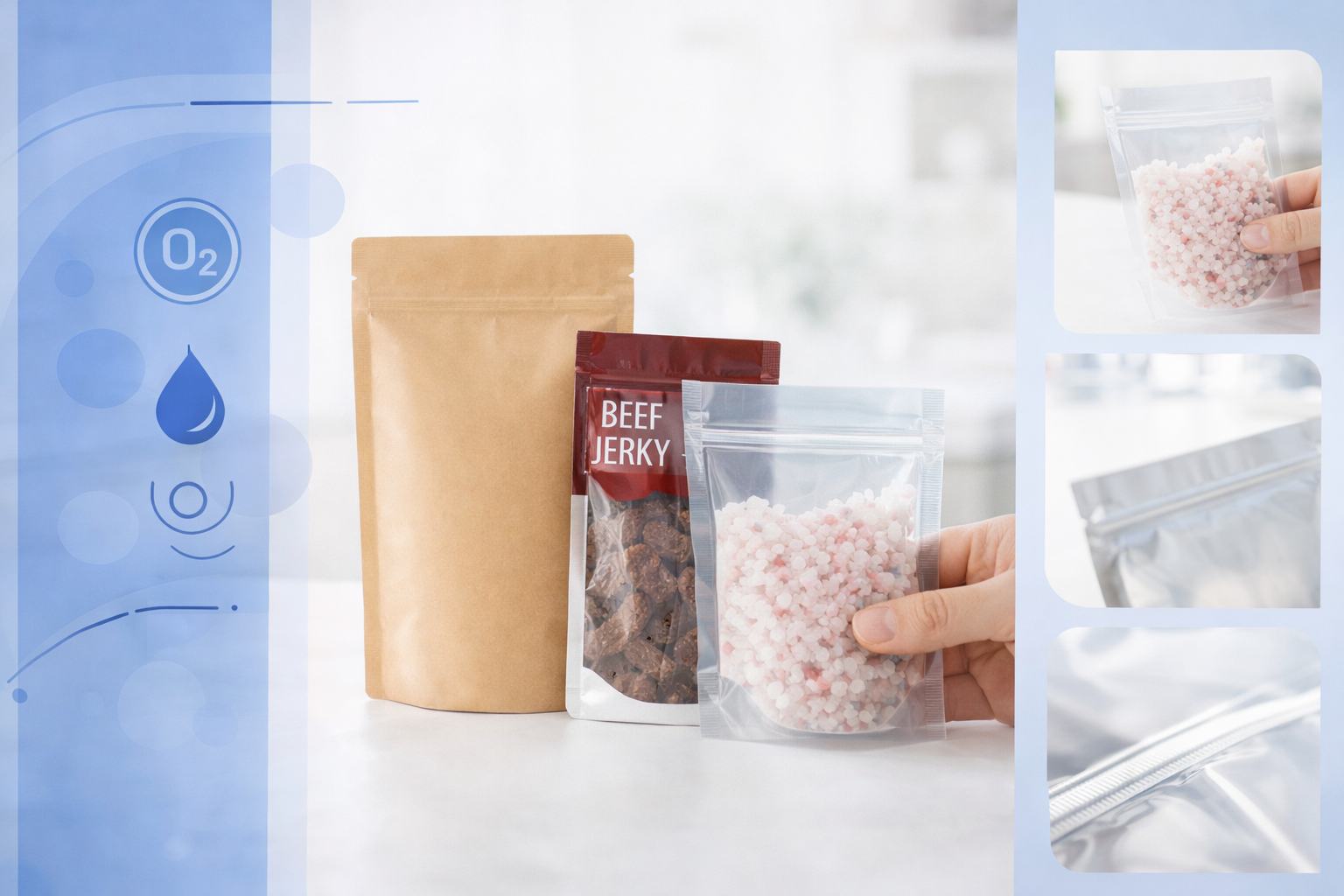
Film laminates can be engineered using a wide variety of materials depending on the product and application. Some of the most commonly used include:
- PET (Polyester): Excellent strength, clarity, and printability; often used as the outer layer.
- MET-PET (Metallized PET): Adds enhanced barrier protection against moisture and oxygen while maintaining a lighter weight than foil.
- Nylon (PA): Known for puncture resistance and durability, ideal for vacuum-sealed or heavy-duty products.
- Foil: Provides the highest barrier to light, oxygen, and moisture; used for sensitive products requiring maximum shelf life.
- EVOH: High oxygen barrier layer commonly used in food and liquid packaging.
- ALOX (Aluminum Oxide–coated films): Transparent high-barrier alternative to foil.
- CPP / PE (Cast Polypropylene / Polyethylene): Used for heat sealing and product contact layers.
- Kraft Paper: Offers a natural, premium look, often combined with inner barrier films for protection.
How Each Layer of a Laminate Structure Functions
A film laminate structure is typically made up of three functional layers, each playing a critical role in overall package performance:
Outer Layer: Printability & Appearance
- Designed for visual impact and brand presentation
- Supports high-resolution digital, flexographic, or rotogravure printing
- Compatible with finishes like gloss, matte, soft-touch, metallic, or holographic
- Often made from PET, BOPP, or kraft paper
Middle Layer: Barrier Protection
- Acts as the protective shield against oxygen, moisture, light, and odors
- Determines shelf life and product freshness
- Materials such as foil, MET-PET, EVOH, nylon, or ALOX are commonly used
- Critical for food, pharmaceuticals, supplements, and sensitive products
Inner Layer: Sealability & Product Contact
- Responsible for heat sealing and package integrity
- Must be food-safe and compatible with filling equipment
- Provides resistance to leaks, punctures, and contamination
- Typically made from PE or CPP
By carefully selecting and combining these layers, Red Dot Packaging engineers laminate structures that are tailored to your product’s protection needs, branding goals, and sustainability objectives, ensuring your packaging performs just as well as it looks.
Key Factors to Consider When Choosing a Laminate Structure
Choosing the right film laminate structure requires a careful evaluation of your product’s needs, your packaging process, your branding goals, and your sustainability priorities. Here are the key factors that guide material selection and structure design:
A. Product Type
Every product brings unique physical and chemical demands to its packaging:
- Texture & Form: Is your product dry or wet? Powder or liquid? Solid and sharp-edged, or soft and compressible? For example:
- Dry products like granola or protein powder may only need moisture protection.
- Liquids or gels, such as sauces or lotions, demand strong seals and potential spout compatibility.
- Sharp or heavy items like pet treats or hardware require puncture-resistant materials such as nylon or reinforced laminates.
- Sensitivity: Certain products are more vulnerable to:
- Moisture (e.g., bath salts)
- Oxygen (e.g., jerky, coffee, nuts)
- Light (e.g., vitamins, spices)
- Odor transfer or aroma loss (e.g., teas, cannabis)
- Moisture (e.g., bath salts)
Examples:
- Jerky: Requires a high oxygen barrier to prevent spoilage, often packaged with MET-PET or foil layers and an oxygen absorber.
- Bath Salts: Need excellent moisture resistance, PET/PE or kraft/PE laminates are ideal.
- Sauces & Purees: Require seal strength and leak-proofing, often paired with spout fitment and barrier layers like EVOH.
B. Shelf Life Requirements
The longer your product needs to stay fresh, the more robust the barrier properties must be:
- Short shelf life (30–90 days): May only require basic moisture and oxygen barriers.
- Extended shelf life (6–24 months): Calls for multilayer high-barrier laminates, commonly with foil, MET-PET, or EVOH.
Material Comparison:
- EVOH: Provides strong oxygen barrier with transparency, suitable for liquid foods.
- Foil: Offers near-total barrier protection against light, oxygen, and moisture, ideal for pharmaceutical and sensitive food applications.
Red Dot can recommend structures that match your shelf life targets while keeping material costs and environmental impact in check.
C. Packaging Format & Machinery Compatibility
The type of packaging and how it’s filled directly influence laminate selection:
- Packaging format: Are you using rollstock for automated filling or pre-made pouches for manual operations?
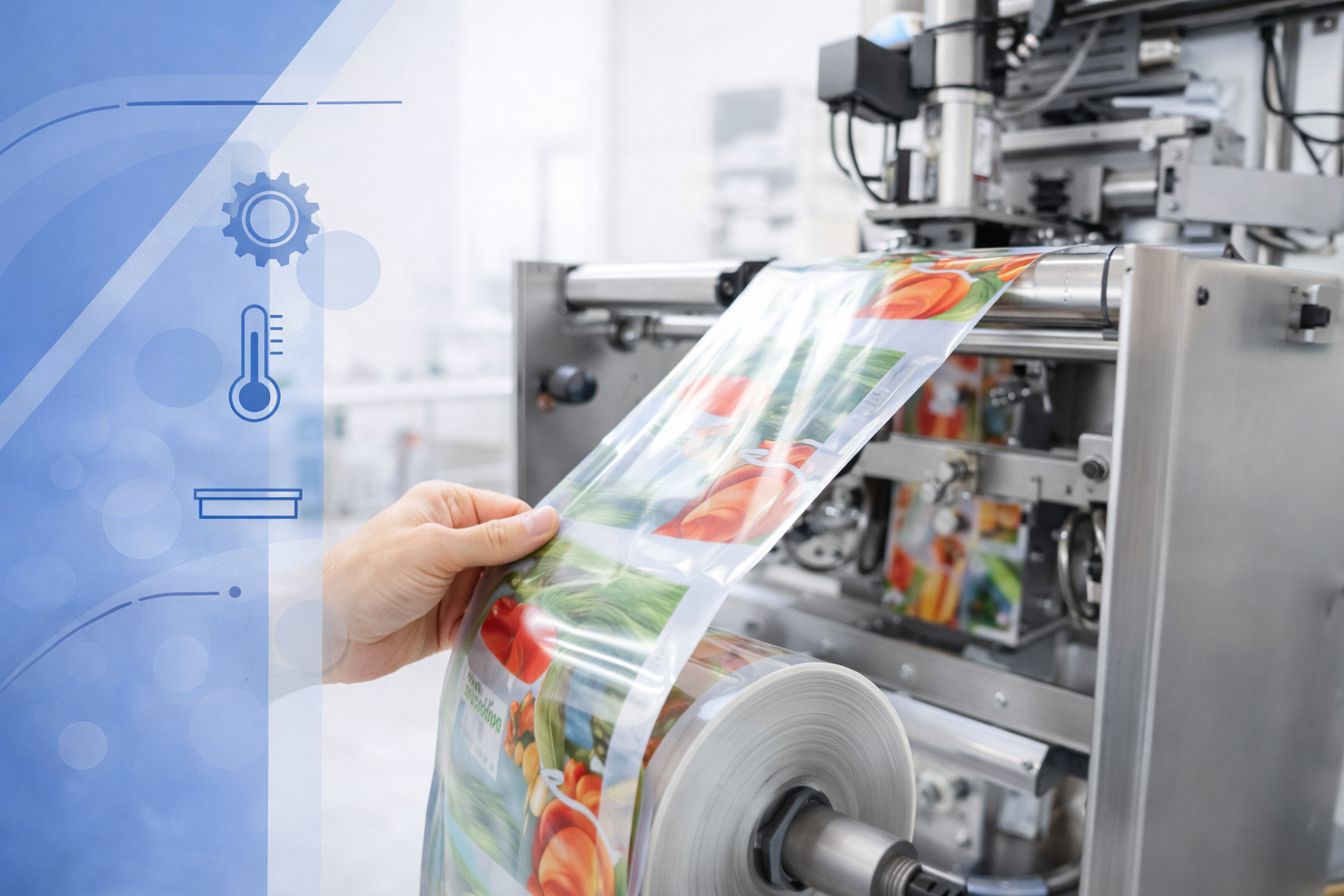
- Rollstock (HFFS/VFFS): Requires materials with proper stiffness, heat resistance, and sealing compatibility.
- Pre-made pouches: More flexibility in materials and finishes; good for premium or short-run SKUs.
- Rollstock (HFFS/VFFS): Requires materials with proper stiffness, heat resistance, and sealing compatibility.
- Machinery type: Some equipment performs better with specific film thicknesses, slip properties, and seal layers.
- Seal strength: Critical for products shipped long distances or exposed to fluctuating temperatures or pressure.
Red Dot designs laminates that are fully compatible with your packaging equipment to ensure smooth production and minimal downtime.
D. Sustainability Goals
As brands prioritize eco-conscious packaging, laminate structures must reflect those goals without compromising performance:
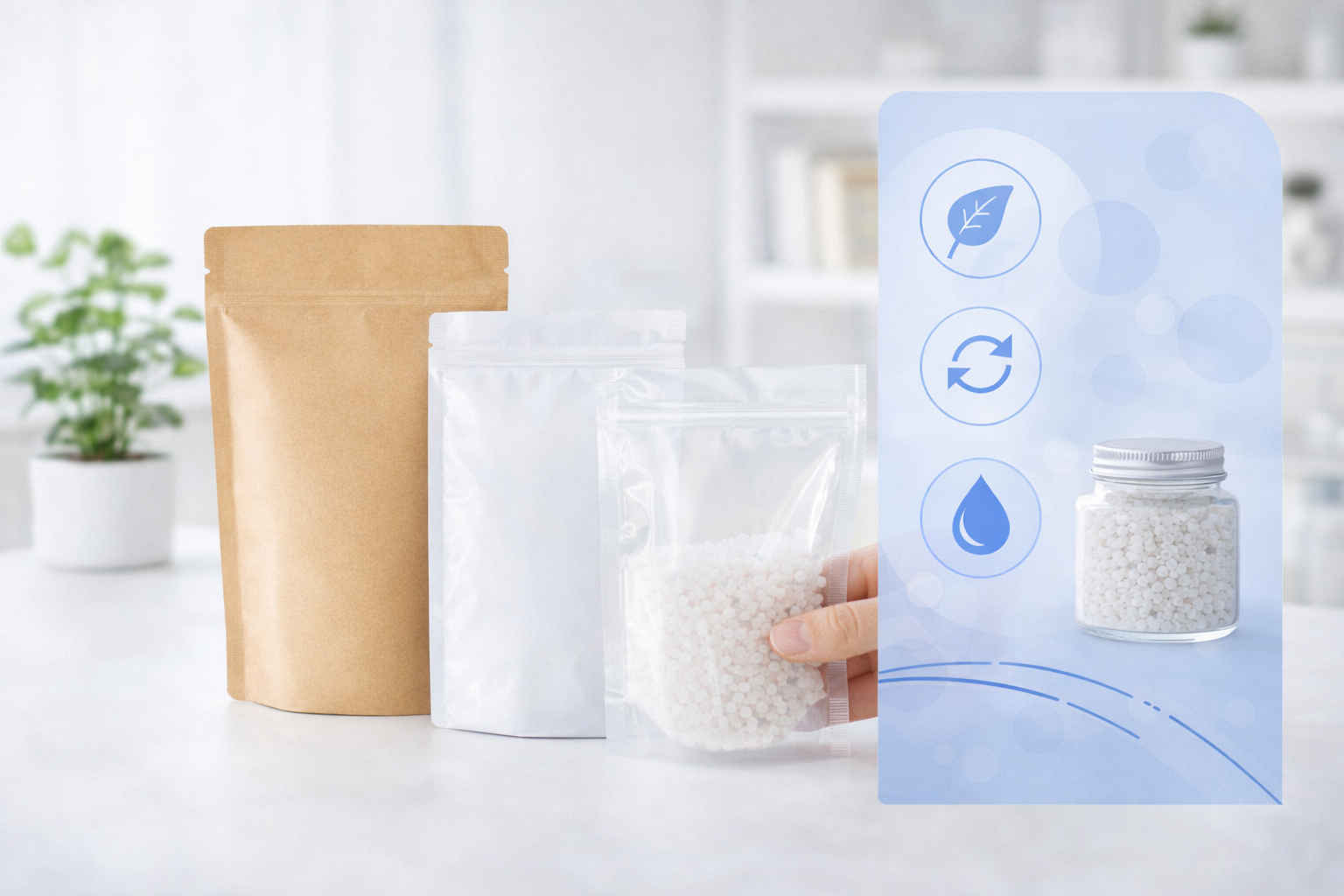
- Recyclable options: Mono-material laminates like recyclable PE or PP structures.
- Compostable films: Laminates made with PLA or bio-based substrates.
- Post-consumer recycled (PCR) content: Integrating PCR resins while maintaining barrier and sealing integrity.
Trade-offs to consider:
- High-barrier recyclable films may not yet match foil’s performance.
- Compostable films typically have a shorter shelf life and lower heat resistance.
Red Dot’s Earth-Friendly Options:
- Recyclable PE/PE laminates
- Compostable PLA/kraft films
- Paper-based laminates with barrier coatings
We help customers strike the right balance between environmental responsibility and product protection.
E. Branding & Appearance
Your package is often your first point of contact with a customer, visual and tactile appeal are critical:
- Finish options:
- Matte: Sophisticated and modern
- Gloss: Bold and vibrant
- Soft touch: Luxurious feel
- Dual finish: Combines matte and gloss for striking shelf appeal
- Matte: Sophisticated and modern
- Special effects:
- Metallic inks, holographics, or foil accents
- Clear windows to showcase the product
- Metallic inks, holographics, or foil accents
- Print compatibility:
- Digital printing: Perfect for multiple SKUs, short runs, and test markets
- Flexographic printing: Ideal for medium to high volume with cost-effective quality
- Rotogravure printing: Premium option for ultra-high volumes and complex designs
- Digital printing: Perfect for multiple SKUs, short runs, and test markets
Red Dot offers all major printing technologies to support high-impact branding on any film structure.
Red Dot’s Custom Engineering Process
At Red Dot Packaging, we understand that one-size-fits-all doesn’t work when it comes to flexible packaging. That’s why we take a collaborative, engineering-first approach to helping our customers select or develop the ideal laminate structure, customized to their product, packaging equipment, brand positioning, and sustainability goals.
Here’s how we simplify what could be a complex decision into a confident, results-driven process:
1. Discovery & Needs Assessment
We start by asking the right questions:
- What are you packaging?
- How is it filled and sealed, manually or via automated equipment?
- What are the shelf life requirements?
- Are there specific barrier needs (oxygen, moisture, light)?
- Do you have sustainability targets?
- What’s your desired look, feel, and branding effect?
Our team draws from over 40 years of combined technical experience to translate your answers into clear material and structure recommendations.
2. Structure Development & Material Selection
Based on your specific requirements, we engineer a custom laminate structure using proven film combinations:
- High-barrier vs. breathable
- Recyclable vs. high-performance traditional films
- Finish options tailored to your brand
We consider every layer’s function, print surface, barrier layer, and sealant, and ensure compatibility with your existing filling and sealing systems.
3. Prototyping & Performance Testing
Before full production, we can produce sample runs or prototype pouches so you can:
- Test product fit and functionality
- Evaluate seal strength and durability
- Confirm print quality, finish, and shelf appeal
If you’re testing for shelf life, we can simulate storage conditions or help guide you through lab testing with certified partners.
4. Fast Turnaround & Consultative Support
Once approved, we move quickly, offering short lead times and scalable production volumes. Whether you need a small run for a new launch or are scaling up to high-volume production, we support you at every stage.
Throughout the process, we act as your technical partner, not just a vendor, ensuring you’re fully supported with:
- Guidance on print file prep and color management
- Compatibility checks with your machines
- Ongoing support for SKU expansion or formulation changes
At Red Dot, our custom engineering process is about more than materials, it’s about making sure your packaging works perfectly for your product, your customers, and your bottom line.