

Custom Box Flat Bottom Pouches
About Custom Flat Bottom Pouches
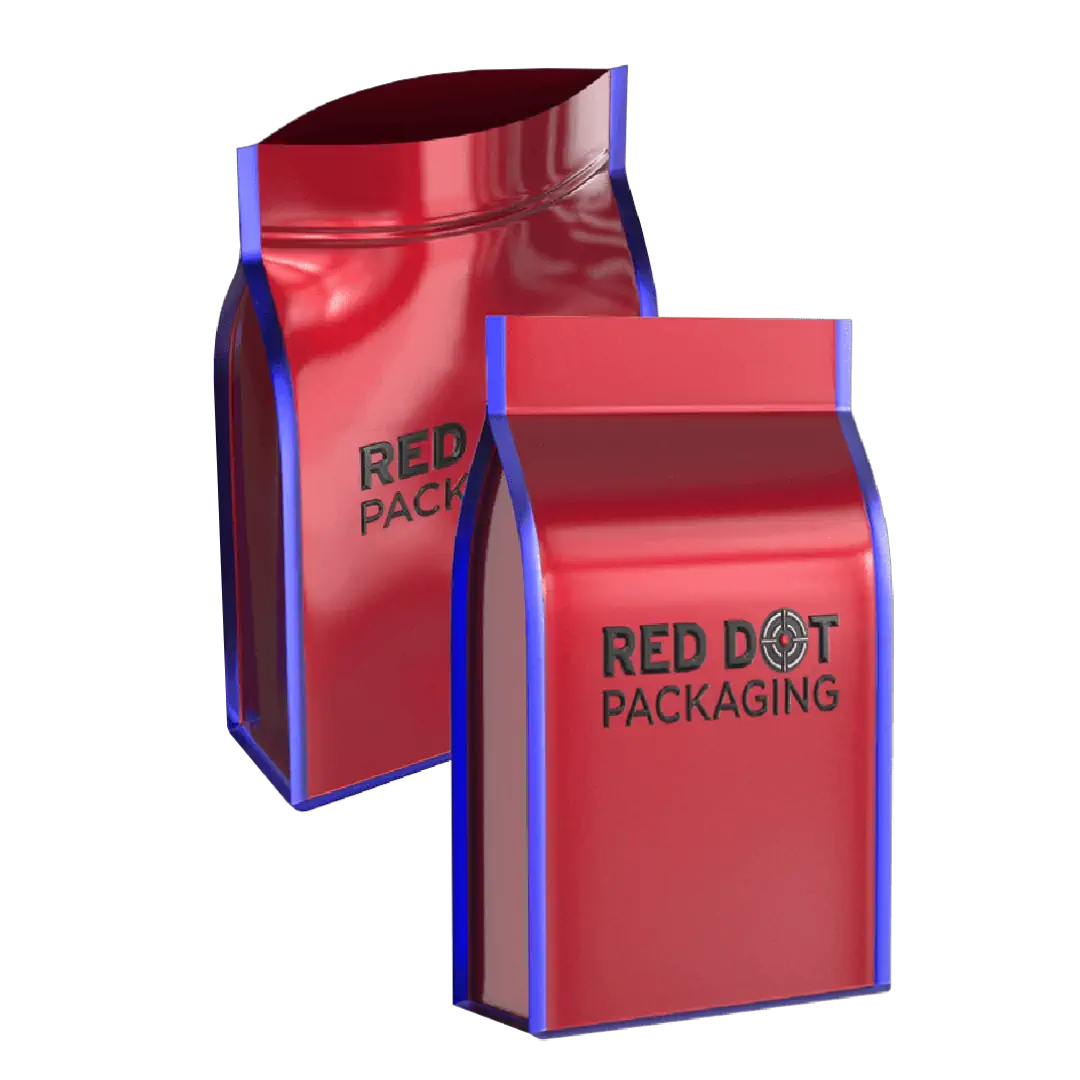
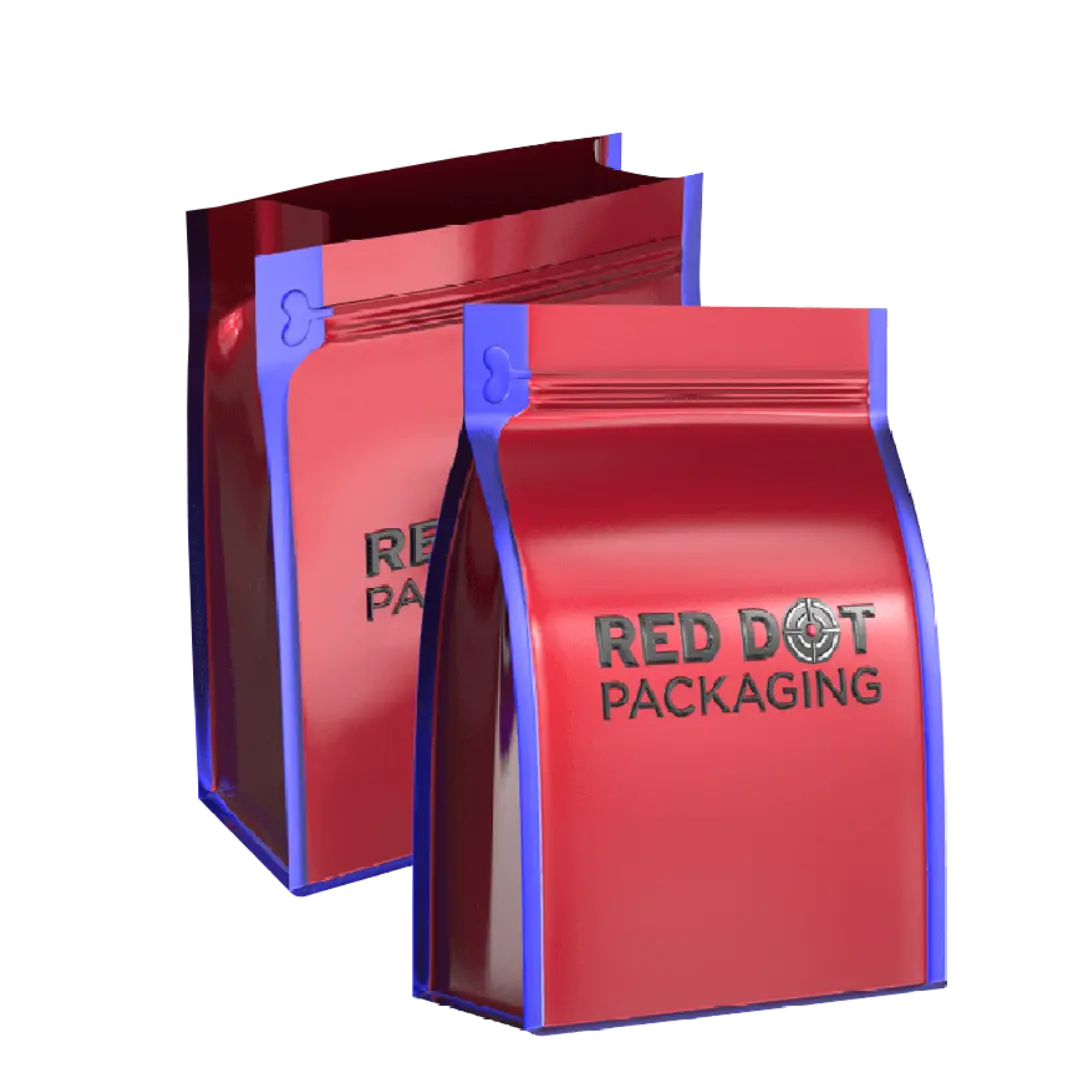
Get made-to-spec, custom flat bottom pouches that stand upright, display cleanly on shelf, and hold more volume per footprint. This category includes flat bottom (box) pouches in standard formats and options with a dog bone zipper for frequent open-and-close use. Choose your size, barrier film, finish, and features such as zippers, tear notches, windows, and one-way coffee valves. Submit artwork and dial in the details with support from packaging specialists. Explore the styles below to compare closures and feature sets, then request a quote to align sizing and specs to your fill and sealing process.
Flat Bottom Pouches (Box Pouches)
- Structure: A stable, flat base with five printable panels for strong shelf presence and efficient case packing.
- Use Cases: Whole bean or ground coffee, snacks, dry mixes, pet treats, and other dry goods that benefit from an upright bag and more volume capacity.
- Features: Add a standard zipper, tear notches for easy opening, clear or frosted windows, and degassing valves for coffee. Select matte, gloss, or mixed finishes to match brand design.
Flat Bottom Pouches with Dog Bone Zipper
- Structure: The same flat bottom format with a shaped, easy-grip dog bone zipper designed for quick open and reclose.
- Use Cases: Ideal for products accessed frequently, such as pet treats or snacks where convenience and retention of freshness matter.
- Features: APair the zipper with tear notches, optional windows, and valves when needed. Maintain full-surface custom printing across panels
Printing and Materials
All options are custom printed to your artwork and brand standards. Choose barrier materials suited to your product’s needs, including moisture, oxygen, and light protection levels. Each pouch is built to your selected size and feature set, so you can align package performance with visual goals across your lineup.
Comparison at a glance
- Standard Zipper: Everyday reclose for most dry goods.
- Dog Bone Zipper: Enhanced grip for quick, repeated access.
- Add-ons: Tear notches, windows, valves, and chosen finish across both formats.
Key Selection Considerations
- Product type and access: For coffee, include a one-way valve; for snacks and pet treats with frequent opening, consider the dog bone zipper. For single-use or portioned packs, a standard zipper with tear notches may be sufficient.
- Barrier and visibility: Match film to your product’s sensitivity to moisture, oxygen, or light. Use a window for merchandising when visibility helps sell, or choose fully opaque films for maximum protection.
- Size and fill: Select dimensions based on net weight, product density, and desired headspace for sealing. Confirm target fill height to keep graphics clear above the seam.
- Closures and handling: Choose a closure that fits your customer’s use pattern and your sealing equipment. Ensure the zipper style aligns with your line’s sealing temperature and jaws.
- Finish and branding: Matte, gloss, or mixed finishes influence color, contrast, and scuff visibility. Plan artwork across five panels to take advantage of the box-style display.
- Operations: Consider case pack counts, palletization, and retail planograms; flat bottoms stack and ship efficiently and face forward on shelf.
Why Red Dot Packaging
Red Dot Packaging focuses on custom-printed flexible packaging with a strong emphasis on flat bottom box pouches. The team works with small to mid-size brands, co-packers, and CPG teams to specify the right barrier structures, closures, and finish combinations for each product. Customers receive practical guidance on dielines, artwork preparation, and feature selection to achieve consistent print quality and a retail-ready presentation. Red Dot’s specialization in stand-up and flat bottom formats, plus experience across food, coffee, snack, pet, and supplement categories, provides a clear path from concept to production-ready pouches tailored to your requirements.
Custom Box Flat Bottom Pouches FAQ
Q: What are flat bottom pouches, and how do they differ from other flexible packaging formats?
A: Flat bottom pouches, also called box pouches, have a stable flat base and five printable panels that stand upright and present cleanly on shelf. They hold more volume per footprint and pack efficiently in cases. Compared to classic stand-up pouches with a single bottom gusset, they offer more display surfaces and a more rigid stance.
Q: What are the main advantages and disadvantages of flat bottom pouches for retail products?
A: Advantages include strong shelf presence, excellent stability, efficient case packing, and five panels for branding. They can carry more product in the same shelf space and support many features like zippers, valves, and windows. Tradeoffs can include higher material and unit costs than simpler formats and tighter tolerances for artwork and sealing.
Q: How do closures like standard zippers and dog bone zippers work, and when should each be used?
A: A standard zipper provides everyday reclose for most dry goods and single-serve to multi-serve packs. A dog bone zipper adds a shaped, easy-grip profile that opens and recloses quickly, ideal for snacks and pet treats accessed multiple times per day. Choose a zipper that matches your customer’s use pattern and your sealer’s jaw design and temperatures.
Q: How should barrier materials be selected for products sensitive to moisture, oxygen, or light?
A: Match films to the specific sensitivity: choose high moisture barriers for hygroscopic products and high oxygen barriers for items that stale or oxidize. Use fully opaque structures for light-sensitive goods and avoid windows when maximum protection is required. For degassing products like coffee, add a one-way valve and pair it with the appropriate barrier film.
Q: What features can be added to custom flat bottom pouches, and what purpose does each feature serve?
A: Options include standard or dog bone zippers for reclose, tear notches for easy first open, and clear or frosted windows to merchandise the product. One-way valves let freshly roasted coffee release gas without letting air in. You can also specify matte, gloss, or mixed finishes to align with brand design and handling needs.
Q: How do matte, gloss, and mixed finishes affect shelf appearance and resistance to scuffs?
A: Matte reduces glare, softens reflections, and tends to hide minor scuffs from handling. Gloss increases contrast and perceived color depth but can show scuffs and fingerprints more readily. Mixed finishes use spot matte and gloss to highlight graphics while controlling wear in high-touch zones.
Q: What are best practices for sizing, fill height, and sealing to ensure reliable packaging performance?
A: Size the pouch for your net weight, product density, and desired headspace so you can achieve a clean top seal. Confirm target fill height to keep graphics and zipper clear of the seal area and tear notch. Validate that your zipper choice seals well on your equipment by checking seal width, temperature, and dwell, then verify case pack and pallet fit.
Q: What artwork and printing considerations matter most for five-panel flat bottom pouches?
A: Plan graphics across five panels—front, back, sides, and bottom—to tell the brand story from multiple angles. Keep critical text, logos, and nutrition panels outside seal areas and away from zipper tracks and tear notches. Reserve clear space for any window or valve and align UPC placement for easy scanning on shelf.
Q: What trends are shaping custom-printed flexible pouches for food, coffee, snacks, and pet products?
A: Brands are adopting flat bottom formats for stronger shelf presence and efficient shipping. Convenience features like reclosable zippers and one-way valves support freshness and frequent access. Windows and mixed finishes help shoppers evaluate quality while maintaining a premium look and consistent branding across sizes.
Q: How do flat bottom pouches compare to stand-up pouches and gusseted bags for shelf display and case packing?
A: Flat bottom pouches stand more rigidly and face forward with five panels, which helps with blocking and clear presentation. Stand-up pouches are often lighter and lower cost but have fewer display surfaces and can be less cube-efficient in cartons. Side-gusseted bags handle dense products well but may not stand as neatly without a formed base and have fewer prime display panels.