
Printing Technologies for Packaging: Digital, Flexography, and Rotogravure Explained
Learn how rotogravure, flexography, and digital printing work in packaging. Discover when each is best used, and compare trade-offs across cost, quality, and run length.
The flexible packaging industry is evolving rapidly, driven by shifting consumer demands, SKU proliferation, and the constant push for greater sustainability and efficiency. For packaging engineers, print buyers, and brand managers, navigating these changes requires a deep understanding of the core printing technologies that bring packaging designs to life. Selecting the optimal printing method is no longer just a technical detail; it is a strategic business decision that directly influences inventory costs, brand perception, and speed to market.
At Red Dot Packaging, we understand that every project has unique requirements. With over 40 years of combined experience and a facility equipped with multiple 10-color rotogravure presses and advanced digital systems, we help brands scale from small trial runs to massive national launches. This article breaks down the three dominant printing technologies, digital, flexography, and rotogravure, providing a practical framework for choosing the right process based on application, volume, substrate, and quality needs.
How Do Digital, Flexography, and Rotogravure Printing Work?
To make an informed decision, it is essential to ground yourself in the fundamental mechanics of each printing process. The way ink is transferred to the substrate dictates the setup time, cost structure, and ultimate visual outcome of your packaging. Understanding these fundamentals allows you to evaluate not just the immediate project needs, but also how each technology scales as your business grows.
Digital Printing (Electrophotographic and Inkjet)
Digital printing has transformed the packaging landscape by eliminating the need for physical printing plates or cylinders. Instead, digital presses transfer the image directly onto the substrate or via an intermediate transfer blanket. Because there is no physical tooling required, digital printing excels at versioning, variable data printing, and rapid prototyping. It allows brands to print multiple SKUs in a single run without incurring costly changeover times, making it ideal for short runs and personalized packaging campaigns.
The technology works by using either electrophotographic (toner-based) or liquid inkjet systems. Electrophotographic presses use charged toner particles attracted to a photoconductor drum, which transfers the image to the substrate. Inkjet systems spray tiny droplets of ink directly onto the material. Both approaches enable near-instantaneous design changes, allowing a brand to print a limited edition flavor variant or a region-specific promotional code without any setup delay. This flexibility is particularly valuable for craft brands, limited-edition products, and direct-to-consumer packaging where personalization drives purchase decisions.
Flexography
Flexography, or flexo, uses flexible relief plates made of photopolymer or rubber. These plates are mounted on rotating cylinders. An engraved roller, known as an anilox roll, meters the exact amount of ink needed and transfers it to the raised image areas of the plate, which then presses the ink onto the substrate. Flexography is highly versatile, capable of printing on a wide variety of materials including films, foils, paper, and corrugated board. Modern advancements in high-definition flexo plates have significantly improved its resolution, allowing it to compete closely with higher-end printing methods.
The flexographic process begins with the creation of a photopolymer plate, which is imaged using a digital file and then processed to harden the raised image areas while washing away the non-image areas. The plate is then mounted on a cylinder and positioned in the press. The anilox roll, which has a precisely engraved surface with thousands of tiny cells, picks up ink from a fountain and transfers a uniform, controlled amount to the plate. This metering system is critical to flexography's efficiency, it ensures minimal ink waste while maintaining consistent coverage. Flexo presses can operate at very high speeds, often exceeding 1,000 feet per minute, making them ideal for high-volume production of standard designs.
Rotogravure
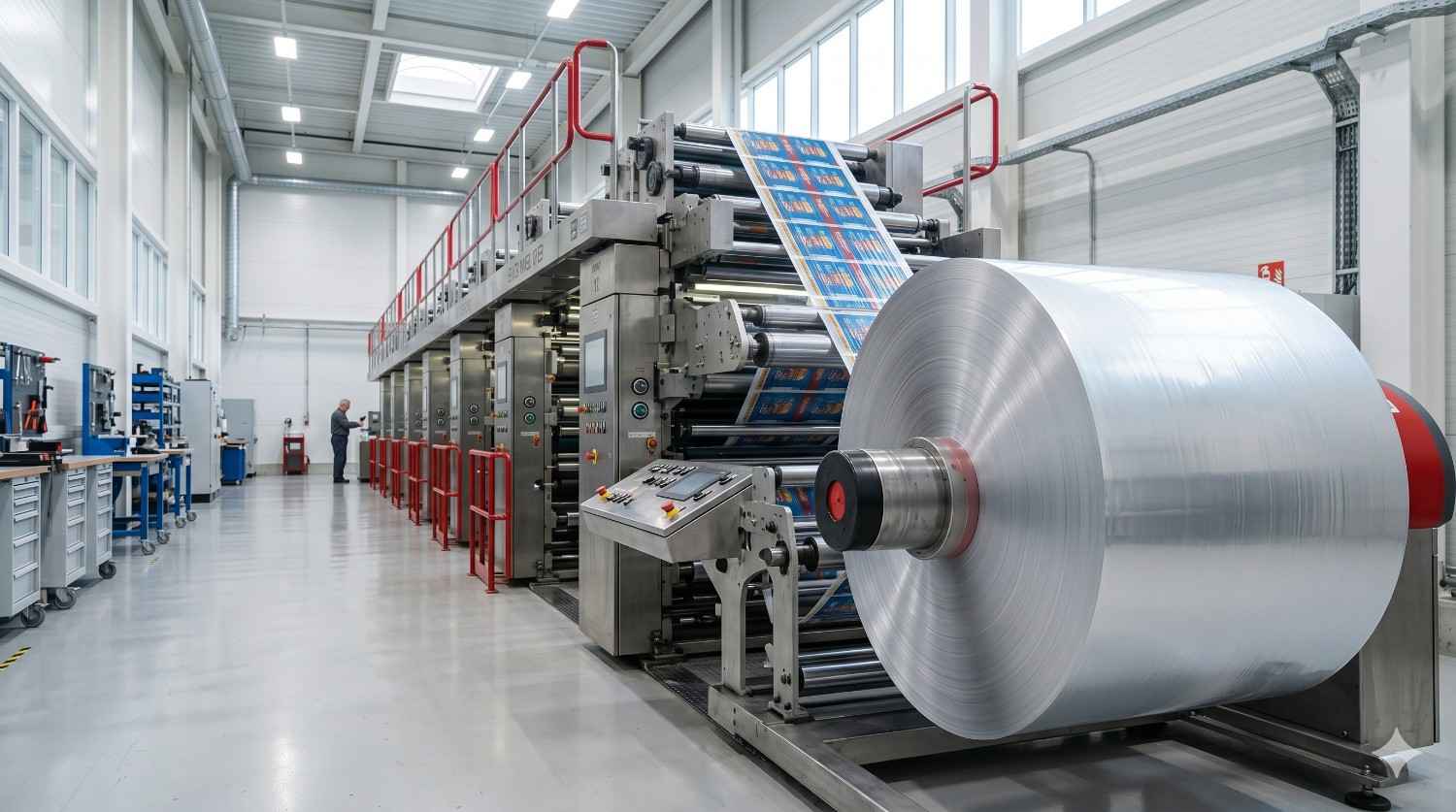
Rotogravure printing, often simply called gravure, is a high-speed, high-volume printing process. The image is engraved into a metal cylinder as a pattern of tiny cells. The cylinder rotates in an ink bath, filling the cells. A doctor blade scrapes excess ink from the non-image areas of the cylinder surface, leaving ink only in the engraved cells. As the substrate passes between the engraved cylinder and an impression roller, the ink is transferred via capillary action. Rotogravure delivers exceptionally high ink laydown, resulting in continuous-tone photographic quality and unparalleled color consistency across runs of millions of impressions.
The rotogravure process begins with the engraving of the metal cylinder, which is typically made of steel or copper. The engraving is performed using electromechanical or laser techniques, creating a precise pattern of cells that vary in depth and width to control ink volume. Deeper cells hold more ink, allowing for richer color saturation, while shallower cells produce lighter tones. This variable-depth engraving capability is what gives rotogravure its unmatched ability to reproduce photographic images with smooth gradients and continuous tone. Once the cylinders are engraved and mounted in the press, production can begin at very high speeds, often exceeding 1,500 feet per minute. The consistency of the engraved cylinder means that color and quality remain locked in throughout the entire run, with minimal operator intervention required.
What Quality Differences Should I Expect Between Processes?
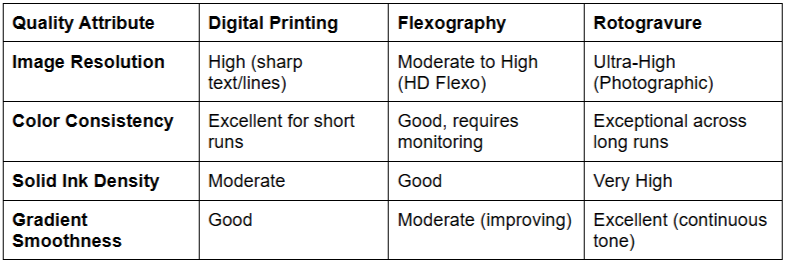
Visual impact is often the first thing a consumer notices on the shelf. The choice of printing technology profoundly affects how fine details, solid colors, gradients, and specialty finishes appear on the final package. For premium brands competing in crowded categories, the quality difference between technologies can be the deciding factor in whether a package stands out or blends into the background.
Resolution, Linework, and Tonal Range
Rotogravure is the gold standard for continuous-tone imagery and dense, vibrant solids. The engraved cells can vary in both depth and width, allowing for precise control over ink volume and creating incredibly smooth gradients and sharp linework. This capability is particularly valuable for premium packaging that features photographic imagery, such as high-end cosmetics, luxury food products, or pharmaceutical packaging where visual authenticity is critical. Flexography has historically struggled with smooth vignettes (fading to zero percent ink), but recent advancements in plate technology have vastly improved its tonal range. Modern HD flexo plates can now achieve screen rulings of 150 lines per inch or higher, approaching the quality once exclusive to rotogravure. Digital printing excels at rendering sharp text, fine linework, and complex, multi-colored designs without the registration issues that can sometimes affect analog processes. For packaging requiring variable text, barcodes, or QR codes, digital's precision is unmatched.
Color Accuracy and Repeatability
For national brands, color consistency is non-negotiable. Rotogravure offers the highest level of color stability over exceptionally long runs. Once the cylinders are engraved and the press is calibrated, rotogravure can maintain tight Delta E tolerances across millions of impressions. Flexography requires more active color management during the run, as plate wear and anilox variations can affect ink transfer over time. Digital printing provides excellent color accuracy for short runs, utilizing ICC color profiles to match brand standards, though color consistency across different batches printed months apart requires careful calibration.
Surface Finishes and Coatings
The ability to apply varnishes, laminations, and specialty effects adds tactile and visual appeal to packaging. Rotogravure is highly effective at applying thick, even layers of overprint varnishes, matte finishes, and cold seals. Flexography is equally versatile, often utilizing inline finishing stations to apply UV or water-based coatings efficiently. Digital printing typically requires offline or nearline finishing equipment to apply laminations or specialty coatings, adding a step to the production workflow.
How Do Run Length and Setup Time Affect Total Cost?
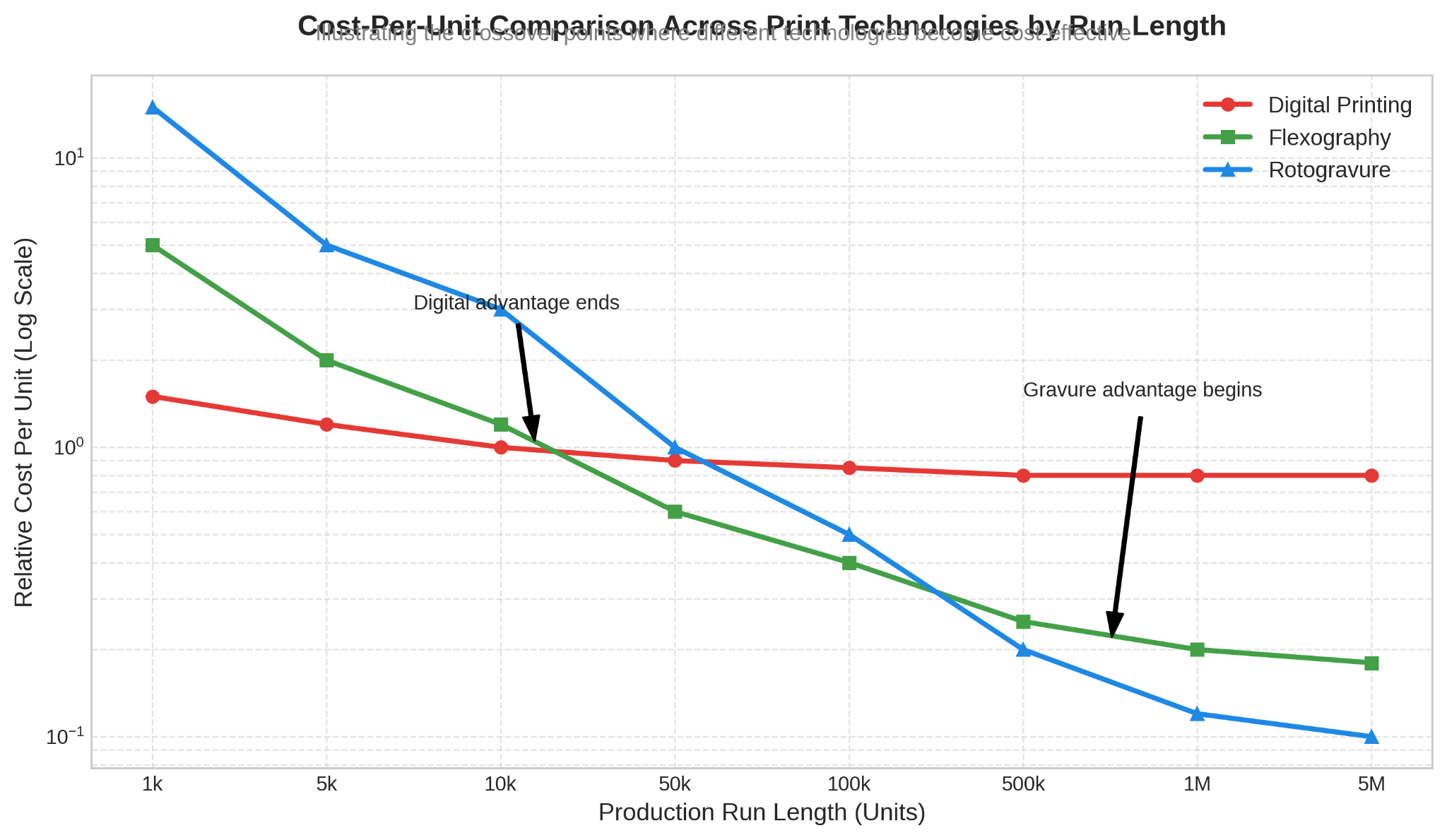
The economics of packaging print are driven by the balance between fixed setup costs (tooling and make-ready time) and variable running costs (ink, substrate, and press time). Understanding these cost structures is vital for optimizing your packaging budget. A common mistake is comparing only the unit price without considering the total cost of ownership, which includes tooling, setup, and waste across the entire project lifecycle.
Setup Effort and Changeovers
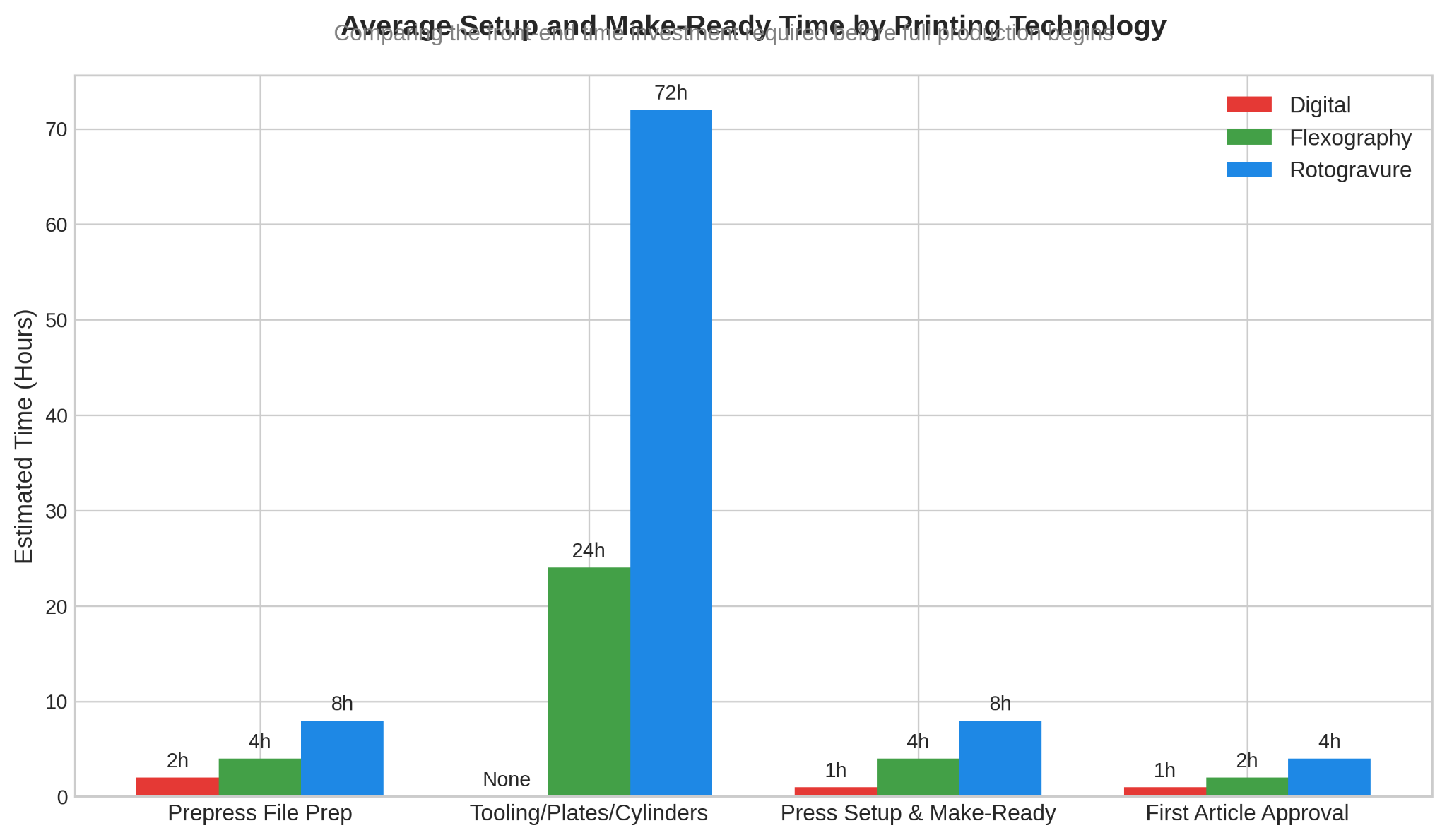
Digital printing has virtually zero setup cost. There are no plates or cylinders to manufacture, and changeovers between SKUs happen instantly via software. This makes digital incredibly cost-effective for small orders. A brand can print 1,000 pouches of one design, then immediately switch to 1,000 pouches of a different design without any delay or waste. Flexography requires the production of photopolymer plates for each color, representing a moderate fixed cost that typically ranges from a few hundred to a few thousand dollars depending on plate size and complexity. Rotogravure has the highest fixed setup cost due to the precision manufacturing of metal cylinders for each color. However, these cylinders are highly durable and can be reused for millions of impressions, making them a worthwhile investment for stable, long-term products.
Running Speeds and Waste
While digital has low setup costs, its running speeds are relatively slow, typically 100 to 300 feet per minute and the cost of digital inks is high, making the unit cost expensive at high volumes. Flexography operates at high web speeds, often exceeding 1,000 feet per minute, and utilizes less expensive inks, significantly lowering the unit cost as volume increases. Rotogravure operates at the highest speeds, often exceeding 1,500 feet per minute, with exceptional efficiency. While startup waste (substrate and ink used during calibration) is higher in gravure due to the need to fill the cylinder cells and stabilize ink transfer, the sheer speed and low variable cost of the process make it the most economical choice for massive production runs. For a 5-million-unit order, the startup waste represents less than 0.1% of total production, making it negligible in the overall cost calculation.
The Crossover Concept
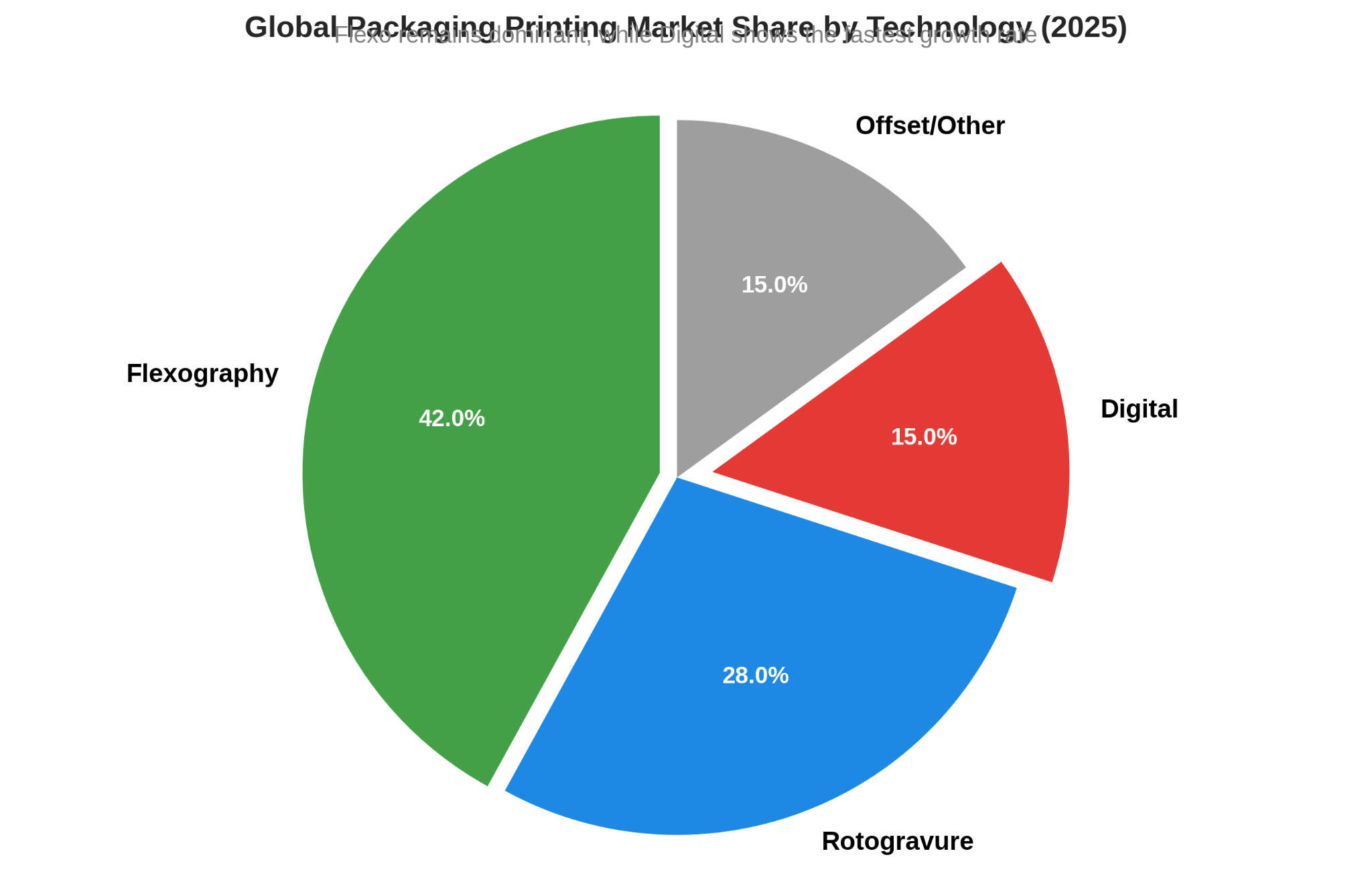
The "crossover point" is the production volume at which one printing technology becomes more cost-effective than another. For very short runs (e.g., under 10,000 units), digital is almost always the most economical choice. As volumes move into the tens of thousands, flexography becomes the dominant process. For runs exceeding several hundred thousand or millions of units, the high initial cylinder cost of rotogravure is amortized over the massive volume, resulting in the lowest possible cost per unit. At Red Dot Packaging, we help clients identify these crossover points for their specific projects, ensuring that the technology selected aligns with both immediate budget constraints and long-term production plans.
Which Substrates and Packaging Formats Work Best?
The material you choose for your packaging, whether film, paper, or laminate, must be compatible with the selected printing technology to ensure proper ink adhesion, barrier performance, and mechanical integrity.
Films and Foils (BOPP, PET, PE, Nylon, Aluminum Foil)
Flexible packaging heavily relies on polymer films and aluminum foils. Rotogravure is exceptionally well-suited for these non-porous substrates. The solvent-based inks typically used in gravure bite into the film, providing excellent adhesion and vibrant color, especially on metallized films. Flexography is also highly effective on films, utilizing both solvent and fast-drying UV or LED-curable inks. Digital printing on films often requires the substrate to be pre-treated with a primer to ensure the ink adheres properly, though newer digital presses are improving native film compatibility.
Paper and Paperboard
For folding cartons, labels, and paper-based flexible packaging, flexography is highly versatile and widely used. It adapts well to the porous nature of paper. Digital printing is excellent for premium paper labels and short-run cartons. Rotogravure is used for high-volume, premium paper applications, such as high-end tobacco packaging or luxury cosmetic cartons, where deep, rich colors and embossing are required.
Packaging Formats
- Stand-Up Pouches and Flat Pouches: All three technologies are used. Digital for craft brands and SKU testing; flexo for mid-sized regional runs; rotogravure for national, high-volume CPG brands.
- Shrink Sleeves: Rotogravure dominates high-volume shrink sleeves due to its ability to print dense solids and precise metallics that withstand the shrinking process. Flexo is increasingly capturing mid-web shrink sleeve work.
- Stick Packs: Often printed via rotogravure or flexo, as they are typically produced in very high volumes for single-serve drink mixes or nutraceuticals.
How Do Inks and Coatings Impact Environmental Goals?
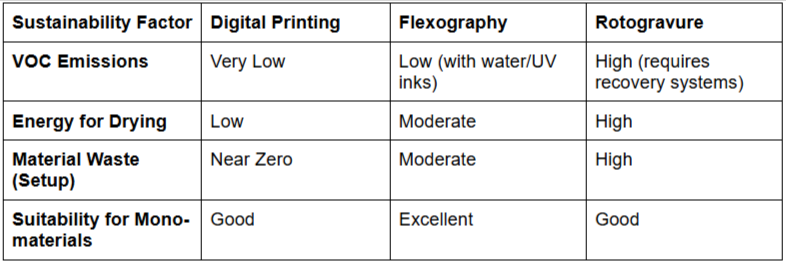
Sustainability is a driving force in packaging decisions today. The choice of printing technology dictates the type of ink chemistry used, which in turn affects emissions, energy consumption, and the recyclability of the final package.
Solvent, Water-Based, and Energy-Curable Systems
Rotogravure traditionally relies on solvent-based inks, which require significant thermal energy to dry and necessitate complex solvent recovery or thermal oxidation systems to manage Volatile Organic Compounds. Flexography offers greater flexibility, widely utilizing water-based inks (especially for paper) and energy-curable inks (UV/LED), which have near-zero VOC emissions and require less energy to cure. Digital inks vary by manufacturer but generally produce low emissions, though the recyclability of some digital toners is an ongoing area of industry development.
Emissions, Recovery, and Regulatory Alignment
For food packaging, compliance with FDA and international food-contact regulations is paramount. Rotogravure facilities must maintain rigorous solvent retention testing to ensure no residual solvents migrate into the food product. Flexography's use of water-based and electron-beam curable inks simplifies compliance in many food packaging applications, reducing the risk of odor or flavor taint.
Waste and Recyclability Implications
The amount of ink laid down on the substrate can impact its recyclability. Heavy ink coverage, typical of rotogravure, can sometimes complicate the recycling of flexible films. The industry is moving toward mono-material structures (e.g., all-PE pouches) designed for recycling. Flexography and digital printing, which can achieve high quality with thinner ink films, are well-positioned to support these sustainable design initiatives.
What Does the Prepress and Quality Assurance Workflow Look Like?
The success of a packaging run is determined long before the press starts rolling. A rigorous prepress and quality assurance workflow is essential for translating artwork into predictable, repeatable output.
Files, Screening, and Separations
Prepress for flexography and rotogravure involves separating the artwork into its component colors (CMYK plus spot colors). For flexo, prepress technicians must apply specific distortion factors to compensate for the stretching of the polymer plate when mounted on the cylinder. They also apply specific screening techniques to avoid moiré patterns and harsh tonal breaks. Digital printing requires less complex separation work, relying on advanced Raster Image Processors to translate the digital file directly to the print heads.
Plates and Cylinders
The lead time for tooling varies significantly. Flexographic plates can often be imaged and processed in-house within hours. Rotogravure cylinders, however, are typically engraved offsite using electromechanical engraving or laser etching. This process is highly precise but requires longer lead times, often several days to weeks. Each cylinder engraving typically takes about 3 hours, and if an error occurs, the cylinder must be stripped and re-engraved.
Process Control and Standards
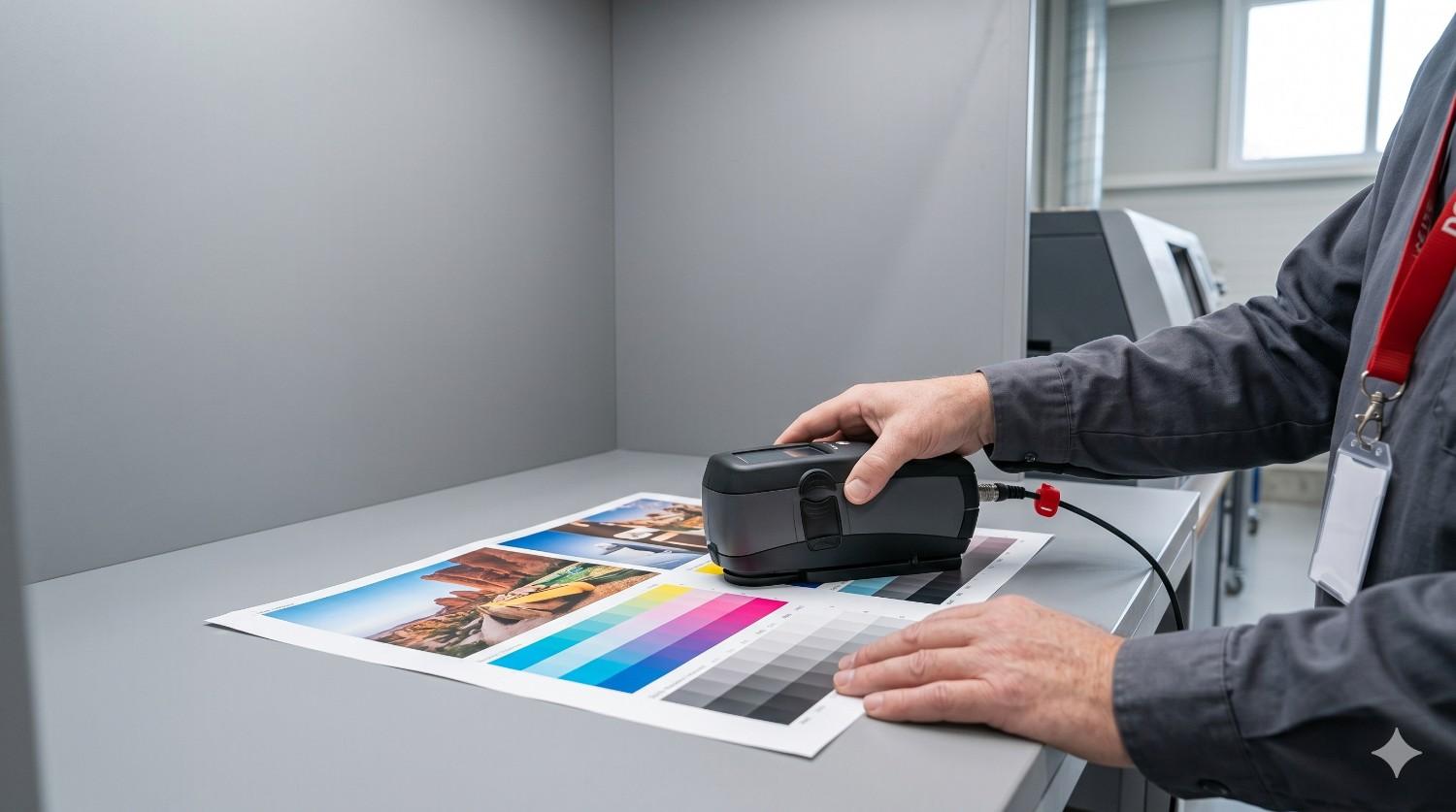
Maintaining print stability across long runs requires strict adherence to industry standards, such as ISO 12647. QA teams use spectrophotometers to measure color accuracy against established targets. In rotogravure, the stability of the engraved cylinder ensures that color remains locked in, reducing the need for constant press adjustments. In flexography, operators must monitor ink viscosity, anilox cleanliness, and plate pressure to maintain consistent quality.
Practical Selection Framework: Matching Process to Project Goals
Choosing the right printing technology is rarely a simple "best vs. worst" scenario. It requires a holistic view of your project's lifecycle, balancing immediate needs with long-term economics. The best choice for your organization depends on your specific business model, growth trajectory, and brand positioning.
Decision Inputs
When evaluating your options, consider the following criteria:
Total Run Length: Are you printing 5,000 pouches or 5 million? This single factor often determines the technology choice. Very small runs strongly favor digital; very large runs strongly favor rotogravure.
Number of SKUs: Do you have one flagship product or 20 flavor variations? Brands with many SKUs benefit from digital's ability to switch designs instantly. Brands with stable, long-term products benefit from rotogravure's consistency.
Quality Tier: Does the brand demand photo-realistic imagery and metallic accents? Premium brands often justify the higher cost of rotogravure for the superior visual impact.
Turnaround Time: Do you need the packaging in 15 days or 8 weeks? Digital and flexography offer faster turnaround. Rotogravure requires lead time for cylinder engraving.
Budget Structure: Can you absorb upfront tooling costs for lower long-term unit prices? This depends on your cash flow and production volume certainty.
Typical Scenarios
The Craft Launch (Digital): A startup coffee roaster launching 5 different single-origin blends, needing 2,000 pouches of each. Digital printing eliminates plate costs, allows for rapid design iteration, and gets the product to market quickly. The total investment is minimal, and the brand can test market response before committing to larger production runs. If one flavor underperforms, the brand has not invested heavily in rotogravure cylinders that would sit idle.
The Regional Scale-Up (Flexo): A growing snack brand expanding into regional grocery chains, needing 50,000 to 100,000 pouches per SKU. Flexography provides the speed and lower unit cost needed to support retail margins, while handling the moderate volume efficiently. The brand can justify the cost of flexo plates because the volume is large enough to amortize the tooling cost, and the per-unit price is low enough to remain competitive in the retail channel. Flexo also allows for quick changeovers between flavors or seasonal variants.
The National Campaign (Rotogravure): A major pet food brand producing millions of stand-up pouches for nationwide distribution. The brand requires absolute color consistency across the country and the lowest possible cost per unit. Rotogravure is the clear choice. The high initial cost of the cylinders is justified by the massive volume, and the consistency of gravure ensures that a pouch purchased in California looks identical to one purchased in New York.
At Red Dot Packaging, we are built to help you test, launch, and scale nationally. With our multiple 10-color rotogravure presses for medium-to-large runs, and high-capacity digital presses for small trials, we align the technology with your specific growth stage, delivering printed pouches in 15 days or less. Our assigned packaging specialists work with you to evaluate your project requirements, model the cost implications of each technology, and recommend the optimal path forward. We understand that the right choice today may not be the right choice tomorrow, so we help you plan for growth and design your packaging strategy with a 12-24 month horizon in mind.
Trends Shaping Packaging Print Choices
The packaging industry is dynamic, and technological advancements are continuously shifting the boundaries of what each printing method can achieve. Understanding these trends helps you make forward-looking decisions about your packaging strategy.
SKU Proliferation and Versioning
Brands are introducing more flavors, seasonal variations, and targeted promotions than ever before. This explosion of SKUs is driving the growth of digital printing, which handles versioning effortlessly. It is also pushing flexo and gravure operators to optimize changeover times to remain competitive on medium-length runs. The rise of direct-to-consumer brands, which often require frequent design updates and limited-edition releases, has accelerated the adoption of digital printing in the packaging industry.
Hybrid and Nearline Finishing
The lines between technologies are blurring. Hybrid presses combine the high-speed, cost-effective solid color printing of flexography with the variable data capabilities of digital inkjet stations inline. This allows brands to print a static brand background economically while adding unique promotional codes or localized text digitally. For example, a national beverage brand can print the same base design on all pouches via flexography, then add region-specific promotional text via digital inkjet. This hybrid approach captures the cost benefits of flexo while maintaining the flexibility of digital.
Data-Driven Production
Advanced analytics and automated color management systems are stabilizing output across all processes. Closed-loop color control systems on modern presses continuously monitor and adjust ink density, reducing waste and ensuring that the first pouch looks identical to the millionth pouch. Predictive maintenance systems are also becoming standard, alerting operators to potential issues before they impact production quality. These advancements are narrowing the quality gap between technologies and making all three options more reliable and consistent.
Frequently Asked Questions (FAQ): Printing Technologies for Packaging
What is rotogravure printing and how does it work?
Rotogravure is a high-volume printing process where the image is engraved into a metal cylinder as tiny cells. The cylinder rotates in an ink bath, a doctor blade removes excess ink, and the ink in the cells is transferred to the packaging material. It is known for exceptional photographic quality and color consistency on very large runs.
When is rotogravure the right choice for packaging?
Rotogravure is the best choice when you are producing very large volumes (typically hundreds of thousands to millions of units) and require premium, photo-realistic image quality. The high initial cost of the engraved cylinders is offset by the extremely low cost per unit at scale.
How do run length and setup time affect total cost?
Short runs favor digital printing because it has zero setup or plate costs. Medium runs favor flexography, which balances moderate plate costs with faster running speeds. Very long runs favor rotogravure, where high initial cylinder costs are amortized over massive volumes, yielding the lowest unit price.
What quality differences should I expect between digital, flexography, and rotogravure?
Rotogravure offers the highest continuous-tone photographic quality and the most consistent color over long runs. Flexography provides excellent quality for solids and text, with rapidly improving image resolution. Digital excels at sharp text, fine detail, and complex multi-color designs without registration issues, perfect for short runs.
How do inks and coatings impact food packaging compliance?
Food packaging requires strict adherence to migration limits. Rotogravure uses solvent-based inks that require thorough drying and residual solvent testing. Flexography often uses water-based or electron-beam, curable inks, which have lower emissions and simplify food-contact compliance by reducing the risk of odor or taint.
What is the typical lead time for rotogravure cylinders?
Rotogravure cylinders are precision-machined metal tools, and their engraving is typically done offsite. The lead time for manufacturing a complete set of color cylinders can range from several days to a few weeks, which must be factored into the overall packaging production timeline.