

The Strategic Fundamentals for Custom Packaging Buyers: A Comprehensive Guide for Food Brands
A comprehensive strategic playbook for custom packaging buyers in the food industry, covering TCO, material selection, print methods, and partner evaluation with real-world examples and actionable frameworks.
Executive Summary
In the highly competitive food and beverage sector, packaging is far more than a simple container. It is a cross-functional business system that sits at the intersection of brand marketing, protective engineering, and supply chain logistics. For food brands looking to scale, transitioning from stock solutions to custom flexible packaging is a major milestone. However, the custom packaging buying process can be complex, involving a myriad of material structures, printing technologies, regulatory compliance requirements, and operational variables.
This comprehensive playbook is designed specifically for custom packaging buyers, operations managers, and brand owners in the food industry. From the perspective of Red Dot Packaging, we share our decades of technical expertise to demystify the buying journey. You will learn how to design packaging that elevates your brand's shelf presence, guarantees product freshness and safety, minimizes transit damage, meets sustainability expectations, and fits seamlessly into your production lines—all while optimizing your total cost of ownership (TCO).
How Can Food Brands Design Packaging as a Unified, High-Performing System?
Many food brands make the mistake of viewing packaging as a transactional, post-production purchase—simply "a bag to hold the product." In reality, custom packaging is a dynamic ecosystem decision that directly influences every stage of the customer journey and your business operations.
From the moment a customer encounters your product, the packaging is the primary physical touchpoint for your brand. In e-commerce, it defines the unboxing experience, turning a routine delivery into a memorable brand interaction. On retail shelves, custom-designed, high-barrier packaging signals premium quality and helps your product stand out from competitors.
Beyond branding, the packaging is an engineered barrier that protects your food from external elements like oxygen, moisture, light, and physical impact. If the packaging fails, the product spoils, leading to high return rates, lost revenue, and damage to your brand's reputation. Therefore, custom packaging must be designed from the inside out: first as a protective shield, then as a brand canvas, and finally as an operational asset.
How Do You Calculate the Total Cost of Ownership for Food Packaging?
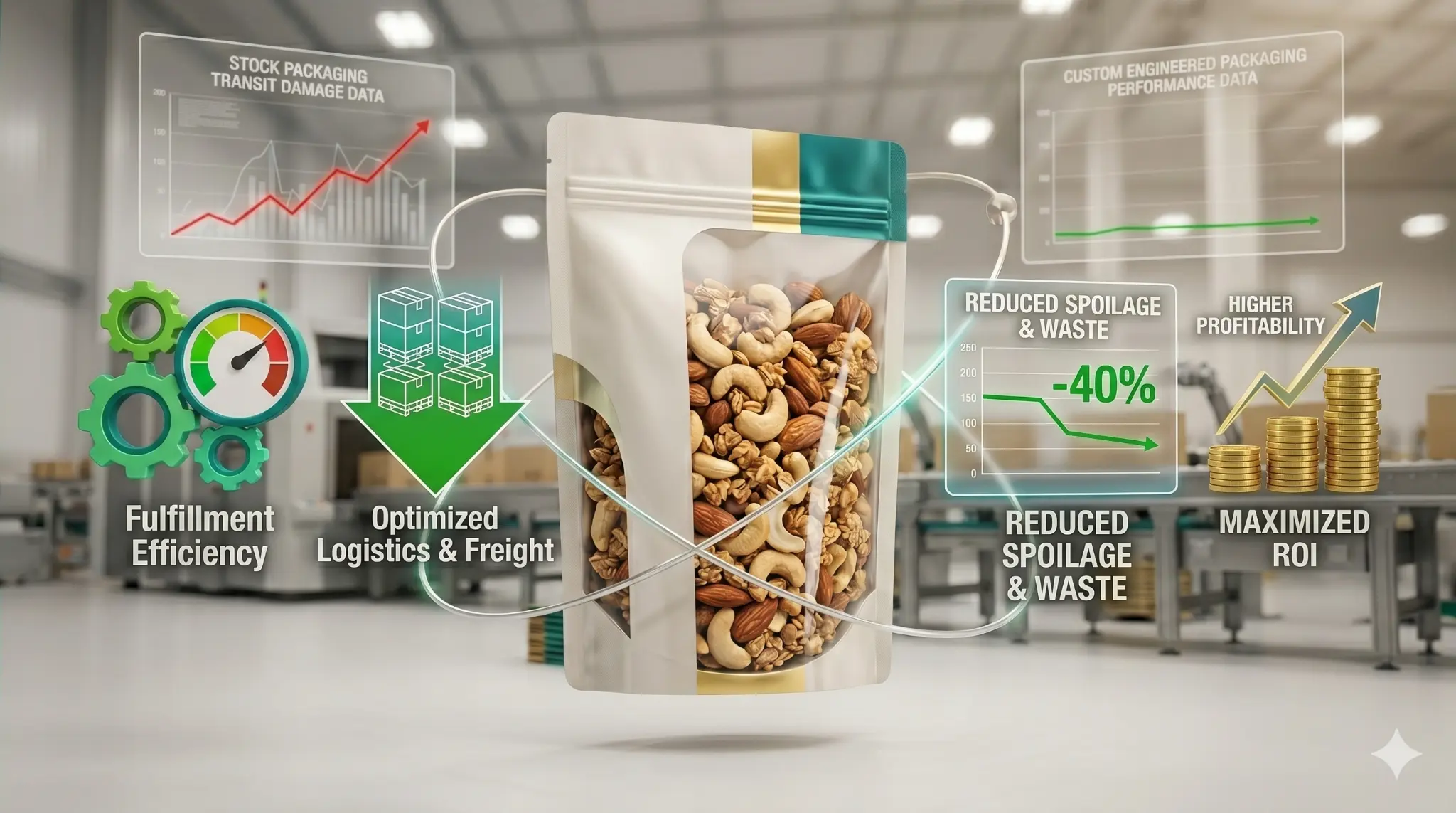
When evaluating custom packaging options, buyers often focus solely on the per-unit material cost. While this is an important metric, it only represents a fraction of the Total Cost of Ownership (TCO). A low-cost pouch that frequently tears on your filling line or fails to protect your product during transit will ultimately cost far more than a premium, engineered solution.
To build an accurate TCO model, food brands must account for the following variables:
- Material and Production Costs: The base price per unit, including film layers, closures (like zippers), and special features.
- Prepress and Tooling: One-time setup costs, such as printing plates for flexographic printing, or digital prepress fees.
- Freight and Logistics: The cost of shipping empty packaging to your facility, which is highly influenced by packaging format. Flexible packaging, such as flat pouches or rollstock, ships flat and occupies up to 90% less space than rigid containers, drastically reducing inbound freight costs.
- Storage and Warehousing: The physical footprint required to store your packaging inventory.
- Fulfillment and Labor: The speed and ease of the manual pack-out process, or how well the packaging runs on automated machinery like VFFS or HFFS systems.
- Product Waste and Damage: The financial impact of product spoilage, punctures, leaks, and customer returns due to packaging failures.

Where Can Food Brands Find the Best Packaging Performance and Cost Data?
To make informed purchasing decisions, custom packaging buyers should leverage data-driven tools and industry benchmarks. Rather than guessing material thicknesses or bag sizes, you can utilize our interactive packaging calculators to determine exact dimensions, estimate material usage, and calculate film thickness requirements.
Additionally, tracking key performance indicators (KPIs) such as your packaging-to-product weight ratio, damage-on-arrival rates, and line-speed efficiency will provide the empirical data needed to refine your packaging specifications over time. Learn more about printing options and how they impact your packaging performance metrics.

What Are the Core Pillars of Effective Custom Packaging for Food Products?
How Does Custom Packaging Design Elevate the Brand and Unboxing Experience?
The visual and tactile design of your food packaging is a powerful marketing tool. It establishes your brand's positioning, communicates key nutritional benefits, and guides the consumer's opening sequence.
When designing the unboxing experience, consider how the packaging feels in the customer's hands. A soft-touch matte finish suggests an organic, artisanal product, while a high-gloss finish conveys vibrant energy. Inside-print messaging, clear window panels that showcase the fresh food inside, and integrated QR codes that lead to recipes or sourcing stories are excellent ways to build post-purchase engagement. For more details on design options, explore our all custom pouches collection.
What Structural Design Elements Offer the Best Food Product Protection?
Structural engineering is the foundation of product protection. Food products vary widely in their physical characteristics and vulnerability to environmental degradation.
For example, sharp or heavy food items like beef jerky require highly puncture-resistant films, while delicate items like crackers require gas flushing (nitrogen purging) to prevent crushing and oxidation. The shape and base of the pouch also play a critical role; a plow bottom stand up pouch provides excellent stability for heavier products, whereas a stand-up pouch vs flat pouch vs quad seal comparison reveals that different shapes offer distinct advantages in shelf presence, volume capacity, and structural rigidity.
Which Packaging Materials and Print Methods Should Food Brands Choose?
Selecting the right materials and printing technology is a critical decision for custom packaging buyers. Flexible food packaging is typically constructed from multi-layer laminated films, where each layer serves a specific purpose (e.g., an outer print layer, a middle barrier layer, and an inner food-contact/sealant layer).
Understanding thickness measurements, such as gauge vs mil vs microns, is essential for specifying the correct film strength. When it comes to printing, brands must choose between digital, flexographic, and rotogravure methods:
- Digital Printing: Ideal for short runs, multiple SKUs, and rapid turnaround times. It requires zero plate costs and allows for high-definition graphics.
- Flexographic Printing: Best for medium-to-large production runs. It offers high line speeds and excellent color consistency using physical printing plates.
- Rotogravure/Lithographic Printing: Reserved for very large runs where the lowest per-unit cost and absolute premium image quality are required.
To achieve consistent branding across all products, work closely with a partner who understands prepress color management and offers a wide array of film and finishes, from metallic accents to tactile varnishes.

How Do Food Companies Navigate Sustainability and Regulatory Compliance?
Sustainability is no longer an optional marketing buzzword; it is a core consumer expectation and an active regulatory requirement. However, food brands face a unique challenge: they must adopt eco-friendly materials without compromising the high barrier properties required to keep food fresh and safe.
At Red Dot Packaging, we help brands transition to sustainable alternatives, such as compostable food packaging and compostable stand up pouches. These innovative materials break down naturally in industrial composting facilities while still providing the necessary barrier against oxygen and moisture.
Furthermore, when choosing materials, buyers must ensure compliance with FDA regulations for direct food contact, heavy metal limits, and environmental claims guidance to avoid greenwashing allegations.
How Do Packaging Choices Impact Logistics and Operational Efficiency?
Your packaging must be optimized for your entire supply chain, not just the retail shelf. This means designing for palletization and cube optimization—ensuring that your shipping cases fit perfectly on standard pallets to maximize truck space and reduce transport emissions.
It also means designing for pack-out efficiency. If your packers struggle to open, fill, and seal your pouches manually, your labor costs will skyrocket. If you are using automated packaging machinery, you must select the correct format—such as pre-made pouches for lower-speed lines or continuous rollstock film for high-speed automated systems. For more information on automation compatibility, check out our guide on VFFS vs HFFS custom packaging.
How Do You Design Branding and Customer Experiences That Drive Food Brand Loyalty?
Every design element of your custom food pouch should reinforce your brand's core message. If your product is positioned as an all-natural, premium organic snack, your packaging should reflect that through a clean, minimalist design, earthy color palettes, and a tactile matte finish.
Conversely, if you are selling a fun, energetic children's treat, vibrant high-gloss colors and unique die-cut shaped pouches will better capture consumer attention.
Inside-print messaging is another powerful tool. Printing a friendly "Thank you for choosing us!" or sharing your brand's origin story on the inside flap of a pouch creates a delightful, unexpected moment of connection when the customer opens the package.
What Features Make Food Packaging Accessible and Usable for Consumers?
A beautiful package that is difficult to open or cannot be reclosed will quickly frustrate consumers. True user-centric design focuses on accessibility and long-term usability.
Key features to incorporate include:
- Easy-Open Tear Notches: Precision-placed notches that allow consumers to open the pouch cleanly without needing scissors.
- Laser Scoring: A microscopic laser-cut line across the top of the pouch that ensures a perfectly straight, effortless tear every time.
- Resealable Closures: High-quality press-to-close zippers or hook-and-loop closures that keep food fresh after opening. For dry powders or granular foods, specialized "powder-proof" zippers are essential to prevent the track from clogging.
- Spouts and Fitments: For liquid or semi-liquid food products, incorporating functional fitment and spouted pouches ensures controlled pouring and mess-free dispensing.
Case Vignette: How a Custom Gummy Brand Solved Spoilage and Boosted Sales
Consider a rapidly growing organic confectionery brand that was experiencing high return rates due to their gummies sticking together and melting during summer transit. Their stock, single-layer plastic bags offered inadequate thermal and moisture protection.
By partnering with Red Dot Packaging, they transitioned to a custom, multi-layer laminated stand-up pouch. The new structure incorporated a metalized barrier layer to block out light and moisture, along with a premium matte finish and a clear, customized window shaped like a gummy bear.
The result? Product damage claims dropped by 94%, shelf life extended from 3 months to 12 months, and the eye-catching shelf presence led to a 35% increase in retail distribution within the first two quarters. This transformation demonstrates the power of custom gummy packaging solutions.
How Do You Engineer Food Packaging for Protection and Damage Prevention?
Before selecting a packaging structure, you must perform a thorough risk assessment of your food product. Different foods have distinct "enemies" that accelerate spoilage or physical degradation:
- High-Fat Foods (e.g., nuts, baked goods): Highly vulnerable to oxygen, which causes fats to go rancid. They require ultra-high barrier films to block oxygen transmission.
- Dehydrated Foods (e.g., powders, dried fruits): Extremely sensitive to moisture, which causes clumping and spoilage. They require excellent moisture barriers.
- Crisp/Fragile Foods (e.g., chips, crackers): Susceptible to physical crushing. They require robust structural designs and gas-flushing capabilities.
- UV-Sensitive Foods (e.g., coffee, transparent oils): Light exposure degrades flavor and color. They require opaque or metalized foil barriers.
By mapping your product's unique vulnerabilities, you can engineer a targeted barrier system using high-performance barrier bags that address these exact threats without paying for unnecessary material layers.
What Packaging Testing and Validation Protocols Ensure Transit Safety?
To ensure your custom packaging can survive the rigors of the modern supply chain—especially the multi-touch journey of e-commerce delivery—it must undergo rigorous testing. Relying on visual inspections is not enough; professional food packaging should be validated using standardized testing protocols:
- Drop Testing (ASTM D5276): Simulates a package falling from various heights and angles to ensure the seals do not burst and the film does not rupture.
- Compression Testing (ASTM D642): Measures the package's ability to withstand stacking forces in warehouses and transport trucks.
- Vibration Testing (ASTM D4728): Simulates the continuous movement and friction experienced during road or rail transport.
- Burst Testing (ASTM F1140): Evaluates the seal strength of the pouch by inflating it with air until it bursts, identifying weak points in the sealing process.
- Vacuum Leak Testing: Submerges the sealed pouch in water under a vacuum chamber to detect microscopic leaks or capillary paths in the seals.
How Should Food Brands Select the Right Inserts and Cushioning Materials?
For fragile food items or multi-pack gift boxes, the outer pouch or box is only the first line of defense. Selecting the right internal support is crucial.
While traditional foam inserts are highly protective, they are increasingly rejected by modern consumers due to environmental concerns. Food brands should prioritize sustainable, high-performance alternatives, such as custom-molded pulp trays, die-cut corrugated paperboard inserts, or paper-based void fills. These options provide excellent shock absorption, secure product placement, and are fully recyclable at the end of their life.
How Can Food Companies Implement Sustainable Packaging Materials in Practice?
When transitioning to sustainable packaging, food brands must avoid the "greenwashing trap" of choosing materials that sound eco-friendly but fail to protect the product. A compostable pouch that allows your food to spoil in two weeks actually has a larger environmental footprint than a traditional plastic pouch, due to the wasted energy and resources embedded in the spoiled food itself.
The most effective sustainable strategies focus on:
- Mono-Material Structures: Constructing the entire pouch from a single polymer family (such as 100% Polyethylene). Unlike traditional multi-material laminates, mono-material pouches can be easily recycled in standard PE recycling streams.
- Post-Consumer Recycled (PCR) Content: Incorporating food-grade recycled plastics into the non-contact outer layers of your packaging, reducing the demand for virgin petroleum-based resins.
- Compostable Laminated Films: Utilizing certified compostable materials (such as PLA or cellulose-based films) that break down in industrial composting systems, perfect for organic and natural food products.
- Right-Sizing: The simplest and most cost-effective sustainability step. By designing custom-fitted pouches rather than using oversized stock bags, you immediately reduce material waste, freight volume, and carbon emissions.

How Do You Measure Environmental Impact and Make Safe Sustainability Claims?
Making environmental claims on your packaging requires absolute precision and compliance with FTC Green Guides. Vague terms like "eco-friendly," "green," or "sustainable" should be avoided, as they are legally indefensible and can lead to costly consumer lawsuits.
Instead, make specific, third-party verified claims:
- "Made with 30% Post-Consumer Recycled (PCR) Content" (with chain-of-custody documentation).
- "100% Recyclable via Store Drop-Off" (utilizing How2Recycle-approved mono-material structures).
- "BPI Certified Industrial Compostable" (referencing specific composting standards like ASTM D6400).
What Are the Operational Realities and Lead Times for Sustainable Packaging?
Sustainable materials often behave differently on packaging lines than traditional plastics. For example, compostable films typically have a narrower "sealing window"—meaning the temperature, pressure, and dwell time of your sealing jaws must be calibrated precisely to avoid burning the film or creating weak seals.
Additionally, because the global supply chain for sustainable resins is still developing, lead times for custom compostable or PCR films can be 2 to 4 weeks longer than standard materials. Food brands must plan their inventory and production schedules accordingly to avoid stockouts.
How Do Different Food Categories Shape Custom Packaging Decisions?
E-commerce food distribution is brutal on packaging. Unlike retail distribution, where products are shipped on neatly stacked pallets, e-commerce parcels are sorted by automated machines, dropped onto conveyor belts, and jostled in delivery vans.
For e-commerce food brands, custom packaging must feature:
- Reinforced Seal Strength: To prevent bursting under the pressure of air-freight transport or rough handling.
- Leak-Proof Closures: Essential for liquid ingredients, sauces, or condiments to prevent ruining other items in a subscription box.
- Compact Footprints: Designing flat pouches or flexible mailers that fit within standard shipping boxes, avoiding expensive dimensional weight surcharges.
How Do You Ensure Safety and Shelf Life in Food and Beverage Packaging?
Food safety is non-negotiable. Custom packaging for perishable foods, fresh meats, or ready-to-eat meals must incorporate advanced barrier technologies:
- High-Barrier Sauce Packaging: Liquid sauces and condiments require specialized sauce packaging that can withstand hot-filling processes, resist acidic ingredients, and incorporate durable spouts for easy dispensing.
- Durable Frozen Food Packaging: Cold-chain logistics present unique challenges. Frozen food packaging and specialized frozen food bags must remain flexible and puncture-resistant at sub-zero temperatures, preventing freezer burn and seal cracking.
- Retort Packaging: For shelf-stable meals, packaging must be capable of surviving thermal sterilization (retort processing) inside a pressurized chamber, replacing heavy, energy-intensive metal cans.
How Do You Optimize Packaging for High-Growth Sectors Like Gummy and Candy Packaging?
The confectionery market is highly visual and fast-moving. To capture consumer attention, brands require specialized packaging solutions:
- Custom Gummy Packaging: Gummies are highly sensitive to moisture and temperature. High-performing gummy packaging must prevent the candies from sticking together, block UV light that degrades colors, and offer child-resistant closures if the products contain active ingredients or vitamins.
- Vivid Candy Packaging: Standout candy packaging relies on high-definition printing, metallic foils, and unique shapes to create immediate shelf appeal in crowded retail aisles.
What Packaging Features Are Essential for Pet Food and Treats?
The pet food industry has experienced massive premiumization, with pet parents demanding the same quality of packaging for their animals as they do for themselves.
Custom pet food packaging must feature:
- Odor Barriers: To prevent strong pet food odors from escaping the bag during storage.
- Grease Resistance: Essential for kibble and oily treats to prevent unsightly grease stains from seeping through the packaging.
- Heavy-Duty Construction: Larger bags of pet food require robust, puncture-resistant quad seal pouches or custom flat bottom pouches that can support weights up to 40 lbs without tearing.
- Resealability: To keep large quantities of food fresh over weeks of repeated use.
What Is the Step-by-Step Decision Framework for Custom Packaging Buyers?
To ensure a successful packaging rollout, custom packaging buyers should follow a structured, repeatable decision-making process. This prevents costly design errors, production delays, and compatibility issues on your filling lines.
- Discovery and Constraints Mapping
Begin by gathering all stakeholders—including brand managers, operations leads, and your packaging partner—to map out your constraints:- What is the target shelf life of the food product?
- What are the storage and shipping conditions (e.g., ambient, refrigerated, frozen)?
- How will the packaging be filled? (Manual pack-out vs. semi-automated vs. high-speed automated machinery like VFFS vs HFFS custom packaging equipment).
- What is the target unit budget and expected annual volume?
- Specifications and Prototypes
Once the constraints are clear, translate them into technical specifications. This includes selecting the exact film structure, thickness, and dimensions. Your packaging partner will generate a 2D dieline—the flat template of your package showing all cut, fold, and seal lines. Use this dieline to create unprinted physical prototypes. Filling these prototypes with your actual product is essential to verify volume capacity, product fit, and zipper placement before any printing plates are made. - Testing, Pilot, and Rollout
Before committing to a massive production run, execute a structured testing and rollout plan:- Lab Testing: Run drop, burst, and barrier tests on your prototypes.
- Machinery Trials: Run a small, unprinted roll of film or pre-made pouches through your filling equipment to ensure there are no tracking, feeding, or sealing issues.
- Pilot Run: Produce a small, printed pilot batch (often using digital printing) to test the market, validate shelf life in real-world conditions, and train your packaging operators.
- Full Rollout: Once the pilot is successful, transition to full-scale production (such as flexographic printing for maximum cost efficiency).
- TCO Modeling and KPI Tracking
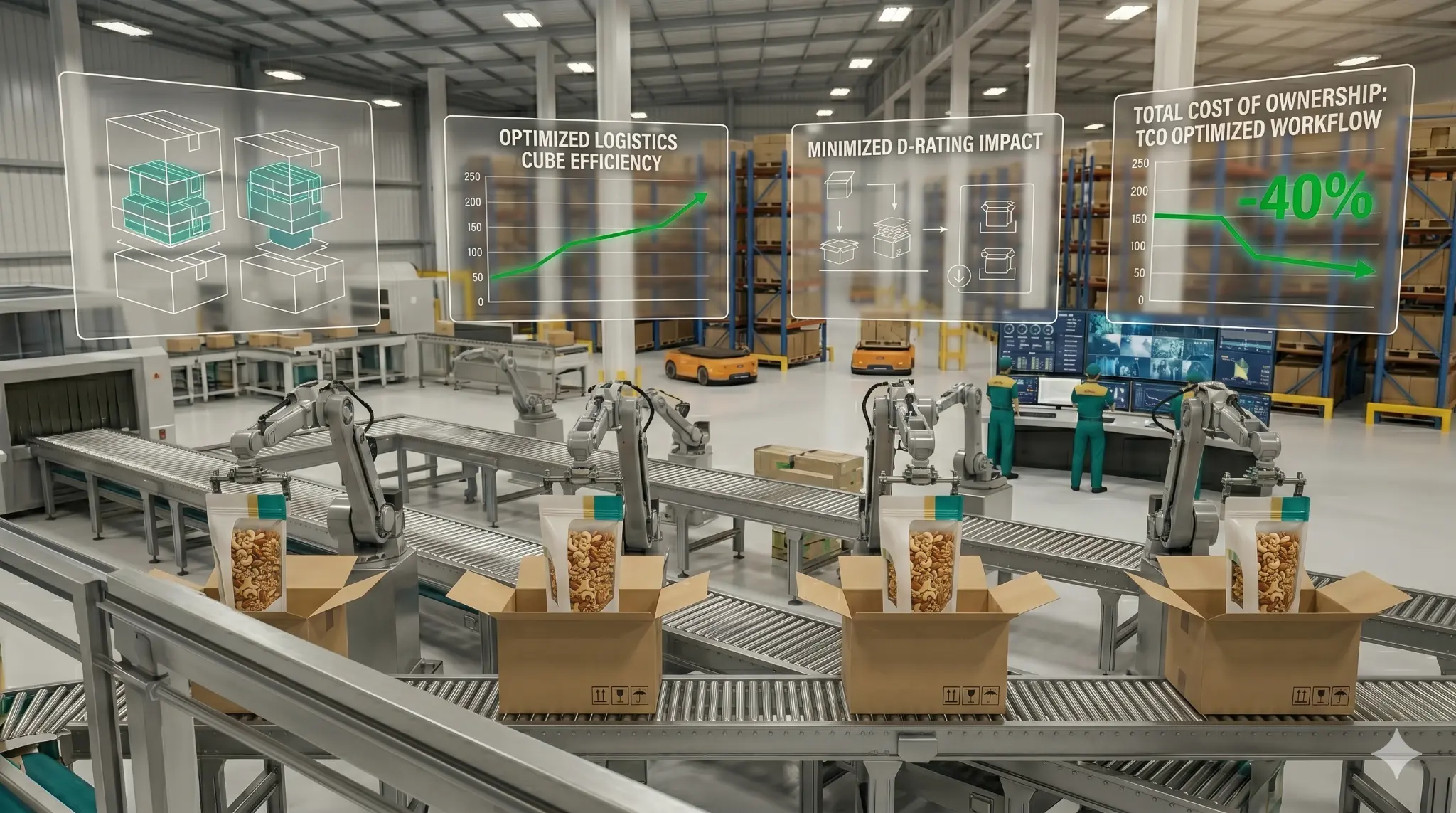
Establish a central dashboard to track the performance of your new packaging program. Monitor key metrics such as packaging material cost per unit, packing line speed (units per minute), packaging waste/scrap rate during production, transit damage rate, and customer satisfaction scores (NPS). Comparing these metrics against your baseline TCO will prove the financial return on your custom packaging investment.

How Do You Select and Evaluate the Right Custom Packaging Partner?
Selecting a custom packaging manufacturer is not just about finding the lowest bidder; it is about choosing a long-term collaborator who can support your brand's growth and technical needs. Use these five criteria to evaluate potential partners:
1. Design and Engineering Depth
Your partner should possess robust structural design and prepress engineering capabilities. They should not just take your artwork and print it; they should actively review your files for prepress errors, suggest material optimizations, provide rapid prototyping support, and offer guidance on color management to ensure your brand colors print perfectly across different materials.
2. Production and Quality Systems
Inquire about the manufacturer's physical infrastructure and quality control protocols. Do they offer the specific print methods (digital, flexo, rotogravure) and finishing options (matte, gloss, spot UV) that your brand requires? Do they have documented Standard Operating Procedures (SOPs), batch traceability, and rigorous quality controls to ensure consistent seal strength and barrier performance? Explore our custom stand-up pouches to see examples of our quality standards.
3. Sustainability and Compliance Literacy
A reliable packaging partner must be highly knowledgeable about food safety regulations and sustainable materials. They should be able to provide FDA food-contact compliance certificates, document the sourcing of their raw materials (such as FSC-certified papers), and guide you on making accurate, legally compliant environmental claims on your packaging.
4. Supply Chain Fit and Communication
Evaluate the partner's operational reliability. What are their standard lead times, and do they have a proven track record of on-time delivery? Do they have a clear risk-mitigation plan (such as redundant manufacturing facilities) to protect your business from supply chain disruptions? Most importantly, do they assign a dedicated project manager to ensure clear, transparent communication throughout the production process?
5. Data and Continuous Improvement
The best packaging partners do not stop after the first delivery. They should actively collaborate with you on continuous improvement. This includes holding quarterly business reviews, analyzing your packaging KPI data, tracking defects, and co-developing future packaging innovations—such as transitioning to next-generation compostable materials as they become commercially viable.
Conclusion
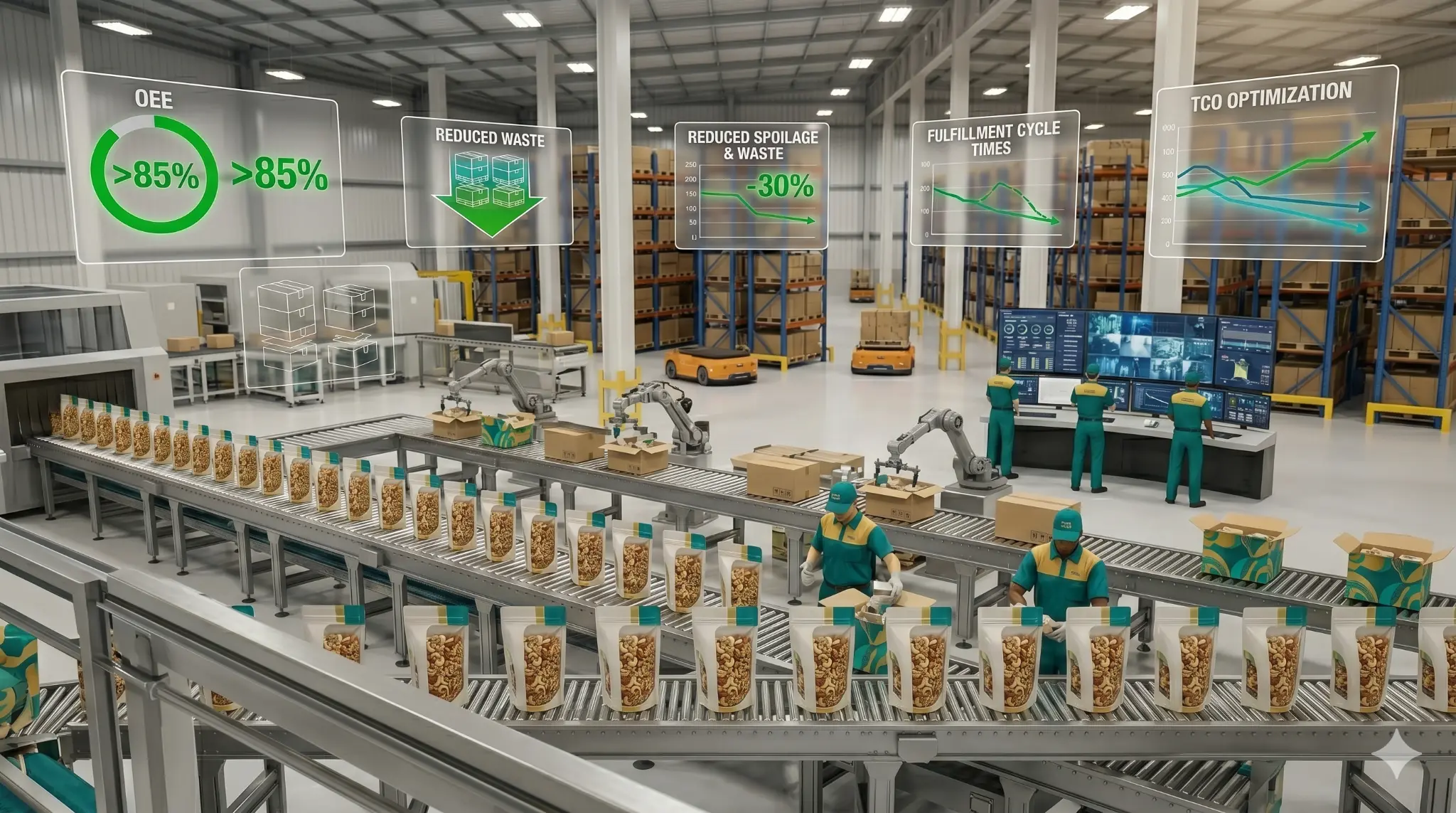
Transitioning to custom packaging is one of the most impactful strategic decisions a food brand can make. By moving away from generic stock bags and embracing an engineered, systems-based approach, you can dramatically elevate your brand's shelf presence, guarantee product freshness, eliminate transit damage, and optimize your total cost of ownership.
Remember, packaging is not a static purchase; it is a living program. As your product line expands, your fulfillment methods automate, and environmental regulations evolve, your packaging specifications must adapt.
We encourage you to take the first step this quarter: conduct a thorough audit of your highest-volume SKU's packaging. Map its operational constraints, evaluate its current damage rates, explore right-sizing opportunities, and measure the true impact on your bottom line.
At Red Dot Packaging, we are committed to helping food brands navigate this complex journey. Whether you are looking to design high-barrier custom stand up pouches, explore eco-friendly compostable food packaging, or optimize your automated filling lines with high-speed rollstock packaging, our team of technical experts is here to engineer the perfect solution for your brand.
Ready to design custom packaging that performs, protects, and drives growth? Contact the experts at Red Dot Packaging today.
FAQs: Custom Packaging
What Does Custom Packaging Include Beyond the Outer Box?
Custom packaging is a comprehensive system. For food brands, it includes the structural design of the pouch, specialized multi-layer barrier films, custom shapes and dimensions, integrated closures (like resealable zippers or spouts), custom-engineered internal inserts or cushioning, high-definition graphic printing, and the optimization of the film for high-speed automated filling machinery.
How Do I Calculate the True Cost of Packaging?
To find your Total Cost of Ownership (TCO), you must look beyond the per-unit material cost. Calculate the sum of your base material and print costs, one-time prepress/tooling fees, inbound freight, warehouse storage space, packaging line labor or automation setup, product waste during filling, transit damage losses, and customer return processing. Often, a slightly higher-quality pouch drastically reduces labor and damage costs, yielding a much lower TCO.
Which Printing Method Should I Consider for Short Runs vs. Large Runs?
For short production runs (typically under 5,000 to 10,000 units) or brands with many SKUs, digital printing is highly recommended because it requires zero plate setup costs and offers rapid turnaround times. For medium-to-large runs (above 10,000 units), flexographic printing becomes much more cost-effective, offering lower per-unit costs and high production speeds. For extremely large, continuous runs, rotogravure printing provides the lowest unit cost and absolute premium image quality.
How Can Packaging Reduce Shipping Costs?
Packaging reduces shipping costs primarily through right-sizing and weight reduction. By designing custom pouches that fit your product perfectly, you eliminate empty space, which reduces your shipping box size and lowers dimensional weight (DIM weight) carrier charges. Additionally, flexible packaging like pouches and rollstock is incredibly lightweight compared to rigid glass or metal containers, drastically reducing total shipment weight and fuel costs.
What Sustainability Claims Are Safe to Make on Packaging?
To comply with FTC guidelines, all sustainability claims must be specific, clear, and backed by third-party documentation. Avoid vague claims like "green" or "eco-friendly." Instead, use precise language such as "Made with 50% Post-Consumer Recycled (PCR) plastic," "100% Recyclable via Store Drop-Off" (with How2Recycle approval), or "BPI Certified Industrial Compostable" (complying with ASTM D6400 standards).
How Much Testing Is Enough Before a Rollout?
Before a full-scale commercial rollout, your packaging should undergo standardized laboratory testing (including drop, vibration, and compression tests) to establish a baseline of physical durability. This should be followed by a machinery trial on your actual filling lines to verify sealing compatibility, and finally, a small-batch pilot rollout to monitor real-world shelf life, shipping performance, and customer feedback.
What Is a Dieline and Why Does It Matter?
A dieline is a flat, 2D technical template generated by a packaging designer that outlines the exact layout of your package. It includes precise markings for cut lines, fold lines, seal areas, zipper placements, and bleed zones. Dielines are critical because they serve as the blueprint for both structural manufacturing and graphic design, ensuring that your artwork aligns perfectly and fits the package without distortion once folded and sealed.