

Stand up pouch with spout: When to use, how to choose, and best applications

The packaging industry is undergoing a structural shift. For decades, rigid bottles, heavy glass jars, and bulky cartons dominated retail shelves and supply chains. Today, those traditional formats are increasingly being replaced by flexible alternatives. At the forefront of this transition is the stand up pouch with spout. This format combines the lightweight efficiency of flexible film with the controlled dispensing of a rigid container, creating a solution that appeals to cost-conscious brands and convenience-seeking consumers alike.
However, transitioning to flexible packaging is not as simple as swapping a bottle for a bag. While a pouch saves space, reduces freight emissions, and lowers material costs, choosing the wrong specifications can lead to catastrophic leaks, compromised shelf life, or a frustrating user experience. The stand up pouch with spout offers a superior alternative to rigid packaging by optimizing logistics, reducing material waste, and improving user experience, provided that brands carefully match fitment sizes, barrier materials, and filling methods to their specific product requirements.
This guide explores when to use these innovative packages, how to select the right components, and where they excel in modern retail and e-commerce environments.
Why the Spout Pouch is Replacing Rigid Packaging Across Industries

A spout pouch is a flexible, reclosable pack featuring an integrated fitment for controlled dispensing. This design makes a spout pouch ideal for liquids, gels, and pourable powders that benefit from easy pouring, portion control, and reduced package weight. The shift toward this format is driven by clear operational and commercial advantages.
When comparing a spout pouch to a traditional rigid bottle, the differences in efficiency become immediately apparent. Rigid containers ship empty, taking up massive amounts of trailer space. In contrast, flexible pouches ship flat. A single truckload of empty pouches can often replace up to 25 truckloads of empty rigid bottles, drastically reducing inbound freight costs and carbon emissions.
Furthermore, the product-to-package ratio of a pouch is exceptionally high. A typical spouted pouch is composed of 95% product and only 5% packaging by weight, whereas rigid containers often feature a much heavier packaging footprint. This lightweight nature makes them particularly resilient for e-commerce and direct-to-consumer shipments, where durable, puncture-resistant packs are required to survive the rigors of parcel delivery without shattering or cracking.

Despite these advantages, brands must navigate certain trade-offs. The sourcing of caps and fitments requires precise alignment with the pouch manufacturer. Additionally, ensuring compatibility with aggressive thermal processes, such as hot fill or retort, demands specialized laminate structures that are more complex than standard blow-molded plastics.
Sizing and Formats: Designing Spout Pouches for Your Audience
Spout pouches come in multiple sizes and configurations, and spout pouches can be tailored for single-serve shots, family-size stand-up formats, and industrial refill packs with handles and large-diameter fitments. The versatility of the format allows it to serve vastly different consumer needs across multiple categories.
For the food and beverage sector, single-serve pouches ranging from 50 to 200 milliliters have revolutionized on-the-go consumption. These travel and sampler sizes are standard for fruit purees, energy gels, and ready-to-drink concentrates. Moving up in scale, standard retail sizes between 250 milliliters and 1 liter dominate the grocery aisles, frequently housing sauces, condiments, and cooking oils.
In the personal care and cosmetics space, medium-sized pouches are increasingly used for shampoos, lotions, and conditioners. However, the most significant growth is occurring in the large-format refill category. Pouches holding 1 to 5 liters are becoming the standard for household detergents, institutional foodservice supplies, and even industrial liquids like coolant additives. These large formats often incorporate reinforced gussets and ergonomic handles, allowing consumers to easily refill durable, reusable dispensers at home, thereby cutting down on single-use rigid plastics over repeated cycles.
The Anatomy of a Stand Up Pouch Spout: Matching Fitments to Viscosity
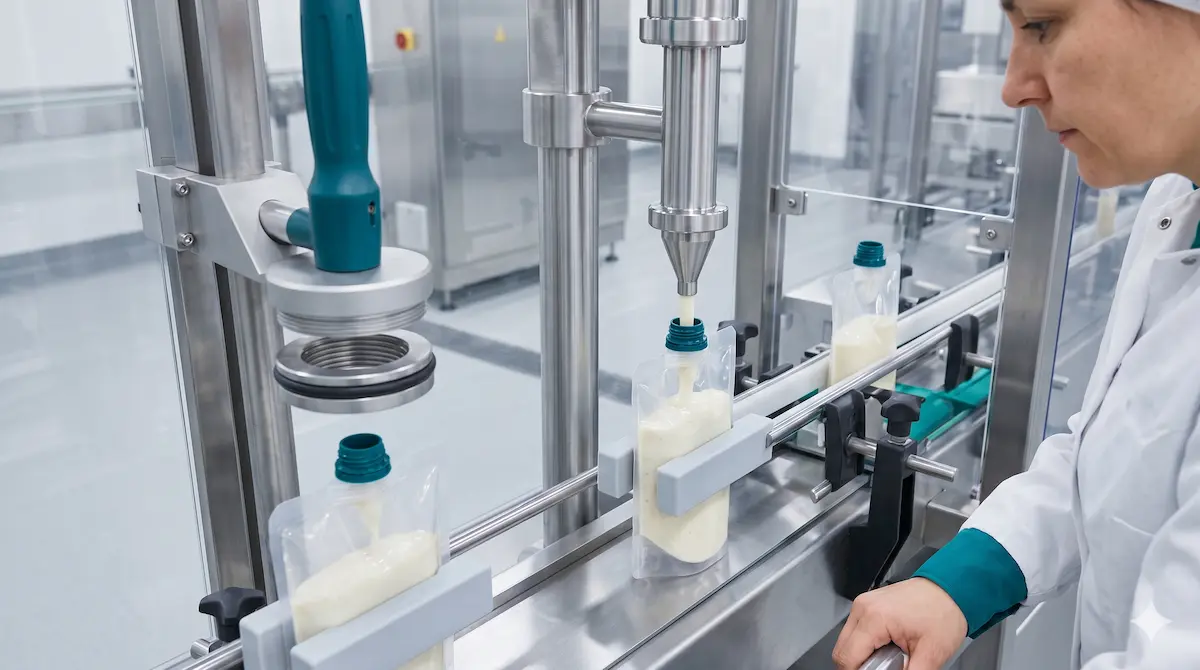
The stand up pouch spout determines flow, reseal performance, and user experience; match spout diameter and cap design to product viscosity, dispensing needs, and safety requirements. A mismatched spout can ruin an otherwise perfect product. If a spout is too small for a chunky sauce, it will clog; if it is too large for a thin liquid, it will spill.
To ensure proper dispensing, packaging engineers must map the spout diameter directly to the product's viscosity and particulate size.
- Small Diameters (8–10 mm): These are engineered for water-like liquids, thin sauces, and essential oils. They provide precise pouring and excellent portion control.
- Medium Diameters (12–14 mm): This versatile size is the industry standard for thicker sauces, syrups, gels, and most personal care products. It balances flow rate with control.
- Large Diameters (16–21 mm and above): Designed for chunky sauces, heavy slurries, and pourable powders. These large fitments allow for fast dispensing and prevent blockages from particulates.
Beyond the diameter, the cap and fitment style play a critical role in functionality and safety. Standard options include twist caps, flip-tops, and hinged closures. For retail environments, tamper-evident bands are essential to guarantee product integrity. Furthermore, highly regulated categories, such as household chemicals, automotive fluids, or certain pharmaceuticals, require child-resistant designs that comply with strict safety standards, such as 16 CFR 1700 in the United States.
Placement of the fitment also impacts usability. While top-center placement is standard for most applications, corner placement is often preferred for large-format pouches, as it provides a more ergonomic pouring angle and facilitates complete evacuation of the product.
Engineering Stand Up Pouch With Spout Packaging for Durability

Stand up pouch with spout packaging relies on laminated films that balance strength, barrier, and print quality, along with fitments that seal securely to the laminate and withstand filling and shipping conditions. The structural integrity of the pouch depends entirely on the sophisticated engineering of these multi-layer films.
The base materials must be carefully selected based on the product's sensitivity and the brand's aesthetic goals. Clear PET (Polyethylene Terephthalate) laminated with PE (Polyethylene) and EVOH (Ethylene Vinyl Alcohol) is frequently used for oxygen-sensitive foods where brand owners want the product to be visible to the consumer. For products requiring maximum protection against oxygen and moisture, metallized PET or pure aluminum foil laminates are the gold standard. Recently, Kraft paper laminations with inner barrier layers have gained popularity for brands seeking a natural, artisanal look without sacrificing shelf life.
Thermal processing requirements dictate the thermal tolerance of these laminates. Products that require hot filling, typically between 85 and 95 degrees Celsius, must utilize films and caps specifically rated for high temperatures to prevent delamination or warping. More extreme sterilization methods, such as retort processing (which reaches up to 121 degrees Celsius), require highly specialized retortable laminates and robust fitments that can withstand intense heat and pressure without failing.
Printing and branding on these flexible substrates offer immense creative freedom. Digital printing is ideal for short runs, seasonal promotions, and fast iteration, allowing brands to test markets without committing to massive inventories. For large-scale production, rotogravure or flexographic printing delivers premium finishes, vibrant colors, and precise registration. When designing artwork, it is crucial to leave adequate clearance around the spout seal area, include readable fill lines for the consumer, and incorporate visual cues for ergonomic gripping.
How Spouted Stand-Up Barrier Pouches Protect Product Integrity
Spouted stand-up barrier pouches use multilayer structures to manage oxygen transmission rate (OTR) and water vapor transmission rate (WVTR), protecting flavor, aroma, and stability during shelf life. Without these specialized barrier layers, oxygen would degrade the product, and moisture would either escape or enter, leading to spoilage.
The barrier performance is quantified by OTR and WVTR metrics. For high-sensitivity products, such as specialized nutritional gels or highly reactive chemicals, foil structures offer near-zero OTR and very low WVTR. For products that require a strong oxygen barrier but are less sensitive to moisture, or where a clear window is desired, EVOH structures provide excellent protection.
Packaging engineers typically target specific metrics based on the product's vulnerability. A standard target for oxygen-sensitive items is an OTR below 1 cc/m²/day, while WVTR is generally kept below 0.1 to 1 g/m²/day. Matching the barrier to the product's specific sensitivities, such as fats that can go rancid, vitamins that degrade, or flavor volatiles that escape, is critical. Brands must validate these material choices through rigorous real-time or accelerated shelf-life testing before full-scale commercialization.
Filling Strategies and Logistics for Pouches With Spouts
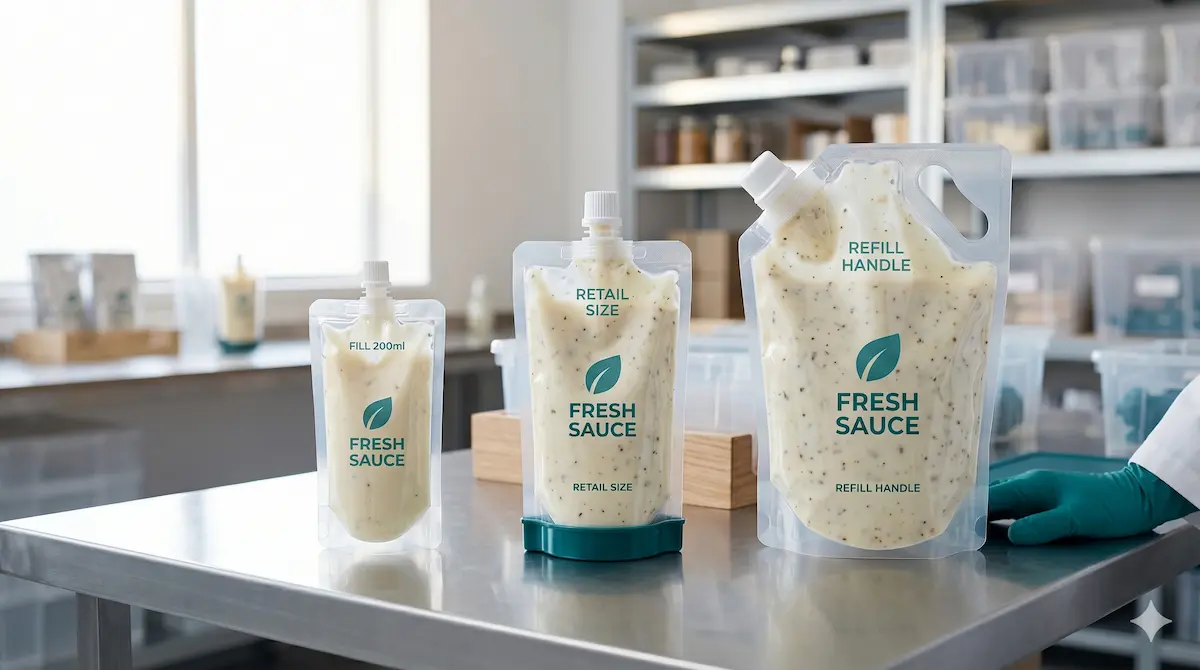
Pouches with spouts shine for refill formats and on-the-go packs, reducing plastic usage compared with rigid bottles and improving cube efficiency in storage and transit. However, integrating them into a production facility requires strategic decisions regarding filling equipment and supply chain logistics.
There are two primary methods for filling a spouted pouch. The first is filling through the spout. In this scenario, the pouch is supplied fully sealed with the fitment pre-applied, but without the cap. The filling machine injects the product directly through the spout opening, and the cap is immediately applied and torqued. This method is excellent for quick changeovers and smaller production runs.
The second method is filling through a top opening. The pouch is supplied with the spout and cap already sealed into place, but the top edge of the pouch is left open. The product is filled through this wide opening, and the top is then heat-sealed. This approach generally allows for much higher line speeds on automated form-fill-seal equipment and is preferred for highly viscous products or large volumes. Regardless of the method, operations teams must account for hot fill tolerances, manage headspace and degassing, and ensure tamper-evident seals are properly activated.
From a logistics standpoint, the lower mass and improved cube utilization of pouches drastically reduce freight emissions and warehouse space requirements. As sustainability mandates increase, brands are also exploring mono-material PE or PP (Polypropylene) options that improve the recyclability potential of the pouch, though regional recycling infrastructure must be verified. The most impactful sustainability strategy is often pairing large-format refill pouches with durable dispensers, cutting plastic use significantly over repeated consumption cycles.
Buyer Checklist and Decision Guide
Transitioning to flexible packaging requires a systematic approach. Procurement managers and packaging engineers can use this checklist to accelerate purchasing decisions and ensure all technical requirements are met.
- Define Product Characteristics: Document the product's viscosity, acidity, and particulate size. Map these traits to the appropriate spout diameter and cap style.
- Set Shelf-Life Targets: Determine the required OTR and WVTR based on product sensitivity. Select a barrier structure (foil, EVOH, clear PET) and confirm compatibility with thermal processing methods (hot fill, retort).
- Confirm Filling Operations: Decide between through-spout or top-opening filling based on existing equipment, required line speeds, and changeover flexibility.
- Determine Formats and Features: Choose the pack size and select necessary functional features, such as carrying handles, tear notches, or hang holes for retail display.
- Validate Safety and Compliance: Ensure all materials meet food-contact compliance (e.g., FDA 21 CFR) and specify child-resistant closures if mandated by the product category.
- Finalize Artwork and Printing: Select between digital or rotogravure printing. Verify that artwork files account for seal clearances and spout placement.
- Plan Sustainability Messaging: Choose recyclable mono-materials if applicable, and align end-of-life messaging with regional recycling capabilities.
- Execute Testing Protocols: Run comprehensive transit testing (drop, vibration, seal integrity) and pilot the packaging with small batches before full commercial rollout.
Conclusion
The transition from rigid bottles to flexible formats is not merely a cost-saving measure; it is a strategic upgrade to supply chain efficiency, sustainability, and consumer convenience. The stand up pouch with spout delivers on all these fronts, offering unparalleled space savings and a superior product-to-package ratio.
However, success depends on precision. Brands must move beyond basic aesthetics and engineer their packaging from the inside out, matching spout diameters to viscosity, selecting barrier films that guarantee shelf life, and aligning pouch formats with filling line capabilities. By treating the spouted pouch as a highly engineered system rather than a simple bag, companies can reduce their environmental footprint, lower freight costs, and deliver a seamless, reliable experience to the end user.
If you are evaluating a transition to flexible packaging, the next step is empirical testing. Request material samples, run viscosity trials with various spout diameters, and consult with packaging engineers to build a structure that precisely fits your product's operational and commercial demands.
FAQs: Stand up pouch with spout
What products are best suited to a stand up pouch with spout? Spouted pouches are ideal for liquids, gels, purees, and pourable powders. Common applications include baby food, sauces, energy gels, liquid detergents, lotions, and large-format refill packs for household cleaners.
How do I choose the right spout size for my product? Spout size is determined by product viscosity. Thin liquids like water or essential oils require small spouts (8–10 mm), while thicker gels and syrups need medium spouts (12–14 mm). Chunky sauces or powders require large fitments (16–21+ mm) to prevent clogging.
Can these pouches handle hot fill or retort processing? Yes, but they require specialized materials. Hot fill applications (85–95°C) need heat-resistant laminates and caps. Retort processing (up to 121°C) demands highly engineered retortable films and robust fitments that will not delaminate under intense heat and pressure.
What materials provide the best oxygen and moisture barrier? For the highest level of protection (near-zero transmission rates), aluminum foil or metallized PET laminates are best. If the product needs to be visible, clear PET laminated with EVOH provides an excellent oxygen barrier, though it offers slightly less moisture protection than foil.
Are pouches with spouts recyclable? Traditional multi-layer pouches (mixing PET, aluminum, and PE) are generally not recyclable in standard curbside bins. However, newer mono-material pouches made entirely of PE or PP are designed for recycling, though acceptance depends on local infrastructure and store drop-off programs.
How are spout pouches filled and sealed? They are filled in two primary ways: either through the spout (where the cap is applied immediately after filling) or through an open top (where the product is filled and the top edge is heat-sealed). Top-filling is generally faster for high-volume automated lines.
What cap options are available, including child-resistant? Standard options include twist caps, flip-tops, and hinged closures. Tamper-evident bands are standard for retail safety. For regulated products like household chemicals or pharmaceuticals, certified child-resistant (CR) caps that require specific push-and-turn motions are available.
How do spout pouches compare to bottles on cost and shipping? Spout pouches are significantly more cost-effective to ship and store. Because they ship flat when empty, a single truckload of pouches can replace up to 25 truckloads of empty rigid bottles, drastically reducing freight costs, warehouse space, and carbon emissions.