

Spout Pouch Packaging: What Is a Spout Pouch and How It Works
This page explains what spout pouches are, how they work, and where they outperform rigid bottles in modern packaging systems. It covers structure, materials, fitments, filling methods, testing, and operational considerations.
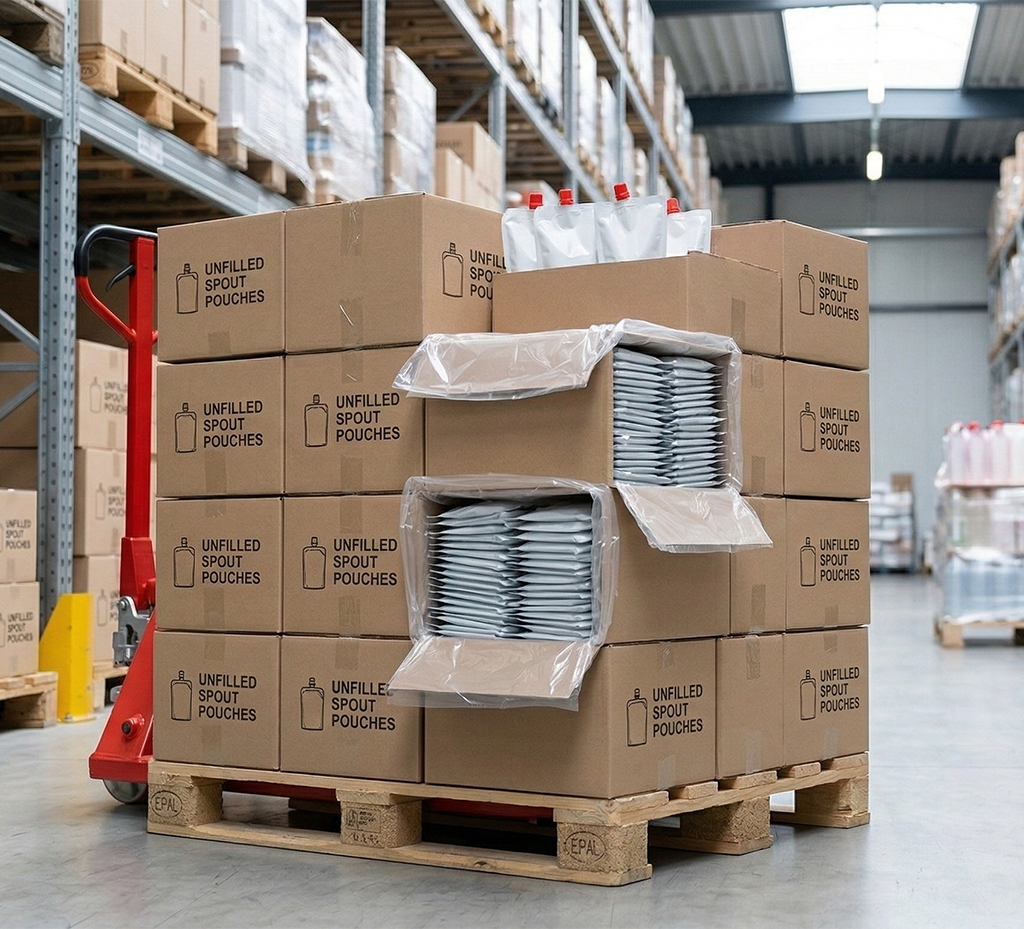
Freight doesn’t care about your label design, it charges by ounces and cubic inches. Rigid bottles add both, plus breakage risk and messy pours that frustrate customers. That’s why more brands in food, personal care, home care, and pet are shifting to spouted pouches: they ship flat, stand tall on shelf, and dispense cleanly.
If you’re deciding between bottles and flexible packaging and asking what is a spout pouch, you need a precise, engineering‑level answer, not a trend piece. Packaging buyers, product owners, and line operators want to know how it dispenses, what barriers it can deliver, which caps fit, and whether it will run on existing equipment.
This guide explains how spouted pouches work, the parts that matter, material and barrier choices, and where they outperform rigid formats, plus practical notes on filling, testing, and costs, so you can spec with confidence.

Rigid vs. Flexible: Why Spouted Pouches Win on Shelf and in Transit
Across food, personal care, home care, and pet products, brands are shifting from bottles and jars to flexible spouted pouches because they optimize the full packaging system, not just unit cost. Flexible packaging has grown rapidly due to source reduction (less material for the same function), lighter shipping weight, and improved transportation efficiency. Pouches ship flat before filling, reducing inbound freight and warehouse space, while improved cube utilization and reduced breakage lower distribution costs and returns. On the filling line, properly matched spout diameters and cap designs improve flow control and reduce leaks or rework, making the format operationally efficient as well as consumer-friendly.
Consumer convenience and sustainability are accelerating the move. Spouted pouches support:
- One-handed dispensing and portion control
- Strong reclosure and leak resistance for on-the-go use
- High product evacuation, reducing waste
- Child-resistant and tamper-evident options for regulated categories
- Lower packaging mass per unit, helping meet sustainability goals
While rigid packaging still makes sense for high-heat processing or heavy stacking environments, spouted pouches increasingly outperform bottles where weight, freight efficiency, barrier performance, and user experience matter most.
Spout Pouch Anatomy Explained: Parts, Placement, and Performance
A spout pouch is a stand-up flexible package designed to store and dispense liquids, semi-liquids, and certain dry products with controlled flow and secure reclosure. At its core, it combines a laminated film body, a welded spout (fitment), and a cap, each engineered to influence fill efficiency, shelf stability, leak resistance, and user experience. When properly specified, these components work together to prevent line stoppages, leakage, and transit failures while delivering strong barrier protection and repeat usability.
Key structural elements include:
- Laminated film body: Multi-layer construction for seal strength, puncture resistance, and oxygen/moisture barrier.
- Bottom gusset style (Doyen, K-seal, flat/plow bottom): Determines stand-up stability and stress distribution during drops.
- Spout placement (corner or top-center): Affects pouring ergonomics, product evacuation, and filling method.
- Spout diameter: Sized to match viscosity, from small openings for gels to wide fitments for sauces or refills.
- Cap options: Screw, flip-top, tamper-evident, or child-resistant depending on compliance needs.
- Seal strength and headspace design: Proper seal width, dwell time, and 3–8% headspace ensure durability through hot fill, torque, and distribution stress.
Thoughtful engineering of these elements ensures the pouch performs reliably on the line, on the shelf, and in the consumer’s hand.
How to Choose Formats and Finishes for Spouted Pouches
Selecting a spouted pouch format is about balancing shelf impact, operational efficiency, and product protection, not just aesthetics. A standard stand-up pouch with a bottom gusset offers strong stability and billboard space, while shaped die-cuts create standout silhouettes but may add tooling cost and packing complexity. Flat formats ship efficiently for refills and e-commerce but sacrifice shelf presence. The right structure depends on channel strategy, whether you’re optimizing for in-store visibility, DTC shipping efficiency, or high-volume automation.
Finish and transparency choices further influence performance and perception. Gloss delivers vibrant color but can show glare and fingerprints; matte improves readability but may require added scuff resistance; soft-touch adds premium feel with trade-offs in abrasion and slip. Clear windows build product trust but may reduce light and oxygen protection unless paired with high-barrier coatings, while fully opaque metallized or foil laminates maximize barrier for sensitive formulas. Smart brands treat these decisions as functional, aligning surface, structure, and print method with product sensitivity, distribution demands, and long-term SKU strategy.
Top Spout Pouch Mistakes Packaging Teams Make (and How to Fix Them)
Transitioning from rigid bottles to spouted pouches can surface avoidable issues during trials and early production. Common missteps include selecting spout sizes based on appearance rather than flow performance, overlooking thermal process requirements, or assuming “mono-material” automatically means recyclable in every market. These oversights can lead to messy dispensing, seal failures, delamination, leakage in transit, or compliance risks, all preventable with upfront testing and clear specifications.
The most frequent pitfalls, and how to solve them, include:
- Mismatched spout diameter: Size the inner diameter to viscosity and dose target (e.g., 8–10 mm for gels, 12–16 mm for smoothies, 20–30 mm for particulates); run timed dispense tests and confirm torque specs.
- Unverified recyclability claims: Validate acceptance in your target markets and monitor EVOH/tie-layer thresholds; align fitments and labeling with the intended stream.
- Ignoring heat exposure: Specify cold fill, hot-fill, pasteurization, or retort conditions early; select compatible films, adhesives, and PP spouts and confirm with burst/drop testing.
- Skipping transit testing: Run ISTA parcel simulations and protect fitments with wider seals, corner radii, or cap guards where needed.
- Printing into seal zones: Maintain clear margins around seals and spout weld areas to protect seal integrity.
- Treating all spout pouches as interchangeable: Define OTR/MVTR and light targets by product category first, then select the appropriate film stack and closure system.
Dialing in these details early prevents leaks, reprints, and product waste, while accelerating the move from pilot to dependable, high-speed production.
Myth vs. Reality: Are Spout Pouches Only About Sustainability?
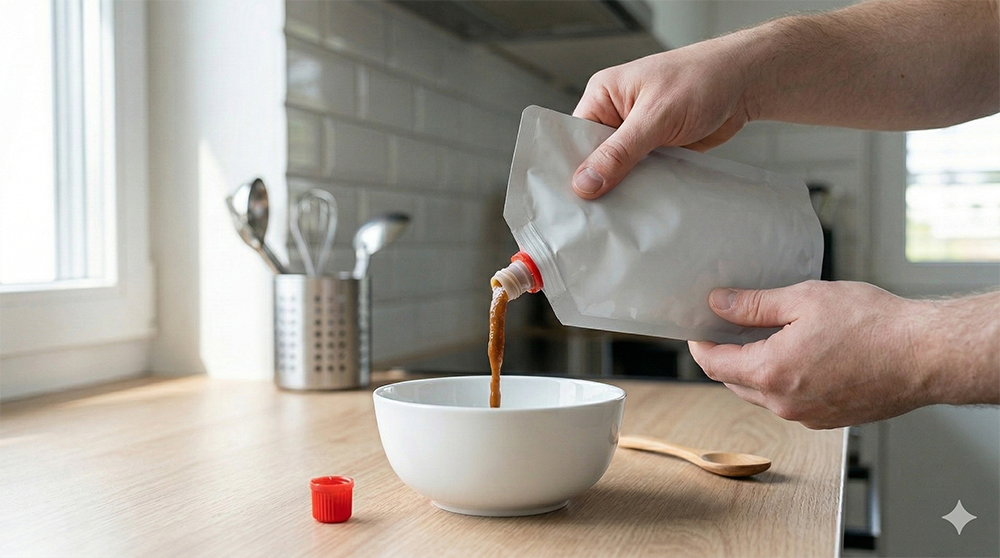
It’s common to assume spout pouches are primarily about reducing plastic while sacrificing protection, premium feel, or reliability. But properly engineered spouted pouches often outperform rigid bottles when evaluated as a full system. With the right film structure, seal design, and fitment, they can meet e-commerce drop standards, maintain strong barrier protection, and improve product evacuation, while dramatically reducing package weight and inbound shipping volume.
When specified correctly, spout pouches deliver measurable advantages:
- Significant source reduction: Often 60–80% less packaging mass compared to rigid bottles
- Lower freight cube: Flat shipment of empties reduces warehouse space and transport impact
- Strong seal and drop performance: Meets common parcel testing protocols when engineered properly
- Improved product evacuation: Flexible walls reduce residual waste compared to rigid containers
- Operational efficiency: Through-spout filling and child-resistant options maintain line speed and compliance
The smarter question isn’t whether a pouch is “greener”, it’s where a spouted format better aligns with your product formula, distribution channel, and user experience. When barrier, spout geometry, and seal strength are matched to real-world demands, a spout pouch becomes a performance upgrade, not a compromise.
Designing Spout Pouches That Deliver on Every Front
A spout pouch unites structure, materials, and closures to deliver convenience, protection, and brand impact with lower total cost and footprint than many rigid options. The real advantage comes from fit: align film barriers, spout and cap style, and filling method with your product’s viscosity, shelf life, and channels.
Red Dot Packaging can help scope requirements, select materials (including recyclable paths), and prototype quickly, so you move from concept to shelf with confidence; start a conversation with our specialists to explore fitments, formats, and print options for your next run.
If you came here asking “what is a spout pouch,” you’re likely weighing cap styles, barrier needs, and how a spouted format will run on your current lines. The best time to lock those choices is before artwork and trials, so you can validate pour performance, leak protection, and shelf impact with the right film and fitment.
Red Dot Packaging manufactures custom spouted pouches and rollstock in the U.S., pairing the right films and fitments with your product and equipment. Our packaging specialists will review your specs, recommend structures that meet regulatory and barrier targets, and size a print-ready pilot that can scale to full production. To scope pricing, timeline, and a test run with our team, please reach out and request a sample.
Spouted Pouches FAQs
What is a spout pouch?
- A spout pouch is a stand-up flexible package with a laminated film body, a welded spout, and a reclosable cap.
- It stores and dispenses liquids, semi-liquids, and some dry products with controlled flow.
- Brands use spout pouches for food, personal care, home care, and pet products where clean dispensing, portability, and freight efficiency are important.
How does a spouted pouch compare to bottles for shipping and cost?
- Spouted pouches ship flat before filling, which reduces inbound freight costs and warehouse space requirements.
- They weigh less and use space more efficiently during transportation.
- This lowers distribution costs and reduces breakage risk.
- When engineered correctly, spouted pouches provide strong protection while reducing packaging mass per unit.
What are the key components of a spouted pouch and why do they matter?
- Laminated Film Body: Determines seal strength and barrier protection against oxygen, moisture, and light.
- Bottom Gusset: Styles such as Doyen, K-seal, or flat/plow affect stand-up stability and drop performance.
- Spout Fitment: Placement and diameter influence pouring control, product evacuation, and filling method.
- Cap: Closure type and torque specifications determine reclosability, leak resistance, and regulatory compliance.
How do I choose the right spout diameter for my product?
- Match the spout’s inner diameter to product viscosity and desired dosing.
- Recommended guidelines:
- 8–10 mm for gels
- 12–16 mm for smoothies or thicker liquids
- 20–30 mm for products containing particulates
- 8–10 mm for gels
- Conduct timed dispense tests using the actual product formula.
- Verify cap torque to prevent leaks and reduce rework.
What materials and finishes should I consider for performance and shelf impact?
- Multi-layer laminates improve seal strength, puncture resistance, and barrier performance.
- High-barrier metallized or foil laminates are ideal for oxygen- and light-sensitive products.
- Clear windows allow product visibility but may require barrier coatings.
- Finish options include:
- Gloss: Enhances color vibrancy but may cause glare.
- Matte: Improves readability and may require scuff resistance.
- Soft-touch: Provides a premium feel but may affect abrasion resistance and slip.
- Gloss: Enhances color vibrancy but may cause glare.
- Choose materials based on OTR and MVTR targets, distribution conditions, and sales channel requirements.
Can spouted pouches handle hot-fill, pasteurization, or retort?
- Yes, if the thermal process is specified early and compatible films, adhesives, and polypropylene (PP) spouts are used.
- Validation should include burst and drop testing at the highest expected temperature and torque levels.
- Rigid packaging may still be preferable for extremely high heat or heavy stacking conditions.
What cap options are available and how do I pick one?
- Common cap types include:
- Screw caps
- Flip-top caps
- Tamper-evident closures
- Child-resistant closures
- Screw caps
- Selection depends on dosing requirements, portability, and regulatory requirements.
- Confirm torque specifications with your filling method.
- Determine whether through-spout filling will be used during production.
Will a spouted pouch run on my existing equipment?
- In many cases, yes, especially when the spout geometry and cap design are compatible with your filling line.
- Through-spout filling can help maintain speed and reduce spills.
- Recommended setup guidelines:
- Use proper seal width and dwell time.
- Maintain 3–8 percent headspace.
- Conduct production trials to verify flow, leak resistance, and acceptable rework rates.
- Use proper seal width and dwell time.
What common mistakes cause leaks or failures, and how can they be avoided?
- Selecting spout sizes based on appearance rather than flow requirements.
- Ignoring heat exposure during filling or distribution.
- Making recyclability claims not accepted in target markets.
- Skipping transit testing.
- Printing into seal areas or spout weld zones.
- Prevent issues by defining thermal conditions and barrier targets early, keeping seal areas clear, and running ISTA parcel, burst, and drop tests before scaling production.
What testing and specifications should be finalized before artwork and trials?
- Define the following specifications early:
- OTR (Oxygen Transmission Rate) targets
- MVTR (Moisture Vapor Transmission Rate) targets
- Spout diameter and placement
- Cap style and torque requirements
- Seal width and dwell time
- Planned filling process
- OTR (Oxygen Transmission Rate) targets
- Maintain 3–8 percent headspace to protect seals under heat and torque conditions.
- Conduct the following tests before scaling production:
- Timed dispense testing
- Cap torque verification
- Burst testing
- Drop testing
- ISTA parcel simulation testing
- Timed dispense testing