

Pet Food Packaging That Protects Quality and Meets Retail Requirements
Learn sustainable pet food packaging that protects freshness, meets retail standards, drives repeat purchases, and ensures reliable barrier performance with mono-PE pouches and PCR content.
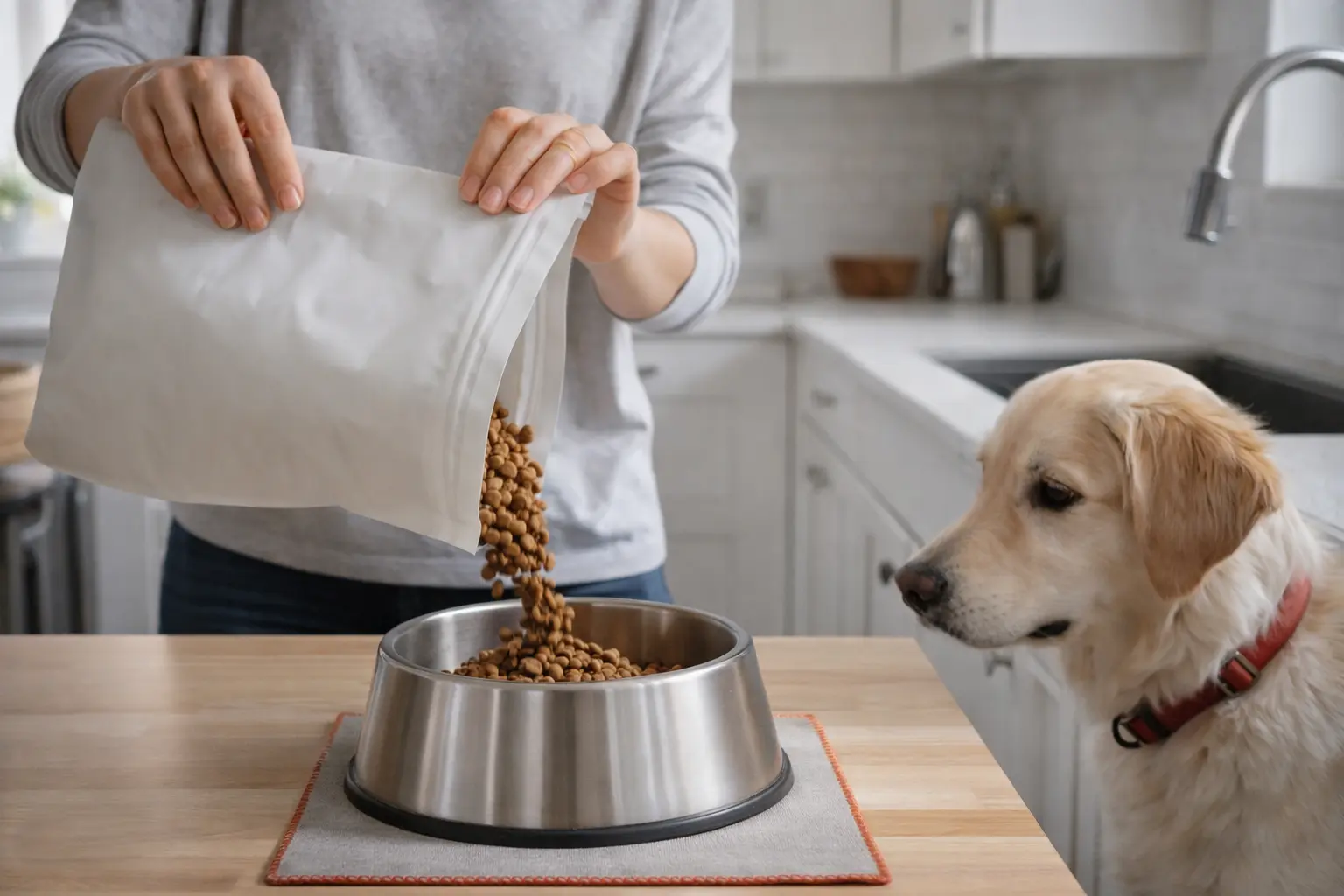
The toughest competitor for pet food packaging isn’t on the shelf; it’s oxygen, moisture, and distribution abuse. Meanwhile, shoppers now read disposal icons as closely as ingredients. Your packaging has to lock in fats and aroma, run cleanly on existing equipment, and make sustainability claims that stand up to scrutiny—all while winning attention in a premium aisle.
For brand managers, packaging engineers, and operations leads, the real choice isn’t paper vs. plastic—it’s which high‑barrier film structure balances recyclability, PCR content, seal integrity, puncture resistance, and line speed. Our perspective at Red Dot Packaging: sustainability only counts when shelf life, machine performance, and regulatory compliance are proven with data.
This article offers practical guidance: material pathways that reduce impact without sacrificing barrier, targets by product type, and format decisions that perform in retail and eCommerce. We’ll begin with the market shift driving greener decisions—and how to translate it into specifications that protect nutrition and deliver a better customer experience.

Why Sustainable Packaging Drives Pet Owner Choice—and How to Respond
Consumers now treat packaging as proof of a brand’s values, not just a container. In pet categories, the shift is measurable: shoppers reward credible environmental progress when it doesn’t compromise freshness or convenience. That’s why pet food packaging choices increasingly decide who wins at shelf and online.
As pets move closer to “family member” status, owners scrutinize ingredient lists and materials with the same intensity they apply to their own food. The APPA reports that 66 percent of U.S. households own a pet (2023–2024), and spend has climbed alongside premium, health-forward recipes. That premium positioning raises expectations for package design, end-of-life clarity, and honest claims.
Multiple studies have found a majority of consumers are open to paying more for sustainable packaging if performance holds; McKinsey’s consumer packaging work has consistently shown 60–70 percent indicate such intent. In the pet aisle, that intent converts when the pack safeguards aroma, crunch, and oil containment, and when disposal instructions are clear. In other words, sustainability drives trial; verified protection and usability convert to repeat.
Meeting Retail Packaging Scorecards Without Losing Protection
Major retailers publish packaging guidance and sustainability scorecards that influence shelf access, from recyclability pathways to right-sizing and reduction targets. E-commerce platforms harden expectations further with damage-rate thresholds and packaging guidelines that reward recyclability and material reduction. For pet brands, meeting these criteria isn’t just optics; it can determine distribution approvals and merchandising priority.
Social and DTC channels surface packaging wins and failures in real time—zipper fatigue, odor transfer, confusing claims, or non-recyclable laminations draw fast scrutiny. Transparent, standards-aligned labeling (e.g., How2Recycle where eligible) and visible proof points (PCR percentages, resin families, disposal guidance) close the trust gap. Clear claims reduce customer service load and returns tied to misunderstanding.
How Barrier Integrity Turns Eco Intent into Loyalty
Sustainable structures help at first glance; consistent barrier performance keeps customers. Oxidation that dulls flavor or rancid notes that emerge mid-shelf-life will erase any goodwill from a recyclability badge. Teams that treat sustainability and protection as one spec—measuring oxygen and moisture barrier, puncture resistance, seal integrity, and reseal life alongside recyclability or PCR targets—see fewer leakers, fewer stale-returns, and stronger reviews.
Translate “greener” into quantifiable targets: material reduction (down-gauging without pinholing), recoverability (mono-material eligibility and clear instructions), recycled content (PCR level and layer placement), and verified shelf-life performance. Align those with retailer scorecards and route-to-market realities—specialty retail, club, and DTC impose different durability and cube-efficiency demands. Then sequence changes to minimize risk: validate barrier first, claims second, merchandising enhancements third.
How Barrier Integrity Turns Eco Intent into Loyalty
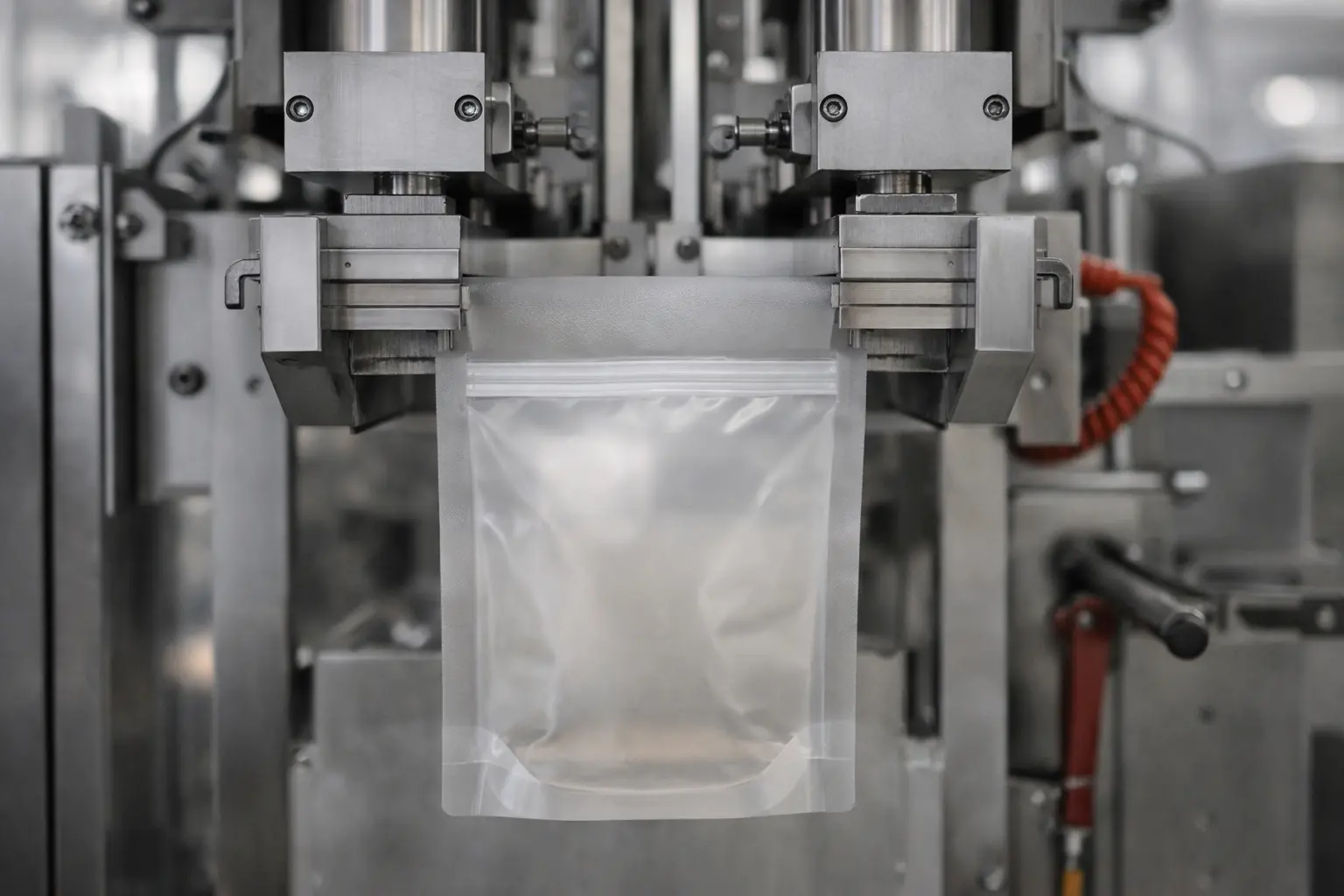
Our approach starts with the product’s chemistry and channels, then maps barrier and durability needs to recyclable mono-PE, PCR-inclusive, or compostable pathways where appropriate. We pair shelf-life modeling with machinability audits so sustainability gains don’t introduce line slowdowns or sealing defects. The outcome: claims you can substantiate, protections you can measure, and formats that retailers welcome.
Next, the performance realities. With demand for credible sustainability established, the next step is engineering structures that match legacy laminations on moisture, oxygen, puncture, odor, and reseal—without surrendering recyclability or line speed. That technical bar defines the material options you can trust.
What It Takes to Protect Pet Food: Moisture, Oxygen, Odor, and Reseal Performance Explained
Pet food formulations are unforgiving: fats oxidize, freeze-dried pieces rehydrate, sharp kibble edges abrade films, and consumers expect an airtight reseal after every pour. Sustainable choices only win if they meet or exceed the protection delivered by legacy laminations. Red Dot Packaging engineers these protections from first principles, quantifying barrier, mechanical, and sealing needs before proposing film architectures for pet food packaging.
- MOISTURE CONTROL (WVTR)
Water activity defines crunch, mold risk, and nutrient stability, so moisture ingress must be tightly managed. For freeze-dried and dehydrated formats, WVTR targets often fall below 0.5 g/m²/day at 38°C/90% RH (ASTM F1249), while standard dry kibble tolerates modestly higher values. Red Dot maps WVTR to product aW and storage climate, then validates with accelerated aging.
- OXYGEN BARRIER (OTR)
Lipid oxidation drives rancidity, off-notes, and vitamin loss; the right oxygen barrier prevents early spoilage. Typical OTR targets range from under 1–3 cc/m²/day at 23°C/0% RH (ASTM D3985 or ISO 15105-2) for high-fat or fish-forward treats to under 10–20 for standard kibble, depending on shelf-life goals. Observed failure modes include peroxide value spikes and headspace odor shifts within weeks when OTR is mis-specified.
- PUNCTURE AND TEAR RESISTANCE
Abrasive kibble and hard inclusions can cause pinholing that silently defeats barrier performance. Red Dot engineers to dart impact (ASTM D1709), tear (ASTM D1922), and tensile (ASTM D882) benchmarks appropriate to pack size—e.g., dart impact above 200–400 g for small-to-large formats—then confirms with abrasion and drop testing that reflect real distribution.
- GREASE AND ODOR MANAGEMENT
Oils migrate and aromas permeate; structures must both resist grease and contain scent. Grease resistance is verified with standardized oil-resistance measures and migration tests for fatty foods, while odor containment is tuned through barrier layer selection and adhesive systems that avoid aroma scalping. Fish-based treats are stress cases Red Dot uses to qualify adhesives, inks, and primers for neutrality.
- SEAL STRENGTH AND RESEAL LIFE
A package that opens in transit or seeps air after day ten fails the mission. Hermetic seals are qualified via burst (ASTM F2054) and peel strength (ASTM F88) testing, with targets set by pack weight and drop regimen; reseal systems are fatigue-tested for dozens to hundreds of cycles to avoid zipper wear and powder contamination issues. For mono-PE, Red Dot widens seal windows with tailored sealant blends to run at commercial speeds.
- SHELF-LIFE MODELING TIED TO FORMULATION
Barrier specs only matter if they hit the claimed shelf life in the field. Red Dot links barrier data to formulation fat level and aW using Arrhenius-based accelerated aging, peroxide and anisidine indices, and sensory checkpoints to model end-of-life. This prevents over-packaging for low-risk items and under-packaging for oil-heavy treats.
- DATA-LED DOWNGAUGING WITHOUT COMPROMISE
Reducing film thickness cuts resin usage and cost, but not at the expense of protection or machinability. Through film orientation, high-performance sealants, and barrier mapping, Red Dot frequently delivers 10–20 percent gauge reductions while holding OTR/WVTR and maintaining dart and tear thresholds. Results are verified on-line with seal integrity and leak testing to avoid surprises.
- MACHINABILITY ON REAL LINES
Sustainable films must run cleanly on VFFS/HFFS and premade pouch lines. Coefficient of friction is tuned (often 0.25–0.35 target), hot-tack and seal initiation temperatures are dialed in for consistent jaws, and zipper profiles are selected to resist contamination from powders or oils. Line trials address common failure modes such as leakers, fold cracking, and zipper misalignment.
Sustainability and protection are not opposites—they are engineering targets that can be met together with the right data and trials. With the performance bar defined, the next step is selecting material pathways—such as recyclable mono-PE systems—that deliver these outcomes without compromising recyclability or shelf life.

Step-by-Step: Engineering Mono-PE Pouches That Match Legacy Barrier Performance
For many pet brands, recyclability stops being theoretical the moment packaging has to hold up to real product and real lines. That is where mono-material polyethylene systems earn their place: they allow you to design for store drop-off recovery where available while still delivering the barrier and durability that nutrient-dense recipes demand. The core idea is straightforward—keep every layer in the PE family, then engineer barrier and seal performance with the right blends, orientations, and tie chemistries. The execution, however, is where projects succeed or stall.
Traditional laminations often rely on mixed polymers—PET/PE, sometimes with metallization or foil—to pin oxygen and moisture near zero. Mono-PE has to reach similar outcomes without defaulting to those layers. Two proven routes do the heavy lifting today. The first is EVOH used within accepted thresholds, typically under a few percent of the total structure by weight to align with APR and How2Recycle guidance. When EVOH is embedded in a PE matrix and paired with appropriate tie layers, you can reach oxygen transmission rates in the low single digits (cc/m²/day at 23°C, 0% RH) at practical gauges, which is sufficient for a large share of kibble and many treat formats.
The second route is oriented PE—often machine-direction oriented (MDO-PE)—which increases stiffness, improves barrier relative to cast films, and helps close the gap further on moisture permeation when combined with high-performance sealants. MDO-PE/PE laminations can deliver water vapor transmission rates well below one gram/m²/day at standard test conditions for common pouch thicknesses, a meaningful step toward parity with legacy PET/PE in use cases where foil-level barrier is not required.
Of course, numbers without context mislead. Barrier isn’t a trophy; it’s a specification tied to shelf life, fat content, and distribution. A three-pound chicken-and-salmon kibble heading into omnichannel retail often needs a low OTR to slow lipid oxidation and manage aroma, but it does not necessarily need the sub-0.1 OTR associated with foil.
In practice, we model shelf life from the product’s water activity and fat profile, then map barrier by format size, headspace, and zipper behavior over time. That is how a mono-PE design becomes right-sized rather than overbuilt.
Recyclability isn’t achieved by polymer family alone. Structures succeed or fail on details that seem minor until they derail a label submission. Tie layers must be chosen for compatibility with PE reprocessing; adhesives should be used at levels that don’t create insoluble contamination; and inks have to sit on a print web that doesn’t introduce mixed-material labels or PET patches. A fully PE zipper is non-negotiable.
Machinability is often the executive-level question. PE-rich films seal differently, and line changes can eat up savings if you’re not ready. This is solvable with film architecture and data. A metallocene LLDPE sealant with a wide, forgiving seal window paired to a stiffer MDO-PE print web gives you both top speed and strong hermetic seals without scorch. We validate jaw temperature, dwell time, and pressure across your equipment to define a safe process range, then confirm with ASTM seal strength and burst testing, plus dart impact and puncture to account for kibble edges and distribution rough-and-tumble. Several customers who expected to slow their VFFS lines actually held or improved throughput after COF tuning and pre-made pouch spec alignment. Line readiness is not a gamble when you treat it as an engineering exercise.
A fair comparison also addresses stiffness and scuff. PET brings inherent rigidity and abrasion resistance that many brands have built their presentation around. MDO-PE narrows that gap markedly, enabling flat-bottom and stand-up formats to hold shape on shelf without resorting to PET. Tactile or matte finishes compatible with PE streams keep the premium look intact, and carefully balanced slip systems reduce scuff without making pouches “slick” at retail. When structural design does its job, you keep billboard presence and stackability while meeting design-for-recovery criteria.
Transparency on claims is the other half of credibility. “Designed for store drop-off where available” is clear and accurate; it respects regional access and avoids implying curbside acceptance where it doesn’t exist. When we prepare a new mono-PE spec, we document layer compositions, adhesive systems, zipper resin families, and ink coverage to support an internal claim review and any third-party submission you choose to make. That claim discipline will matter more as retailers expand packaging scorecards and as labeling rules tighten.
Where does this leave categories that truly need ultra-high barrier? Some fish-based or high-fat inclusions can stretch the limits of mono-PE alone. There are advanced barrier coatings in development, and select AlOx-on-PE constructions are emerging, but eligibility varies and must be vetted against current guidance. Our position is pragmatic: go mono-PE wherever the product and channel allow, and don’t compromise product integrity to chase a logo. The right answer is the one that preserves nutrition, controls aroma, and can be recovered in the real world.
This material pathway gives brands a credible, now-ready route to lighten footprint without retooling their entire operation. It also opens the door to a fuller circular story. Once the base structure is proven on your lines and at retail, the next lever is resin origin—incorporating post-consumer recycled PE in targeted layers while protecting print quality and seals. That is where we turn next: moving from recyclability to recycled content without giving up machinability, graphics, or shelf life.

How to Add PCR to Pet Food Pouches Without Sacrificing Performance
Brands are moving from “recyclable” to “circular”—not just designing for recovery, but specifying post‑consumer recycled (PCR) content in the film itself. The opportunity is clear: lower virgin resin use and carbon impact while preserving barrier, print quality, and line efficiency.
- Put PCR in the right layer
Use food‑contact compliant rPE grades and, for fatty recipes, place PCR in the print web with a functional barrier over the sealant to simplify compliance. This preserves seal integrity and odor neutrality while keeping migration within regulatory limits.
- Design for recyclability from the start
Keep the structure all‑PE, use APR‑recognized inks and adhesives, and maintain EVOH (if used) within accepted thresholds to support retail film drop‑off eligibility where available. Pre‑check labels with How2Recycle and avoid components that can disqualify an all‑PE claim (e.g., incompatible tie layers or metallization).
- Engineer machinability: COF, stiffness, and seal window
PCR can change slip and modulus; tune the slip package to target stable COF and confirm forming behavior on VFFS/HFFS jaws. Validate a robust seal window (temperature, time, pressure) so reseals and distribution seals match legacy performance.
- Protect graphics quality with controlled PCR specs
Specify rPE with tight gel/contamination limits and manage opacity with white ink laydowns to achieve consistent color across SKUs. In practice, the treat brand above met delta‑E targets for earth‑tone palettes and matte finishes without added scrap.
- Model barrier and confirm with testing
PCR does not add barrier; pair it with PE‑compatible high‑barrier layers or EVOH to hit OTR/WVTR targets for fats and dehydrated formats. Use ASTM/ISO methods (e.g., OTR, WVTR, seal strength, dart) and shelf‑life modeling to show parity with the incumbent.
- Claim with proof and qualify access
Document PCR percentage with supplier certificates and periodic audits; align claims with FTC Green Guides and note that film drop‑off access varies by location. The example brand used “Made with 30% post‑consumer recycled plastic” and a QR link to verification and disposal guidance.
Integrated this way, PCR delivers real circularity gains without trading away protection or uptime in pet food packaging.
Formats That Perform — Pouch and Rollstock Pitfalls (and How to Fix Them)
Great formats make sustainability and shelf presence tangible. Yet small format decisions can derail barrier performance, line efficiency, and claim credibility. Here are the mistakes we see most often in pet food packaging and how to correct them before they cost time and inventory.
- Picking the wrong pouch style for weight and channel
Brands often default to stand-up pouches for every SKU, only to see bulging panels, shelf instability, or poor cube efficiency for 3–12 lb kibble and club pallets. E-commerce adds drop stress that a light-gauge SUP bottom can’t absorb.
Choose format by fill weight and route: use flat-bottom or quad-seal for 3–12 lb kibble (better cube and stack), SUP for sub-2 lb treats, and reinforced bottoms or corner web reinforcements for DTC. Validate with ISTA drop and compression tests before spec lock.
- Under-specifying the zipper for heavy or dusty fills
A light press-to-close on 6–12 lb kibble or powdery freeze-dried treats leads to zipper fouling, poor engagement, and early reseal failure. Sliders with incompatible materials can also compromise recyclability.
Match closure to use: pick powder-resistant double-rail or hook-to-hook for dusty fills, and consider sliders with end-clips above 8 lb. Specify PE-based zipper and slider components when recyclability matters, and run a 10-cycle open–close fatigue test on filled pouches.
- COF and seal-window mismatches that create leakers
Films with the wrong surface coefficient of friction can cause poor web control, tipping in the forming tube, or sealing through contamination issues. Narrow seal windows on mono-PE structures magnify setup errors.
Define target COF by machine: many VFFS lines run best with external COF ~0.25–0.35; confirm with your OEM. Build a seal curve (temperature, dwell, pressure) on real product, then lock parameters. Add a contamination challenge (oil/salt) to confirm hermeticity at speed.
- Ignoring puncture hot spots at gusset folds and corners
Kibble edges abrade film at bends and seam crossovers; down-gauged webs can pinhole at the K-seal and bottom corners during transit vibration.
Reinforce stress points: specify tougher outer webs or oriented PE at folds, use rounded corners, and widen K-seal legs. Verify with dart impact, puncture, and vibration tests on ship-ready cases; a modest outer-web thickness increase (e.g., +10 microns) can prevent pinholing without a full gauge jump.
- Mixing incompatible components that break recyclability claims
Non-PE sliders, metalized valves, or PET header patches can disqualify otherwise recyclable designs from store drop-off eligibility and How2Recycle labels.
Keep the bill of materials aligned: use all-PE zippers, sliders, and patches; limit EVOH within accepted thresholds; and confirm adhesives/inks against APR guidance. Phrase claims precisely (for example, “designed for store drop-off where available”) and pre-check eligibility before artwork finalization.
- Skipping ergonomics on multi-serve bags
Heavy formats without reinforced handles or controlled pour features cause tear-outs, spills, and customer frustration. Poor notch placement leads to ragged opens that compromise reseal.
Add die-cut or folded handles with reinforcement, place tear notches outside the zipper path, and consider pour spouts for large kibble. Aim for 85–90 percent fill volume to preserve stand stability and consumer usability.
Getting formats and closures right protects product, prevents waste, and keeps lines running. Address these areas early with targeted testing and you’ll ship a package that merchandises cleanly, runs at speed, and supports credible sustainability claims.
Conclusion
Everything in this guide points to one practical next step: turn barrier targets, seal windows, and COF into a tested film spec for each SKU. Waiting invites needless risk—rancidity on high‑fat treats, zipper fatigue, or recyclability claims that won’t clear retailer review. If your pet food packaging needs to hit defined OTR/WVTR while running on your current VFFS/HFFS, it helps to work with a team that can model requirements from water activity and fat load, preflight APR/How2Recycle eligibility, and prove performance on your line.
Red Dot Packaging is a U.S. manufacturer of custom pouches and rollstock that pairs barrier modeling with real line support. We engineer mono‑PE systems, integrate PCR where graphics and machinability allow, or qualify compostables for the right use cases—and we back it with ASTM data, dielines, samples, and clear sealing parameters tailored to your equipment. Get a quote to review structures and pricing for your SKUs, receive test materials, and lock a trial plan that delivers freshness, uptime, and credible on‑pack claims.
Pet Food Packaging FAQs
Q: Should I choose recyclable or compostable packaging for my product?
A: Match the material to your product’s fat level, water activity, and shelf-life target. For most dry kibble and treats that need strong oxygen and moisture barriers, recyclable mono-PE structures are the safer choice; compostables can struggle with high barrier and grease, and fit short-life, low-risk dry goods. Also consider channels and retailer scorecards that favor recyclability. Validate with OTR/WVTR testing and clear, standards-aligned labeling.
Q: What’s the most eco-friendly pet food bag that still protects freshness?
A: A recyclable mono-PE pouch using MDO-PE and a controlled amount of EVOH (within APR/How2Recycle guidance) delivers strong barrier without mixed materials. These builds can reach low single-digit OTR and sub-1 g/m²/day WVTR at standard conditions for many kibble and treat SKUs. Use all-PE zippers and compatible tie layers to protect recyclability. Claim “designed for store drop-off where available” to reflect real access.
Q: Who can make custom printed stand-up pouches for my brand?
A: Red Dot Packaging is a U.S. manufacturer of custom pouches and rollstock with digital, flexographic, and rotogravure printing. They produce stand-up, flat-bottom, quad-seal, spouted, child-resistant, and die-cut formats built for moisture and oxygen protection. Material options include recyclable mono-PE, PCR-inclusive, and compostable structures. They supply dielines, samples, ASTM data, and sealing parameters to speed approval.
Q: How do I use recycled plastic in food packaging and keep it safe?
A: Place food-contact compliant rPE in the print web and keep a functional barrier over the sealant, especially for fatty recipes. Control COF and modulus shifts from PCR and specify tight gel/contamination limits to protect graphics. Pair PCR with EVOH or other PE-compatible barriers to meet OTR/WVTR targets. Document PCR percentage with supplier certificates and align claims with FTC Green Guides.
Q: Stand-up pouch or flat-bottom bag, which should I pick for larger bags?
A: For 3–12 lb kibble, choose flat-bottom or quad-seal for better cube efficiency, stack stability, and shelf presentation; reserve SUP for sub-2 lb treats. Reinforce bottoms and corners for heavier fills and omnichannel handling. Validate with ISTA drop and compression tests before finalizing the spec. Add ergonomic handles and place tear notches to protect reseal.
Q: Which zipper works best for heavy or dusty products so it reseals every time?
A: For dusty or powdery fills like freeze-dried treats, use powder-resistant double-rail or hook-to-hook closures; above 8 lb, consider sliders with end-clips. Keep zipper and slider components in the PE family if you need store drop-off eligibility. Fatigue-test 10+ open/close cycles on filled pouches and confirm peel and burst (ASTM F88/F2054). Place notches away from the zipper path to reduce contamination.
Q: What packaging holds up best for online shipping and rough handling?
A: Use formats with reinforced bottoms, rounded corners, and tougher outer webs or oriented PE at fold lines to resist pinholing. Engineer dart impact, tear, and puncture resistance for your pack weight, then confirm with ISTA drop, vibration, and compression on case-packed product. Widen K-seal legs and add corner reinforcements to protect stress points. Verify zipper fatigue and seal integrity to reduce transit leakers.
Q: How can I lower packaging material and cost without risking freshness?
A: Apply data-led downgauging: optimize orientation and sealant performance to cut gauge by 10–20 percent while holding OTR/WVTR and mechanical thresholds. Confirm dart impact (ASTM D1709), tear (ASTM D1922), tensile (ASTM D882), and seal strength on real product at line speed. Use shelf-life modeling tied to fat level and water activity to right-size barrier. Monitor COF and seal windows after gauge changes to maintain machine performance.
Q: Where can I get a fast quote on custom pouches?
A: Red Dot Packaging provides quotes for custom pouches and rollstock, including recyclable mono-PE, PCR-inclusive, and compostable options. Share SKU details, target shelf life, fill weights, formats, graphics, and line information to receive structures, pricing, and a trial plan. They can supply samples and test materials with sealing parameters matched to your equipment. This speeds validation and helps you approve artwork and claims with data.