

Custom Pasta Packaging
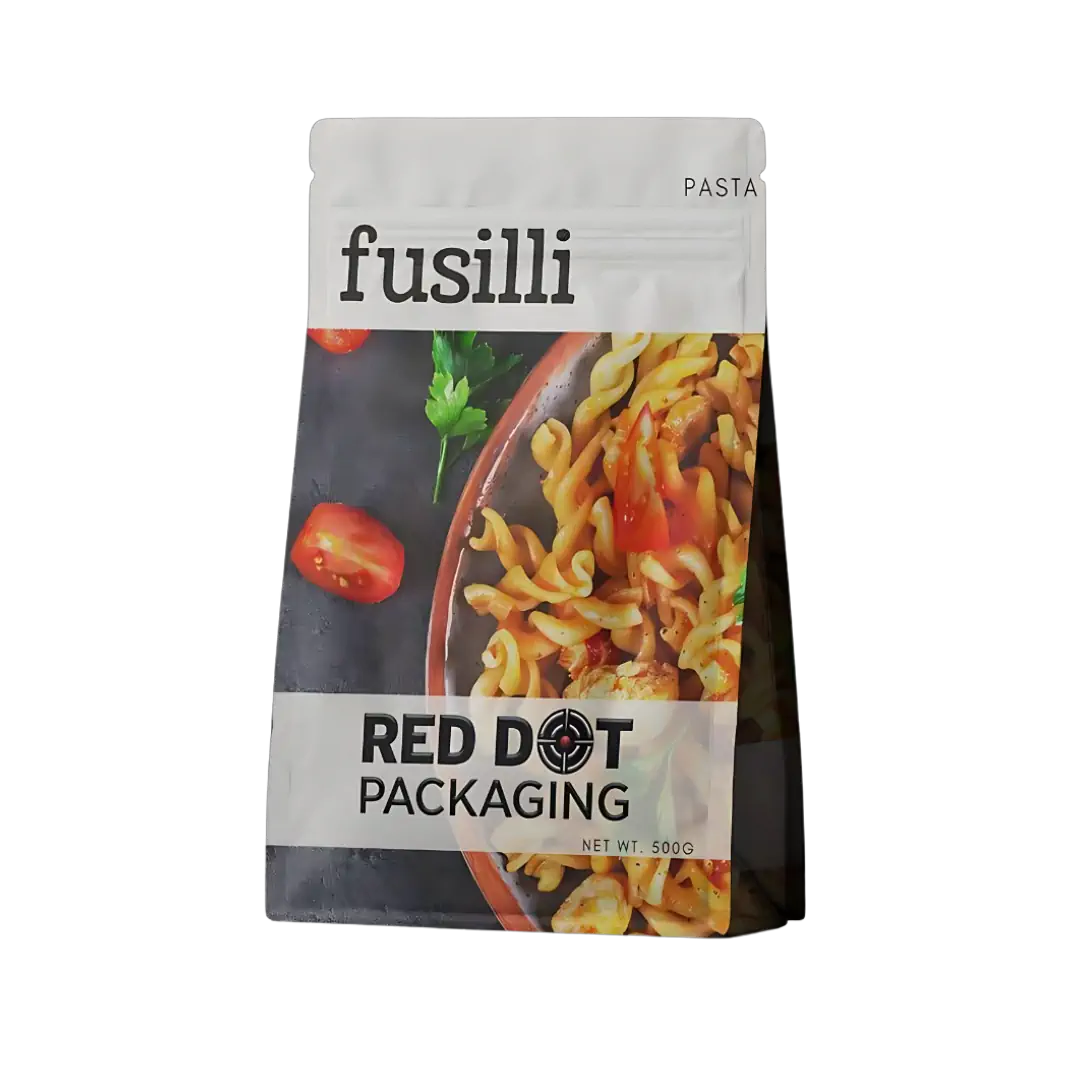
Custom Pasta Packaging Solutions
Dry pasta needs packaging that keeps moisture out, branding strong, and shelf life long. Whether you’re packaging fusilli, penne, or gourmet blends, Red Dot Packaging delivers flexible pouches that protect product integrity and support premium shelf presence. From clear windows to high-barrier laminations, our materials are selected to keep pasta crisp and retail-ready. Our pouch styles give you flexibility across product types and formats, helping you match your visual identity and production goals.
Packaging Formats Tailored for Pasta Products
Pasta products benefit from packaging that’s not just protective — but practical and efficient for filling, sealing, and stacking. We help brands choose structures that work on- and off-shelf.
- Stand-Up Pouches – Great for consumer convenience and visual merchandising
- Flat Pouches / 3-Side Seal – Ideal for smaller pack sizes or single servings
- Shaped or Die-Cut Pouches – Offers a more distinctive branded look
- Rollstock Film – Compatible with VFFS/HFFS equipment for high-speed packaging
Custom options include tear notches, resealable closures, hang holes, and gussets to support weight and shape.
Print & Finish Options for Pasta Packaging
In a crowded grocery aisle, print quality makes the difference. We provide scalable print technologies that help you stand out — whether you're launching a new SKU or updating legacy packaging.
Print Technologies:
- Digital Printing – For small batches, product launches, or artisan lines
- Flexographic Printing – Efficient for mid-volume runs with consistent quality
- Rotogravure Printing – Delivers premium results for high-detail, high-volume packaging
Finish Options:
- Matte – Creates a premium, modern look
- Gloss – Brightens color and attracts attention
- Soft Touch Matte – Adds a luxury feel for specialty products
- Dual Finish (Gloss & Matte / Spot UV) – Helps emphasize key branding elements
Why Brands Trust Red Dot for Pasta Packaging
Red Dot Packaging is the go-to partner for pasta brands that care about performance and presentation. We understand the balance between durability, aesthetics, and cost-efficiency.
Here’s why brands choose Red Dot:
- Moisture and oxygen barriers that preserve pasta texture
- Low minimums and fast turnarounds
- Compostable and recyclable film options
- Full-service support from dieline to delivery
Whether you're packaging a retail line or private label, we build pasta pouches that perform — and sell.
Pasta Packaging FAQ
Q: What’s the best packaging format for dry pasta to keep moisture out and preserve shelf life?
A: Choose high-barrier laminated flexible pouches to block moisture and oxygen and keep pasta crisp. Stand-up or flat (3-side-seal) pouches both work; pick based on pack size and merchandising goals. For automated lines, high-barrier rollstock on VFFS/HFFS also preserves shelf life while running at speed.
Q: Stand-up pouches vs flat 3-side-seal bags for pasta—how do they compare for shelf presence and filling efficiency?
A: Stand-up pouches excel at consumer convenience and visual merchandising, making them strong on shelf. Flat 3-side-seal bags suit smaller or single-serve packs and store compactly. Both can be efficient to fill; for highest speeds, use rollstock on VFFS/HFFS.
Q: Which printing method should I choose for pasta pouches: digital, flexographic, or rotogravure?
A: Use digital printing for small batches, product launches, or artisan lines where agility matters. Choose flexographic printing for mid-volume runs that need consistent quality and efficiency. Select rotogravure for high-detail graphics at high volumes with a premium result.
Q: What finish should I use for pasta packaging—matte, gloss, soft touch, or mixed—and why?
A: Matte creates a modern, premium look; gloss brightens color and draws attention. Soft touch matte adds a luxury feel for specialty products. A dual finish (mix of gloss and matte or spot UV) highlights key brand elements without overwhelming the design.
Q: What custom features should a pasta pouch include—tear notch, resealable closure, hang hole, gusset—for convenience and weight support?
A: Add a tear notch for easy opening and a resealable closure for multi-use freshness. Use a hang hole for peg merchandising. Include a gusset to support product weight and shape so the pouch presents well and stacks reliably.
Q: How do I choose rollstock for VFFS/HFFS to package pasta at high speed?
A: Select rollstock with high-barrier laminations to protect against moisture and oxygen on fast lines. Confirm compatibility with your VFFS/HFFS equipment and choose a print method that matches your run size (digital, flexo, or rotogravure). Include features like tear notches or designed gussets as needed for your finished pack.
Q: Are there compostable or recyclable films that still provide strong moisture and oxygen barriers for pasta?
A: Yes. Red Dot offers compostable and recyclable film options with barrier performance selected to preserve pasta texture. Materials are chosen to keep products retail-ready without compromising protection.
Q: I’m launching an artisan pasta; what print and production options work for small batches versus mid- or high-volume runs?
A: For small batches and new SKUs, choose digital printing to control cost and move quickly. For mid-volume lines, flexographic printing delivers efficient runs with consistent quality. For high-volume or high-detail designs, rotogravure provides premium results, supported by low minimums and fast turnarounds.
Q: How do I design a pasta pouch with a clear window and high-barrier laminations without sacrificing shelf life?
A: Pair a clear window with high-barrier laminations so visibility and protection work together. Keep the overall structure focused on moisture and oxygen control, and add a resealable closure to limit exposure after opening. Red Dot helps balance window placement and barrier selection for both shelf appeal and performance.
Q: What’s the typical process from dieline to delivery for custom pasta pouches?
A: Red Dot supports you from structure selection and dieline development through print technology, finish choice, and final production. After specifications are set, we manufacture the pouches and handle delivery on fast timelines with low minimums. The result is packaging aligned to your brand, run size, and shelf goals.
Additional Pasta Packaging FAQ
Q: What packaging formats work best for dry pasta like fusilli or penne, and why?
A: Stand-up pouches are ideal for consumer convenience and strong shelf presence. Flat 3-side-seal pouches suit smaller pack sizes or single servings. Shaped or die-cut pouches add a distinctive branded look, while rollstock film runs on VFFS/HFFS lines for high-speed packaging. Pair any format with high-barrier materials to keep moisture out and protect shelf life.
Q: Compare stand-up pouches vs flat 3-side seal bags for pasta—pros, use cases, and shelf presence.
A: Stand-up pouches offer excellent visibility on shelf and are convenient for consumers. Flat 3-side-seal bags are compact and efficient for small packs or single servings. Both are practical for filling and sealing; choose based on pack size, merchandising needs, and how you want the product to display.
Q: Which print method should I choose for pasta pouches: digital, flexographic, or rotogravure?
A: Choose digital printing for small batches, product launches, or artisan lines. Use flexographic printing for mid-volume runs that need consistent quality. Pick rotogravure for high-detail graphics at high volumes. Match the method to run size, SKU count, and visual requirements.
Q: What finish should I pick for premium pasta packaging: matte, gloss, soft touch, or a mix of finishes?
A: Matte creates a premium, modern look, while gloss brightens color and draws attention. Soft touch matte adds a luxury feel for specialty products. A dual finish (mix of gloss and matte) helps emphasize key branding elements. Select the finish that supports your brand’s look and on-shelf impact.
Q: What pouch features are worth adding for pasta products—tear notches, resealable closures, hang holes, or gussets?
A: Add tear notches for easy opening and resealable closures for convenience after first use. Hang holes support peg merchandising, and gussets help carry weight and shape for stability. These features improve usability and presentation without compromising protection.
Q: Do you offer compostable or recyclable films for pasta packaging, and when do they make sense?
A: Yes. Red Dot offers compostable and recyclable film options and can pair them with moisture and oxygen barriers suitable for dry pasta. They’re a good fit when you need sustainability without sacrificing shelf life or brand presentation. We help align material choices with performance and cost goals.
Q: Can I run your rollstock film for pasta on VFFS or HFFS equipment at high speed?
A: Yes. Our rollstock film is compatible with VFFS/HFFS equipment for high-speed pasta packaging. We help spec the film structure and sealing features so your line runs efficiently while maintaining product protection.
Q: How does Red Dot Packaging keep pasta protected from moisture and oxygen to preserve texture and shelf life?
A: We use moisture and oxygen barrier structures, including high-barrier laminations, selected specifically for dry pasta. Materials are chosen to keep pasta crisp and retail-ready. Strong seals and closure options further support protection during distribution and use.
Q: I’m launching a small-batch pasta SKU—what print and pouch options fit low minimums and quick turnarounds?
A: Digital printing paired with stand-up or flat 3-side-seal pouches is ideal for small batches and fast timelines. You can add clear windows, standard closures, and other features without committing to large runs. As volume grows, you can move to flexographic or rotogravure for scale.
Q: What support does Red Dot Packaging provide from dieline to delivery for a new pasta pouch project?
A: We offer full-service support from dieline to delivery. Our team helps you choose structures, films, print methods, finishes, and custom features that match your brand and production goals. We support both retail lines and private label programs to ensure a smooth launch.