

Custom Dry Food Packaging
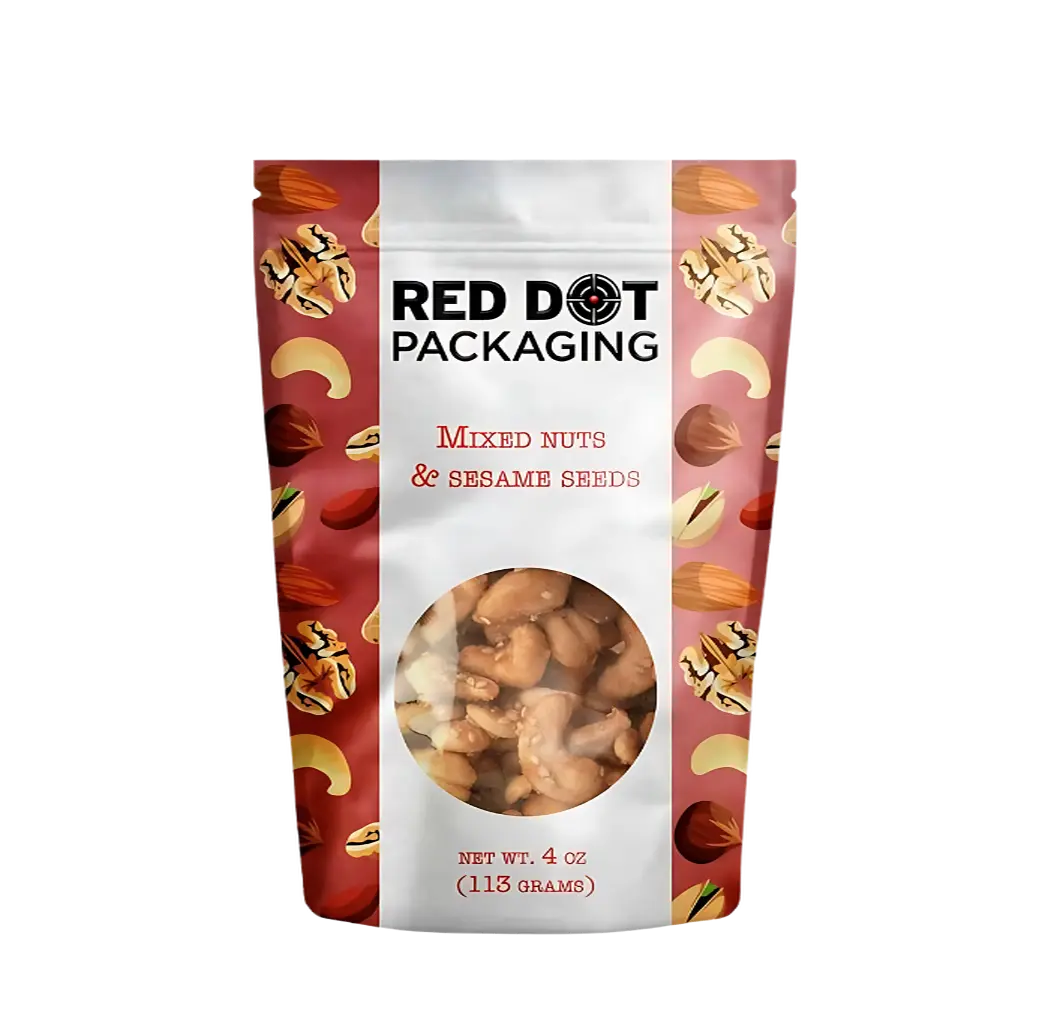
Custom Dry Food Packaging Solutions
Dry food packaging has to work hard — protecting ingredients from moisture, maintaining freshness, and making the product easy to store and use. Whether you're packaging grains, snacks, baking mixes, or pet treats, Red Dot builds high-barrier pouches and rollstock that keep products stable and appealing from production through shelf life. We help brands get the right structure, seal, and features for everything from large-format pantry bags to compact trial sizes.
Packaging Formats Tailored for Dry Food Products
Dry foods vary widely in density, flow, and oil content. Red Dot engineers packaging to perform across a wide spectrum of dry goods — from fine powders to chunky snacks.
- Stand-up pouches – Ideal for granola, cereals, and snacks with resealable convenience
- Fin seal and pillow pouches – Streamlined formats for powders, mixes, and grains
- Rollstock film – Compatible with vertical and horizontal form-fill-seal systems
- Quad seal and gusset bags – Excellent for heavier dry foods like pasta, beans, or kibble
- Zipper closures – Available in flange, dual track, and powder-proof designs
Materials are available in PET, MET-PET, foil, kraft, or recyclable laminates, depending on your shelf life, filling method, and branding goals.
Barrier Performance That Supports Shelf Life
Dry foods are especially vulnerable to moisture migration, which can clump powders, stale snacks, or degrade nutritional content. We build high-barrier laminations to protect dry ingredients without over-packaging.
- Moisture and oxygen protection for sensitive grains, snacks, and blends
- Custom sealing layers to support your exact fill method and heat tolerance
- Grease resistance and anti-scuff coatings for high-oil snacks and spices
- Printable windows and natural textures for clean-label product storytelling
We match barrier specs to your product’s behavior and your desired shelf life — whether it’s a 30-day snack or a 12-month pantry staple.
Why Brands Choose Red Dot for Dry Food Packaging
Red Dot supports brands across food, pet, and wellness categories that require packaging built for dry product integrity. From formulation to fulfillment, we help you get to market quickly and confidently with:
- Durable pouch styles for powders, snacks, and dry blends
- Flexible order volumes to support both pilot runs and retail expansion
- Fast turnaround and responsive service from concept through production
- In-house expertise in film structure, barrier testing, and machine compatibility
- Sustainable film options available, including recyclable and reduced-plastic
We make dry food packaging easier — with structure, protection, and standout shelf appeal.
Dry Food Packaging FAQ
Q: How do I choose the right pouch format for dry foods like granola, baking mixes, or pet treats?
A: Start with your product’s flow characteristics, density, and oil content. Stand-up pouches are ideal for granola and snack items that benefit from resealability and shelf presence. Fin seal or pillow pouches are efficient for powders and baking mixes that run on high-speed lines. Quad seal and gusseted bags provide added strength and stability for heavier items like pasta, beans, or kibble. The right structure should align with your filling method, retail channel, and target shelf life.
Q: What’s the difference between stand-up pouches, fin seal/pillow pouches, quad seal bags, and gusseted bags for dry goods?
A: Stand-up pouches combine upright display with resealable convenience, making them popular for snacks and cereals. Fin seal and pillow pouches are streamlined, cost-efficient options for powders, grains, and mixes. Quad seal and gusseted bags add structure and stacking strength, making them better suited for heavier or bulk dry foods. Each format can be customized with appropriate barrier layers and closures.
Q: Which zipper closure is best for powders versus snacks—flange, dual track, or powder-proof?
A: Powder-proof zippers are recommended for fine powders to prevent particulates from interfering with the seal. For snack items, flange or dual-track zippers provide reliable reclosure and a solid tactile feel. The best choice depends on your filling equipment, closure cycle expectations, and consumer usage patterns.
Q: What packaging materials (PET, MET-PET, foil, kraft, recyclable laminates) work best for long shelf life dry foods?
A: High-barrier laminations using PET, MET-PET, or foil help limit moisture and oxygen ingress for extended shelf life. Kraft and recyclable laminates can be incorporated to support brand aesthetics and sustainability goals. Material selection should reflect product sensitivity, storage conditions, and required shelf-life duration.
Q: How can flexible packaging protect dry foods from moisture and oxygen to prevent clumping or staling?
A: High-barrier films restrict moisture vapor transmission and oxygen exposure, helping powders resist clumping and snacks retain crunch. Custom sealing layers are matched to your filling method and heat parameters to ensure consistent protection. Barrier performance is calibrated to meet shelf-life targets ranging from short-term distribution to year-long storage.
Q: What film features help with oily snacks or spices, like grease resistance and anti-scuff coatings?
A: Grease-resistant layers prevent oil migration and maintain structural integrity. Anti-scuff coatings protect printed graphics during shipping and handling. These features can be combined with high-barrier laminates and resealable closures to preserve both product quality and packaging appearance.
Q: Can your rollstock film run on both vertical and horizontal form-fill-seal machines?
A: Yes. Rollstock is engineered for compatibility with both vertical (VFFS) and horizontal (HFFS) form-fill-seal systems. Sealing layers and film thickness are tailored to your equipment specifications and fill conditions to ensure efficient forming and strong seals.
Q: How do I match barrier specs and sealing layers to my filling method and target shelf life (30 days to 12 months)?
A: Begin by assessing product sensitivity to moisture, oxygen, and environmental exposure. Establish barrier levels that align with your shelf-life target, then select sealing layers compatible with your heat settings and filling speed. Film structure, thickness, and laminate composition are optimized to balance performance and efficiency.
Q: What are good packaging options for heavier dry foods like pasta, beans, or kibble?
A: Quad seal and gusseted bags offer structural strength and stability for heavier fills. These formats stack well, support clear branding panels, and can include resealable features. Sizes and laminate builds are customized to accommodate weight, distribution conditions, and merchandising strategy.
Q: Do you offer recyclable or reduced-plastic options for dry food packaging, and can you support small pilot runs with fast turnaround?
A: Yes. Recyclable and reduced-plastic laminate options are available for dry food applications, engineered to maintain barrier protection. Flexible order volumes and digital printing enable small pilot runs, product tests, and phased retail launches with quick turnaround and scalable production.