

Custom Child Resistant Pouches
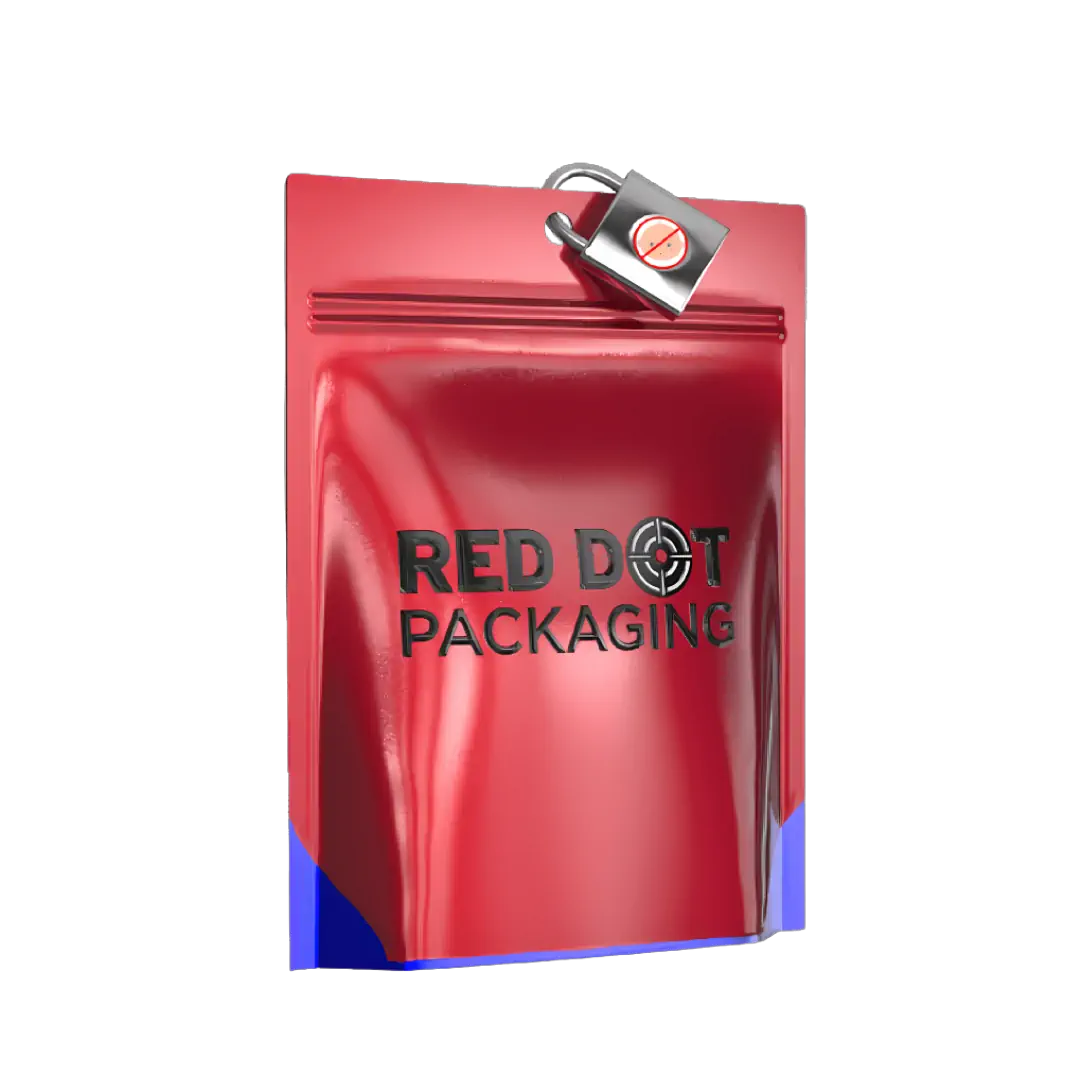
Custom Child Resistant Pouches for Secure Packaging
Products that require child-resistant packaging — including pharmaceuticals, nutraceuticals, cannabis, and specialty chemicals — demand more than just barrier protection. They require engineered solutions that comply with strict safety standards while maintaining brand appeal and user-friendly functionality. Red Dot Packaging specializes in custom child-resistant pouches that balance form, function, and safety. From tamper-evident features to certified closures and secure materials, we help brands protect their products and their customers — without sacrificing shelf appeal or production efficiency.
Packaging Formats Tailored for Child-Resistant Products
Our packaging formats are engineered to meet regulatory standards (such as CFR Title 16 Part 1700) while offering flexible branding options and practical use:
- Child-Resistant Stand-Up Pouches — With press-to-close zippers or push-and-turn mechanisms
- Single-Dose or Multi-Use Barrier Bags — Ideal for edibles, concentrates, or unit-dosed applications
- Tamper-Evident Structures — Including tear notches, heat seals, and visual indicators of access
- Puncture-Resistant & High-Barrier Films — For odor, moisture, and light protection
- Specialty Coatings — Including matte finishes or textured surfaces for grip and differentiation
Whether you need ASTM-certified locking mechanisms or are launching in a state with cannabis packaging regulations, we’ll engineer the right format for compliance and consumer confidence.
Print & Finish Options for Child-Resistant Products
Even in regulated categories, branding matters. Red Dot helps you deliver packaging that communicates quality and safety at a glance — without compromising creativity.
Our capabilities include:
- Digital Printing — For low minimums, rapid prototyping, or variable data
- Flexographic Printing — For medium-scale production with color control
- Rotogravure Printing — For high-volume runs and ultra-precise detail
Finish options designed for child-resistant packaging:
- Matte or Soft Touch — For a premium, tactile experience
- Gloss or Dual Finish — For contrast and product callouts
- Spot UV — For branding elements like logos or safety icons
- Opaque or metallized barriers — To meet opacity requirements for cannabis packaging laws
Why Brands Trust Red Dot for Child-Resistant Packaging
Child-resistant packaging can’t afford to fail — and neither can your launch timelines. That’s why brands across regulated industries rely on Red Dot to navigate compliance while achieving packaging that performs.
- ASTM-certified solutions for pharmaceuticals, nutraceuticals, and cannabis
- Dedicated technical support for barrier structures and zipper functionality
- Fast prototyping and low MOQs for early-stage product testing
- Supply chain readiness for large-scale production or rollout
- Design expertise that merges safety, convenience, and shelf appeal
At Red Dot, we don’t just make pouches — we make protection easy, reliable, and on-brand.
Child-Resistant & Regulated Packaging FAQ
Q: What child-resistant pouch options meet CFR Title 16 Part 1700 for cannabis edibles and concentrates?
A: Red Dot engineers child-resistant stand-up pouches with press-to-close or push-and-turn certified closures designed to meet CFR Title 16 Part 1700 requirements. Options include tamper-evident features such as tear notches, heat seals, and visual indicators, along with puncture-resistant high-barrier films that control odor, moisture, and light. ASTM-certified mechanisms are integrated to align with cannabis packaging regulations and safety standards.
Q: Press-to-close vs push-and-turn zippers in stand-up pouches: which is right for my product?
A: Press-to-close child-resistant zippers provide intuitive access for repeat use and are well-suited for edibles and multi-serve products. Push-and-turn mechanisms introduce an additional safety step and are often preferred when enhanced security is required by regulation or risk profile. Red Dot helps match closure type to compliance standards, consumer expectations, and usability goals.
Q: How do I design a compliant, tamper-evident pouch with odor, moisture, and light protection for pharmaceuticals?
A: Combine tamper-evident elements—such as tear notches, heat seals, and visual indicators—with puncture-resistant, high-barrier laminates engineered to control odor, moisture, and light exposure. Integrate an ASTM-certified child-resistant closure where required and ensure alignment with CFR Title 16 Part 1700. Red Dot also supports compliant labeling, safety icons, and barrier validation to reinforce patient and consumer confidence.
Q: Can I get ASTM-certified child-resistant pouches with low minimums and fast prototyping? Who offers this?
A: Yes. Red Dot provides ASTM-certified child-resistant pouch solutions with low minimum order quantities and rapid prototyping capabilities. Technical support is available to help specify barrier films, closures, and compliance features. For consultation, contact 951-283-5850.
Q: Digital vs flexographic vs rotogravure printing for regulated product pouches—when should I choose each?
A: Choose digital printing for low minimums, variable data, and quick design iterations. Flexographic printing is suited for mid-scale production runs that require consistent color control. Rotogravure is ideal for high-volume production demanding ultra-precise graphics and repeatability. Red Dot supports all three methods to align regulatory branding, cost efficiency, and production scale.
Q: What finish options work for child-resistant packaging (matte, soft touch, gloss, dual finish, spot UV) and how do they support branding in regulated categories?
A: Matte and soft-touch finishes create a premium, tactile feel associated with quality and trust. Gloss and dual finishes add visual contrast to emphasize branding or mandatory claims. Spot UV can highlight logos, warnings, or safety icons. For cannabis packaging, opaque or metallized barrier films support opacity requirements while maintaining brand presence.
Q: What packaging formats fit single-dose and multi-use barrier bags for edibles or unit-dosed applications?
A: Red Dot offers single-dose and multi-use barrier pouches engineered for edibles, concentrates, and unit-dose products. These formats can incorporate tamper-evident seals, ASTM-certified closures, and high-barrier laminates to manage odor, moisture, and light while meeting regulatory requirements.
Q: How can I meet state cannabis packaging opacity rules while maintaining strong on-pack branding?
A: Use opaque or metallized barrier films to satisfy opacity mandates, then apply high-quality printing and finishes—such as matte, gloss, dual finish, or spot UV—to ensure brand elements remain clear and compliant. Red Dot aligns material selection, graphics, and labeling to meet state-specific rules while preserving strong shelf appeal.
Q: Checklist: key features to include in a child-resistant stand-up pouch (tamper-evident seals, tear notches, certified closures, high-barrier films).
A: Include an ASTM-certified child-resistant closure (press-to-close or push-and-turn), tamper-evident elements such as heat seals and tear notches, and puncture-resistant high-barrier films that control odor, moisture, and light. Ensure opacity compliance where required and apply print finishes or spot UV to clarify safety messaging. Red Dot configures these features to align with CFR Title 16 Part 1700 and category-specific regulations.
Q: I’m launching a nutraceutical on a tight timeline—what should I ask a packaging partner about compliance, zipper functionality, and supply chain readiness?
A: Confirm CFR Title 16 Part 1700 compliance where applicable and verify ASTM-certified closure availability for your format. Request rapid prototyping, low MOQs, and technical guidance on barrier structures and zipper performance. Review production capacity, lead times, and supply chain stability to ensure scalability and on-time launch execution.