

What Is the Custom Pouch Printing Process?
Your Expert Partner for Flexible Film Solutions
The custom pouch printing process involves designing, printing, laminating, and converting flexible packaging materials into finished pouches with custom branding and product protection features. The process typically includes artwork preparation, material selection, printing, lamination, pouch forming, sealing, and quality control before the finished pouches are shipped to the customer.
Most custom pouch printing uses digital, flexographic, or rotogravure printing depending on order size, print quality requirements, and production volume. Additional features such as resealable zippers, child-resistant closures, degassing valves, matte finishes, and high-barrier materials may also be added during manufacturing.
As flexible packaging continues growing across food, coffee, supplements, gummies, cannabis products, and ecommerce industries, the custom pouch printing process has become one of the most important parts of modern packaging production.
Why the Custom Pouch Printing Process Is Important
The custom pouch printing process plays a major role in how products are presented, protected, and delivered to consumers.
Modern flexible packaging does much more than simply hold a product.
Packaging now influences:
Brand perception
Product freshness
Ecommerce performance
Retail shelf appeal
Customer experience
Operational efficiency
A well-manufactured pouch helps brands:
Protect products from contamination
Extend shelf life
Improve visual presentation
Reduce shipping costs
Strengthen brand identity
At the same time, poor pouch manufacturing can create:
Packaging defects
Print inconsistencies
Product spoilage
Leakage issues
Compliance problems
Understanding the custom pouch printing process helps businesses make better decisions about materials, printing methods, and packaging features.

How the Custom Pouch Printing Process Starts With Artwork Design
The first stage of the custom pouch printing process is packaging design and artwork preparation.
Before printing begins, brands create packaging artwork that includes:
Logos
Product information
Ingredient panels
Nutrition facts
Compliance labeling
Barcodes
Marketing graphics
Packaging design is important because consumers often judge products based on packaging appearance before trying the product itself.
The artwork must also be prepared according to manufacturing specifications such as:
Bleed areas
Color profiles
Print dimensions
Seal zones
Safe margins
Professional packaging design improves:
Shelf visibility
Brand recognition
Ecommerce presentation
Consumer trust
Strong packaging design has become one of the most important competitive advantages in modern retail and ecommerce markets.
How Material Selection Affects the Custom Pouch Printing Process
After artwork is prepared, manufacturers select the packaging materials used to produce the pouch.
Material selection is one of the most important parts of the custom pouch printing process because different products require different barrier properties.
Many products are highly sensitive to:
- Oxygen exposure
- Moisture
- UV light
- Air contamination
- Odor leakage
Common flexible packaging materials include:
- PET (polyester)
- PE (polyethylene)
- Foil laminates
- Nylon films
- Kraft paper
- Mylar barrier structures
Different industries require different packaging structures.
For example:
- Coffee often requires oxygen barriers and degassing valves
- Gummies require moisture-resistant materials
- Cannabis products may require smell-proof barriers
- Supplements often require high-barrier freshness protection
The material structure directly affects:
- Shelf life
- Product freshness
- Durability
- Printing performance
- Packaging cost
Choosing the right material is essential for long-term product quality.
How Digital Printing Works in the Custom Pouch Printing Process
Digital printing has dramatically changed flexible packaging manufacturing.
Digital printing works by printing artwork directly onto packaging material without requiring physical printing plates.
This method is popular because it supports:
- Lower minimum order quantities
- Faster turnaround times
- Easier artwork revisions
- Multiple SKU production
- Short-run packaging
Digital pouch printing is commonly used for:
- Startups
- Ecommerce brands
- Seasonal packaging
- Product testing
- Limited-edition packaging
Digital printing also allows brands to launch products more quickly because setup requirements are lower compared to traditional printing methods.
For smaller packaging runs, digital printing is often the most efficient and cost-effective solution.
How Flexographic Printing Works in the Custom Pouch Printing Process
Flexographic printing is commonly used for larger wholesale pouch production.
This process uses flexible printing plates mounted on high-speed presses to transfer ink onto packaging materials.
Flexographic printing offers:
- High production speed
- Strong color consistency
- Lower unit costs at large volumes
- Efficient wholesale manufacturing
However, flexographic printing usually requires:
- Printing plates
- Larger minimum orders
- Higher upfront setup costs
This printing method is commonly used for:
- Large retail brands
- National product distribution
- High-volume packaging production
As production quantities increase, flexographic printing often becomes more economical than digital printing.
How Rotogravure Printing Works in the Custom Pouch Printing Process
Rotogravure printing is typically used for:
- Extremely large production volumes
- Highly detailed graphics
- Premium packaging applications
This method uses engraved cylinders to transfer ink onto packaging material with very high print precision.
Rotogravure printing offers:
- Exceptional image quality
- Strong color consistency
- Long production durability
However, it also involves:
- Expensive cylinder engraving
- Large setup investments
- Longer production timelines
Rotogravure is usually reserved for very large national and international packaging programs.
How Lamination Works in the Custom Pouch Printing Process
After printing, many flexible packaging structures go through lamination.
Lamination combines multiple material layers into a single packaging structure.
This process improves:
- Barrier protection
- Durability
- Seal strength
- Product freshness
- Puncture resistance
For example, a pouch may combine:
- A printable outer layer
- A foil barrier layer
- A sealable inner layer
These laminated structures help protect products from:
- Moisture
- Oxygen
- UV exposure
- Odor leakage
The lamination process is one of the most important stages for ensuring packaging performance and long shelf life.
How Pouch Conversion Works in the Custom Pouch Printing Process
Once the packaging film is printed and laminated, the material moves into pouch conversion.
This stage transforms flat printed film into finished pouch shapes.
The pouch conversion process may include:
- Folding
- Sealing
- Cutting
- Gusset formation
- Zipper insertion
- Spout attachment
- Valve installation
Different pouch styles require different conversion methods.
Common pouch formats include:
- Stand-up pouches
- Flat pouches
- Spout pouches
- Child-resistant pouches
- Vacuum pouches
The conversion stage directly affects:
- Pouch durability
- Seal integrity
- Functional performance
- Consumer usability
Precision manufacturing is critical during this phase.
How Specialty Features Are Added During the Custom Pouch Printing Process
Many modern pouches include specialty packaging features designed to improve:
- Convenience
- Freshness
- Compliance
- Product functionality
Common specialty features include:
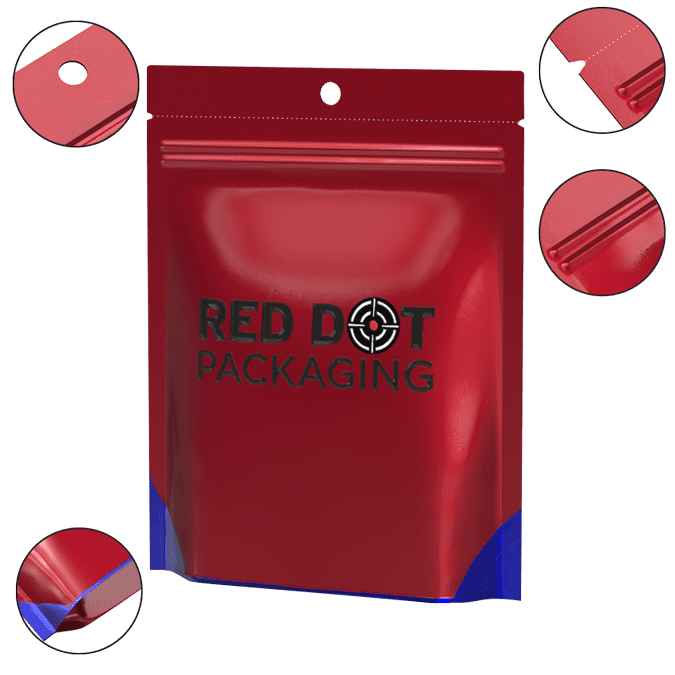
- Resealable zippers
- Child-resistant closures
- Degassing valves
- Tear notches
- Clear windows
- Spouts
- Hang holes
For example:
- Coffee pouches may include one-way degassing valves
- Cannabis packaging may require child-resistant zippers
- Liquid packaging may require spouts and caps
These features are typically integrated during the pouch conversion process.
The more advanced the packaging structure becomes, the more manufacturing complexity is involved.
How Quality Control Works in the Custom Pouch Printing Process
Quality control is one of the most important parts of flexible packaging manufacturing.
Manufacturers inspect pouches for:
- Print consistency
- Seal strength
- Color accuracy
- Barrier integrity
- Leak resistance
- Closure functionality
Poor quality control can lead to:
- Product spoilage
- Packaging failure
- Customer complaints
- Retail rejection
- Compliance issues
Strong manufacturers perform repeated inspections throughout the production process to maintain packaging consistency and product protection.
Quality assurance becomes especially important for:
- Food packaging
- Cannabis packaging
- Supplement packaging
- Liquid packaging
where product integrity is critical.
How the Custom Pouch Printing Process Supports Ecommerce Packaging
Ecommerce has changed how flexible packaging is manufactured and designed.
Modern ecommerce packaging must:
- Survive shipping
- Look good online
- Reduce fulfillment costs
- Support social media marketing
- Improve unboxing experiences
Flexible pouches work especially well for ecommerce because they are:
- Lightweight
- Durable
- Compact
- Highly customizable
The custom pouch printing process now often includes packaging optimization specifically for:
- Ecommerce photography
- Shipping durability
- Direct-to-consumer fulfillment
Packaging has become both:
- A logistics tool
and - A branding tool
for modern ecommerce brands.
Why Sustainable Manufacturing Matters in the Custom Pouch Printing Process
Sustainability has become a major focus in flexible packaging manufacturing.
Many brands now seek:
- Recyclable pouch materials
- Compostable packaging films
- PCR (post-consumer recycled) materials
- Reduced-plastic packaging structures
However, sustainability remains technically challenging because many products still require:
- High-barrier protection
- Durable seals
- Long shelf life
Manufacturers increasingly balance:
- Product protection
- Packaging performance
- Environmental impact
- Cost efficiency
The custom pouch printing process continues evolving rapidly as sustainable packaging technology improves.
Why the Custom Pouch Printing Process Matters for Modern Brands
The custom pouch printing process is far more than simply printing graphics onto packaging.
It directly affects:
- Product freshness
- Packaging durability
- Customer experience
- Ecommerce performance
- Retail visibility
- Brand perception
Modern brands increasingly rely on flexible packaging to:
- Protect products
- Reduce shipping costs
- Improve operational efficiency
- Strengthen branding
- Support long-term scalability
As ecommerce and retail competition continue growing, understanding the custom pouch printing process helps businesses create packaging systems that support both operational performance and long-term brand growth.
For many companies, packaging is no longer simply a production step — it has become one of the most important parts of the overall product experience and business strategy.
Why Choose Red Dot for Your Flexible Packaging Needs?


Experience
Over 40 years of combined flexible packaging experience

.png)
Full Customization
Full customization to meet performance, sustainability, and visual goals


Eco Conscious
Eco-conscious film options without compromising durability


Speed
Fast, reliable service with rapid turnarounds