

Protein Powder Packaging in Custom Pouches: An Expert, Practical Guide
Learn how to plan protein powder packaging in custom pouches—formats, barrier films, closures, filling, and shelf-life steps for quality and compliance.
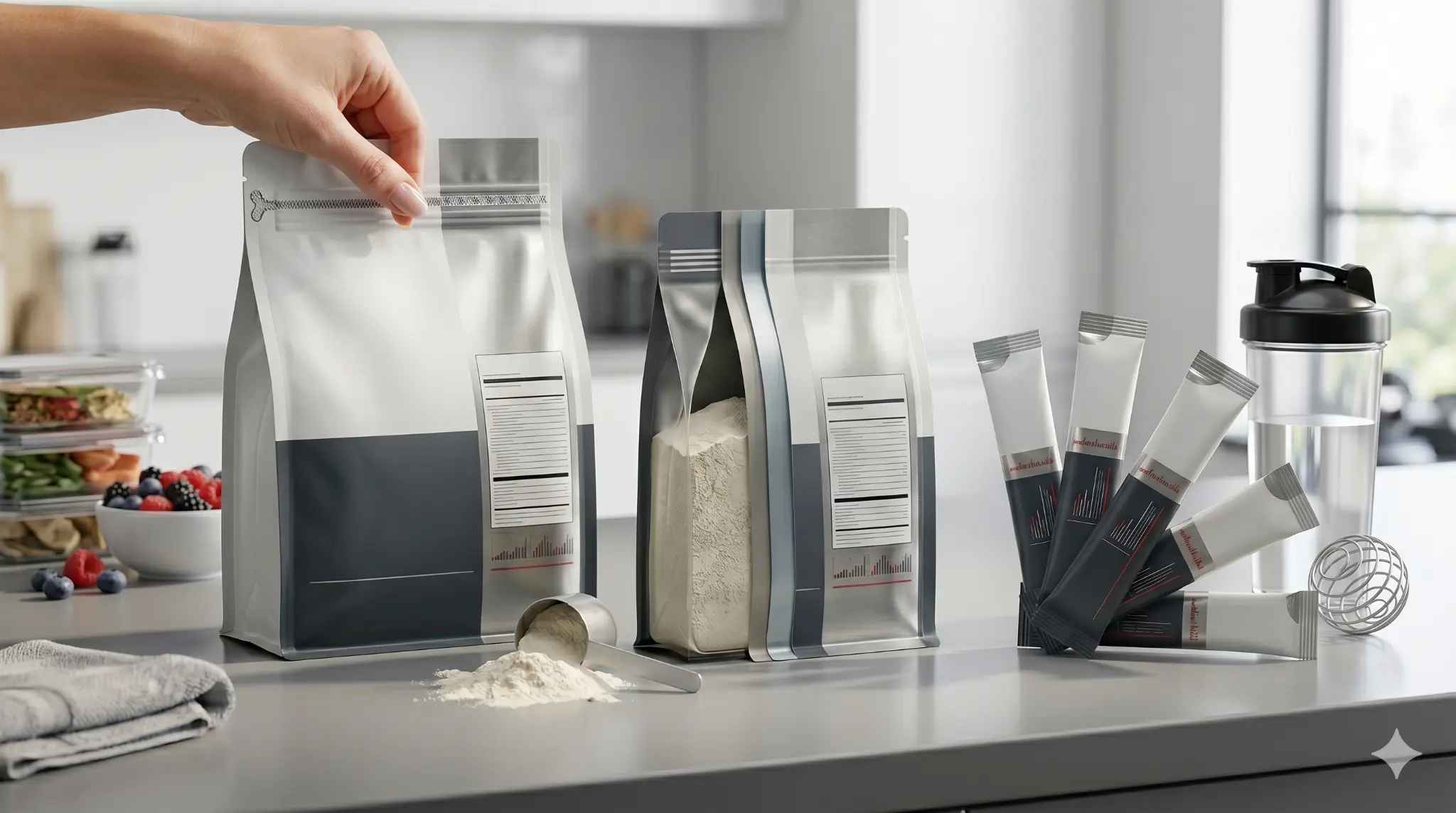
The decisions you make about protein powder packaging directly dictate the product's freshness, its flowability during use, its safety over time, and the ultimate customer experience. When a consumer opens a custom pouch of protein powder, they expect a smooth, clump-free product with its original flavor profile intact. Achieving that requires packaging that has been meticulously engineered to combat environmental threats at every stage of the supply chain. This guide walks through the full planning process: selecting the right pouch format, designing a barrier structure that matches your formulation, engineering closures for real-world use, managing freshness through active and passive controls, ensuring compliant and high-quality printing, validating the filling and sealing process, and making defensible sustainability decisions.
The foundation of every effective packaging specification is a precise understanding of the product itself. Different powder formulations exhibit unique characteristics that directly shape packaging requirements. Whey isolates, for example, behave differently than plant-based blends or high-fat collagen formulas. Factors such as oil content, hygroscopicity (the tendency to absorb moisture from the air), particle size, and susceptibility to caking or flavor oxidation must be evaluated before a single material is specified. A highly hygroscopic powder demands aggressive moisture barriers, while a formula with delicate flavor profiles requires stringent oxygen protection. These product traits translate directly into performance specifications for the packaging film, and getting those specifications right from the outset is what separates a product that performs on shelf from one that fails in the field.
What Protein Powders Need from Packaging: Translating Product Traits into Specifications
Defining performance specifications early in the development process is one of the most important steps a packaging engineer or product developer can take. The two most critical metrics are the Oxygen Transmission Rate (OTR) and the Moisture Vapor Transmission Rate (MVTR). OTR measures the steady-state rate at which oxygen gas permeates through a film, typically expressed in cc/100in²/24hr. MVTR measures the amount of water vapor that passes through a material, expressed in g/100in²/24hr. For high-barrier applications, an OTR of less than 1 cc/100in²/24hr is the widely accepted industry threshold for a high-oxygen-barrier package. MVTR targets are determined by the specific hygroscopicity of the powder and the desired shelf life.
Beyond gas and moisture barriers, the specification must also address light protection, puncture resistance for demanding shipping environments, and the intended pack sizes. Whether you are producing single-serve stick packs for sampling programs or multi-kilogram bulk bags for club-store channels, the packaging system must be designed around the product's needs from the very beginning. The table below provides a general reference for MVTR and OTR target bands organized by formulation sensitivity level.
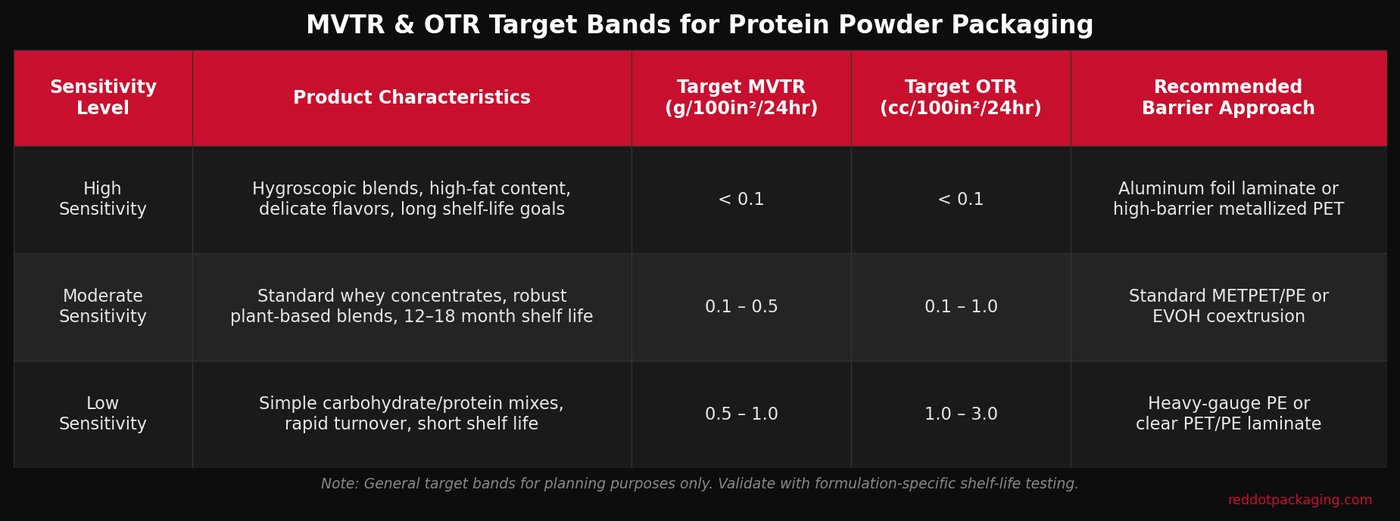
Note: These are general target bands intended as a planning reference. Exact requirements must be validated through formulation-specific shelf-life testing.
Choosing the Right Pouch Format: How Fill Weight, Retail Presence, and eCommerce Shape the Decision
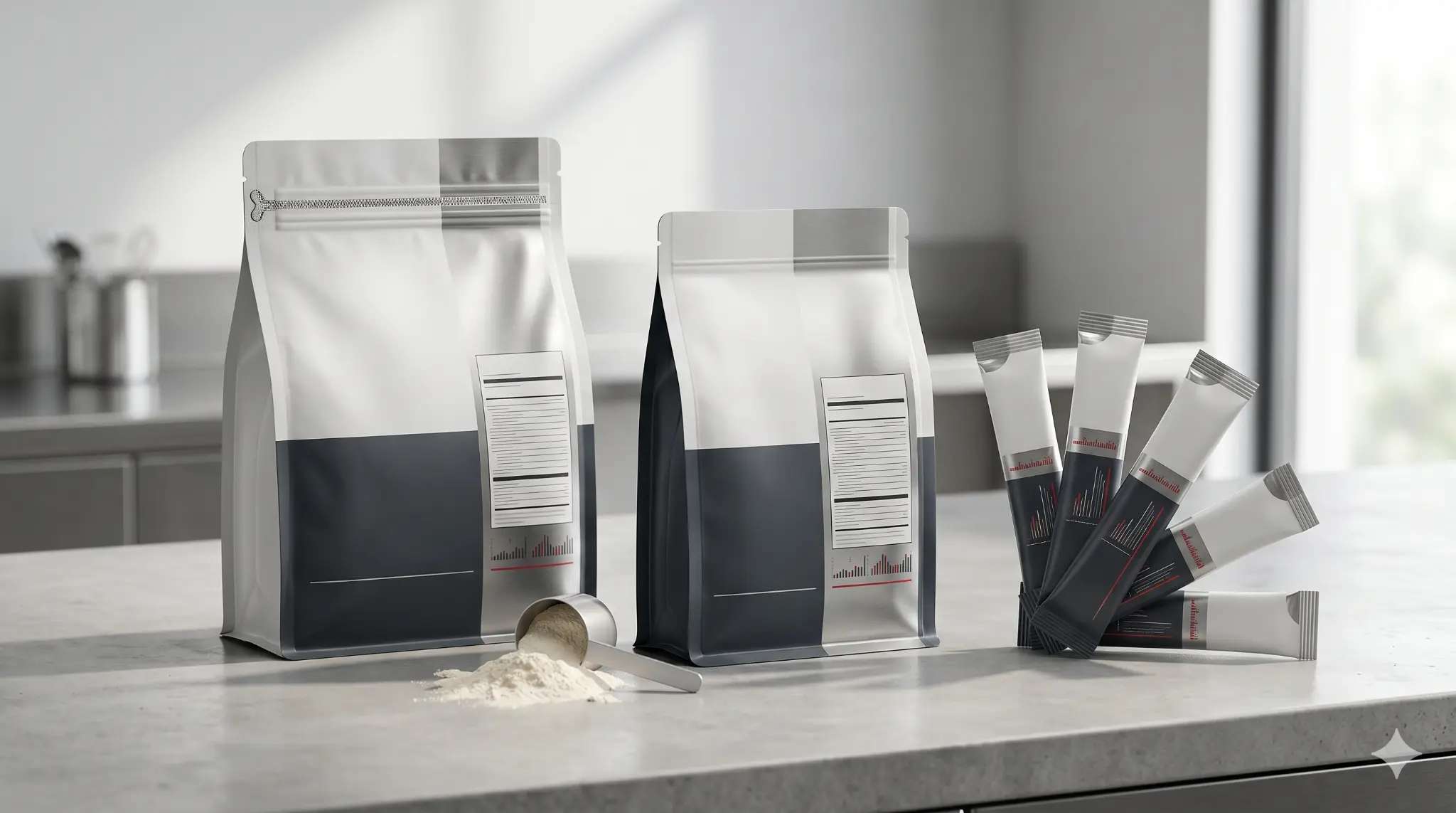
With performance requirements clearly defined, the next step is selecting the pouch format that best supports both the protective needs of the powder and the commercial goals of the brand. The geometry and dimensions of the pouch are shaped by fill weight, how the product will be presented on the retail shelf, and the logistical constraints of direct-to-consumer or eCommerce shipping. There is no single correct format; the right choice depends on a careful evaluation of these intersecting factors.
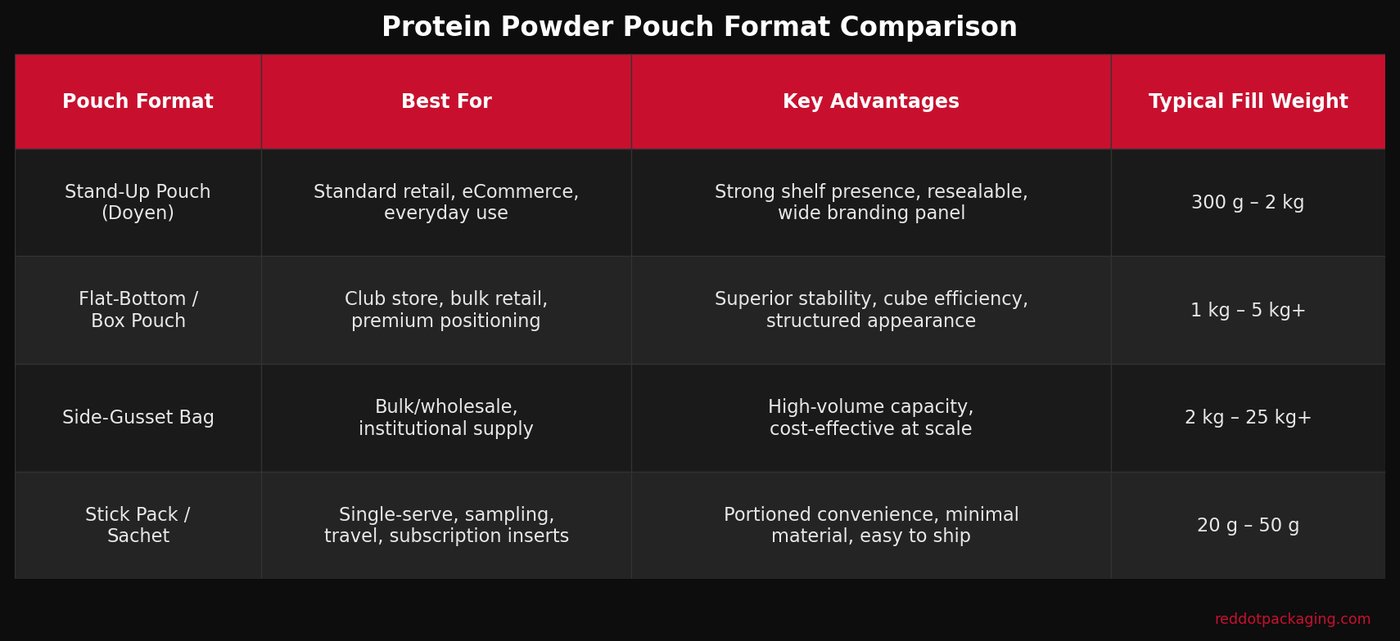
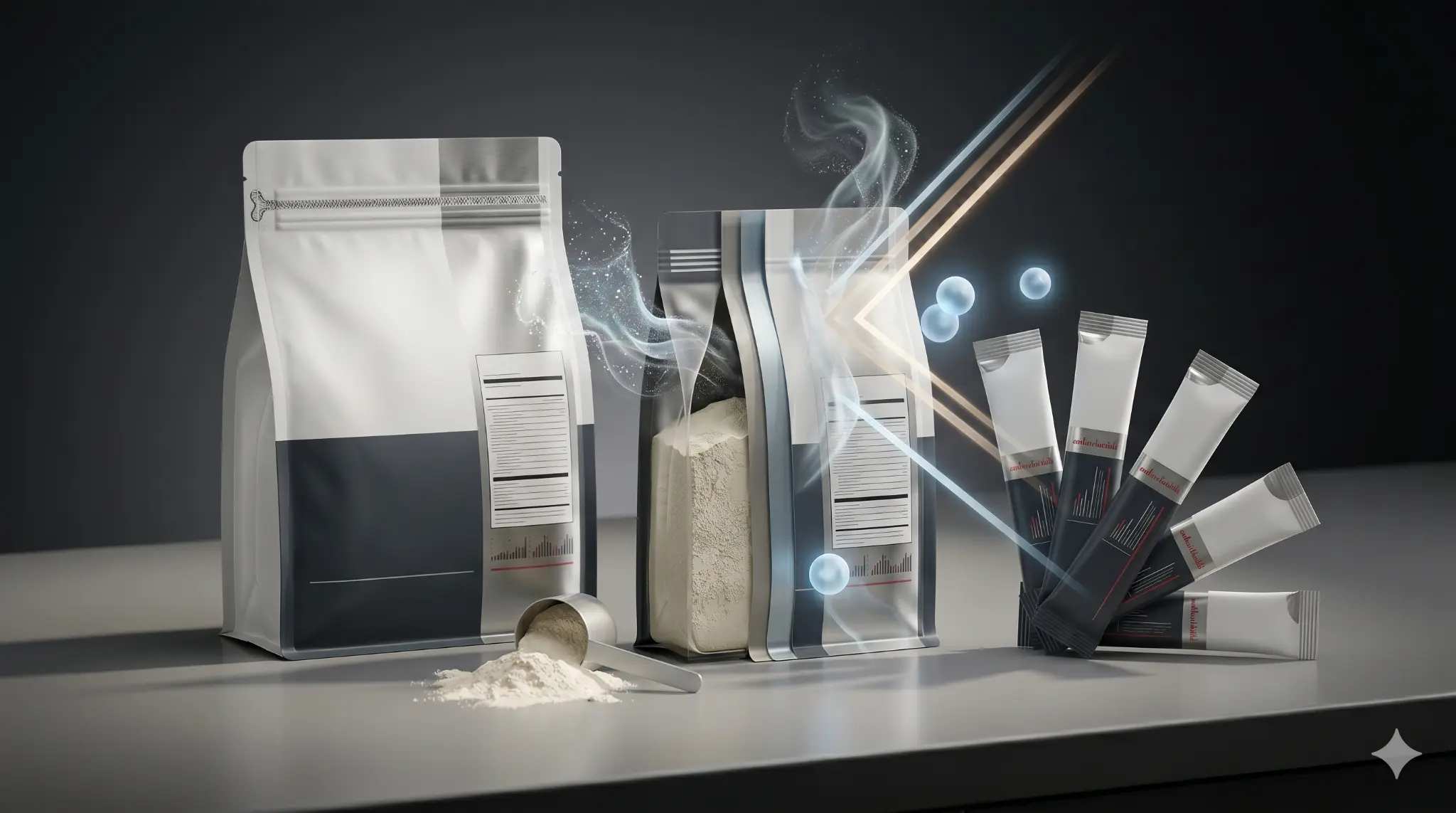
Stand-up pouches, often referred to as Doyen style, are among the most popular formats for retail protein powder because they offer strong shelf presence and excellent resealability. Their broad, flat front panel provides ample space for branding, and their stable base makes them easy to store on a countertop or in a cabinet. For larger fills where structural integrity and cube efficiency are priorities, flat-bottom or box pouches are a compelling alternative. Their rigid, box-like base provides superior stability and stacks efficiently in cases, reducing shipping costs. For bulk or club-store sizes, side-gusset bags accommodate substantial volumes while maintaining a manageable footprint. At the other end of the spectrum, stick packs and sachets are indispensable for single-serve applications, sampling programs, subscription box inserts, and on-the-go retail channels.
A practical example illustrates how these formats can work together strategically. A brand launching a core whey isolate might package its standard 30-serving retail SKU in a custom stand-up pouch for everyday retail and eCommerce. The same formula in a larger 60-serving club-store size might transition to a flat-bottom box pouch for superior shelf stability. And for sampling or subscription programs, the brand would deploy stick packs to deliver a single serving with minimal material and maximum convenience. Understanding how each format serves a different channel and consumer need is essential to building a cohesive packaging strategy.
Building the Barrier: How to Select Film Structures That Protect and Perform
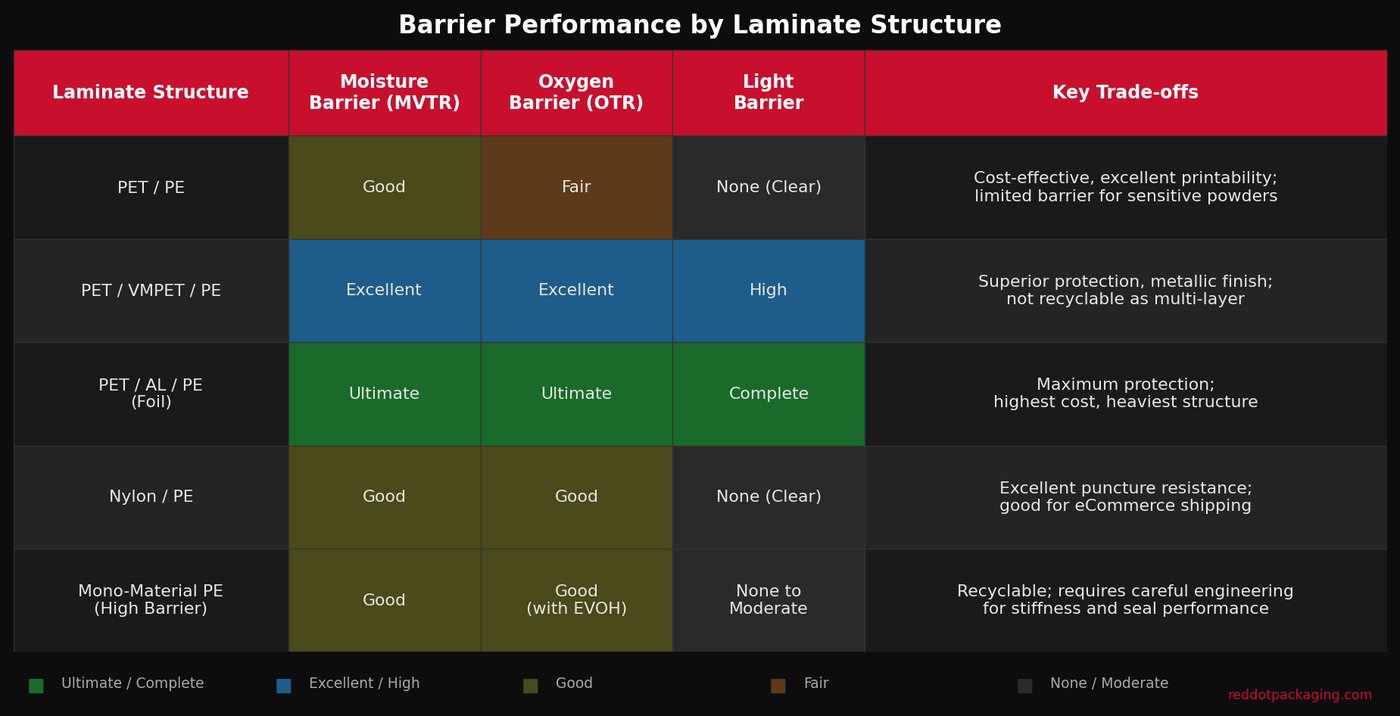
The material structure of the custom pouch is the primary determinant of its protective performance. Film laminations must balance the required OTR and MVTR targets with physical durability, stiffness, tear resistance, and the aesthetic requirements of the brand. The most common laminations used in protein powder packaging are PET/PE (Polyethylene Terephthalate/Polyethylene), METPET/PE (Metallized PET/PE), Nylon/PE, and coextrusions incorporating EVOH (Ethylene Vinyl Alcohol).
PET serves as an excellent outer layer, providing printability, heat resistance, and a good gas barrier. PE, used as the inner sealant layer, delivers reliable moisture resistance and strong heat-seal performance. When heightened protection against light, moisture, and oxygen is required, metallized films are employed. The ultra-thin vacuum-deposited aluminum layer in METPET significantly enhances barrier performance against all three threats without the weight and cost of traditional aluminum foil. For applications requiring the absolute maximum barrier, a full aluminum foil laminate (PET/AL/PE) provides complete protection against gases, moisture, and light.
The industry is also seeing a meaningful shift toward mono-material PE or PP structures, driven by sustainability goals and increasing regulatory pressure on multi-material laminates. Mono-material pouches are designed to be recyclable through store drop-off programs, addressing a growing consumer and brand priority. However, these structures introduce real engineering constraints. Stiffness, the operational sealing window on filling equipment, and inherent barrier limitations compared to multi-material laminates must all be carefully managed. Regardless of the structure chosen, all materials must meet strict food-contact compliance expectations, utilizing low-migration inks and adhesives that conform to applicable FDA and global regulatory standards. You can explore the full range of custom flexible packaging configurations available for protein powder applications.
Closures, Opening Features, and the User Experience: Engineering Convenience Without Compromising Integrity
A protein powder pouch is opened, scooped from, resealed, and used again repeatedly, often daily. The closure system and opening features must therefore be engineered not just for the first use, but for the entire lifespan of the product. The goal is to deliver a seamless, frustration-free experience at every interaction while maintaining the barrier integrity that protects the formula.
The choice of zipper is one of the most consequential decisions in the design of a protein powder pouch. Standard press-to-close zippers are common and cost-effective, but for fine powders, hook-to-hook closure profiles are often preferred because they offer superior tolerance to powder dust contamination in the tracks, ensuring a reliable seal even after many uses. Double-track and slider zippers provide an additional layer of security and ease of use, particularly for larger, heavier pouches. The custom pouch configuration must specify the zipper type in the context of the powder's particle size and the expected frequency of use.
The initial opening experience is equally important. Laser scoring and precisely placed tear notches guide the consumer to a clean, straight tear, preventing the ragged opening that can create mess and frustration. Tamper-evident features, such as a sealed top above the zipper, provide both security and a clear signal of product integrity. A persistent challenge with fine powders is dusting upon first opening; designing adequate headspace above the powder fill and positioning the tear notch to direct the opening away from the product can significantly reduce this problem.
The pouring and measuring experience should also be considered in the design phase. A wide gusset that allows the pouch to stand open during scooping, combined with a scoop-friendly opening width, reduces the chance of spills. Anti-static considerations and specialized internal coatings can minimize the cling of powder to the inner walls, ensuring accurate dosing and a cleaner experience. A thorough user experience evaluation should assess every step: opening, pouring, resealing, storing, and traveling with the pouch.
Freshness, Stability, and Shelf Life: Controlling Moisture and Oxygen from the Inside Out
Even the most precisely specified barrier film cannot fully eliminate the ingress of moisture and oxygen over a product's shelf life. Active freshness management strategies, deployed alongside the passive barrier of the film structure, are often essential to achieving the target shelf life for protein powders.
Desiccants are widely used to manage internal moisture levels within the sealed pouch. The required size and type of desiccant must be calculated based on the total internal volume of the pouch, the MVTR of the film structure, the hygroscopicity of the specific powder, and the target relative humidity (RH) required to keep the product free-flowing and clump-free. Undersizing the desiccant leads to premature moisture accumulation; oversizing can excessively dry the powder, potentially affecting its texture and solubility.
For oxygen management, nitrogen flushing is the most widely adopted technique in the protein powder industry. The process displaces the oxygen within the headspace of the pouch immediately prior to sealing, replacing it with inert nitrogen gas. This significantly reduces oxidative reactions that lead to rancidity, flavor degradation, and color changes. Nitrogen is an inert gas that does not react with food ingredients, preserving their flavors and aromas while also inhibiting microbial growth. Under typical storage conditions, whey protein powder has a minimum shelf life of 18 months; nitrogen flushing is a key enabler of that target. In certain highly sensitive applications, such as formulas with very high fat content or delicate bioactive compounds, oxygen scavengers may be deployed in addition to nitrogen flushing for a belt-and-suspenders approach to oxygen control.
Preventing caking requires a coordinated effort between the formulation team and the packaging engineer. Formulation adjustments, such as the use of anti-caking agents, address the product's inherent tendency to clump. Packaging levers, including the barrier structure, desiccant sizing, and nitrogen flushing, address the environmental triggers that cause caking. Storage and transport temperature considerations are also critical; high temperatures accelerate moisture absorption and can cause powders to set. Validating these strategies requires a rigorous shelf-life testing program, encompassing both real-time studies and accelerated aging protocols, as well as sensory and functional evaluations to confirm that the product meets its quality standards at the end of its intended shelf life.
Printing, Information Design, and Compliance: What Every Protein Powder Pouch Must Communicate
The exterior of the pouch is the primary communication interface between the brand and the consumer. It must be both visually compelling and rigorously accurate, satisfying the demands of regulatory compliance while delivering a brand experience that builds trust and drives purchase decisions. For protein powder products, this is a particularly complex challenge given the detailed regulatory requirements for supplement labeling.
Required panels for a protein powder pouch typically include a Supplement Facts or Nutrition Facts panel, a comprehensive ingredient list with allergen declarations, a net quantity statement, and lot/best-by coding for traceability. The layout must establish a clear visual hierarchy, guiding the consumer from the brand identity and product name to the serving information, health claims, and regulatory disclosures. Traceability elements such as batch codes, date stamps, and QR codes for transparency must be carefully positioned to avoid critical seal areas, where they could be obscured or damaged during the sealing process. For brands navigating the complexities of supplement labeling, Red Dot Packaging's team provides guidance on artwork preparation and regulatory alignment as part of the overall packaging development process.
The selection of print method is driven by production volume and design complexity. Digital printing is ideal for short runs, flavor variations, and rapid prototyping because it requires no plates and supports quick turnaround times. This makes it particularly well-suited for emerging brands testing new SKUs or established brands managing a wide portfolio of flavors. For larger production volumes, flexographic and rotogravure printing deliver superior cost efficiency at scale and the ability to apply special finishes such as spot UV, soft-touch matte, and metallic accents. Understanding the trade-offs between these methods is essential for managing cost and quality. A detailed comparison of these printing technologies for packaging can help brands make the right choice for their production volume and visual goals.
Ink and varnish selection must prioritize scuff resistance to ensure the packaging remains pristine through the rigors of the supply chain. When incorporating clear windows to showcase the product texture, careful consideration must be given to the potential reduction in light barrier performance. The window area must be sized and positioned to balance consumer appeal with the protective requirements of the formula.
Filling, Sealing, and Quality Control: Aligning Equipment and Process with Pouch Design
The physical packaging process must integrate seamlessly with the pouch design, the film structure, and the flow characteristics of the powder. A pouch that is perfectly specified on paper can fail in production if the filling and sealing parameters are not properly validated and controlled.
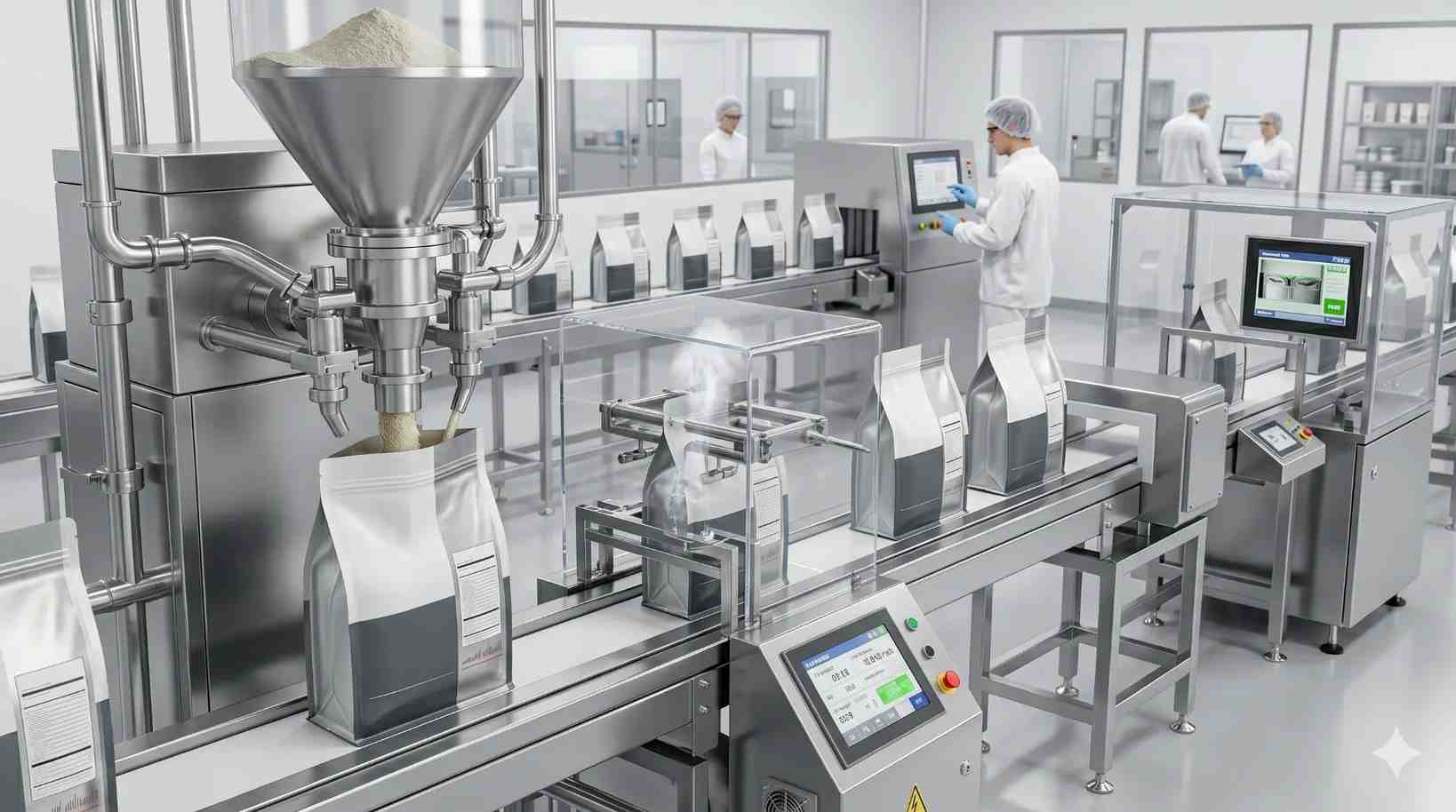
Brands and co-packers must choose between utilizing pre-made pouches on dedicated fill-seal machines or employing Vertical Form-Fill-Seal (VFFS) or Horizontal Form-Fill-Seal (HFFS) systems that form the pouch from custom rollstock films. Each approach has distinct trade-offs in terms of capital investment, production speed, flexibility, and the ability to accommodate complex pouch formats. Dosing is typically handled by auger fillers, which are designed for precise volumetric measurement of powders. Given the dusty nature of protein powders, robust dust mitigation strategies, including enclosed filling stations and extraction systems, are essential to keep the seal zone free of contamination. For a deeper comparison of these production approaches, the guide on rollstock packaging versus pre-made pouches provides a practical framework for evaluating speed, cost, and customization.
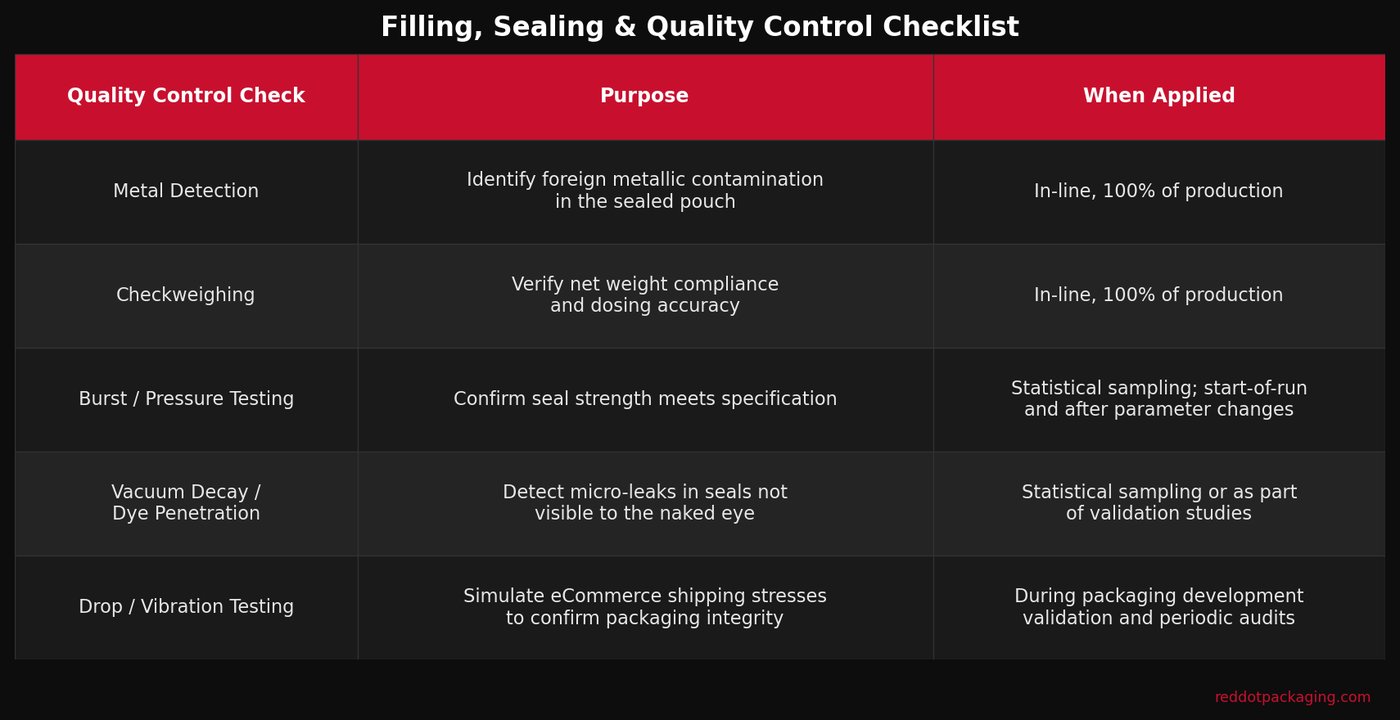
Seal integrity is the single most critical quality parameter in the production process. The operational windows for sealing temperature, dwell time, and jaw pressure must be precisely established and rigorously maintained for the specific film structure being used. Contamination at the zipper or fin seal from powder dust is a leading cause of seal failures and must be actively prevented. In-line quality control checks are non-negotiable components of a professional production line. These include metal detection to identify any foreign material, checkweighing to ensure compliance with net weight claims, and seal integrity testing methods such as burst testing, vacuum decay, or dye penetration. For products destined for eCommerce channels, drop and vibration tests are also necessary to confirm that the packaging can withstand the rigors of individual parcel shipping without seal failure or structural damage.

Sustainability and End-of-Life Choices: Making Credible, Defensible Environmental Decisions
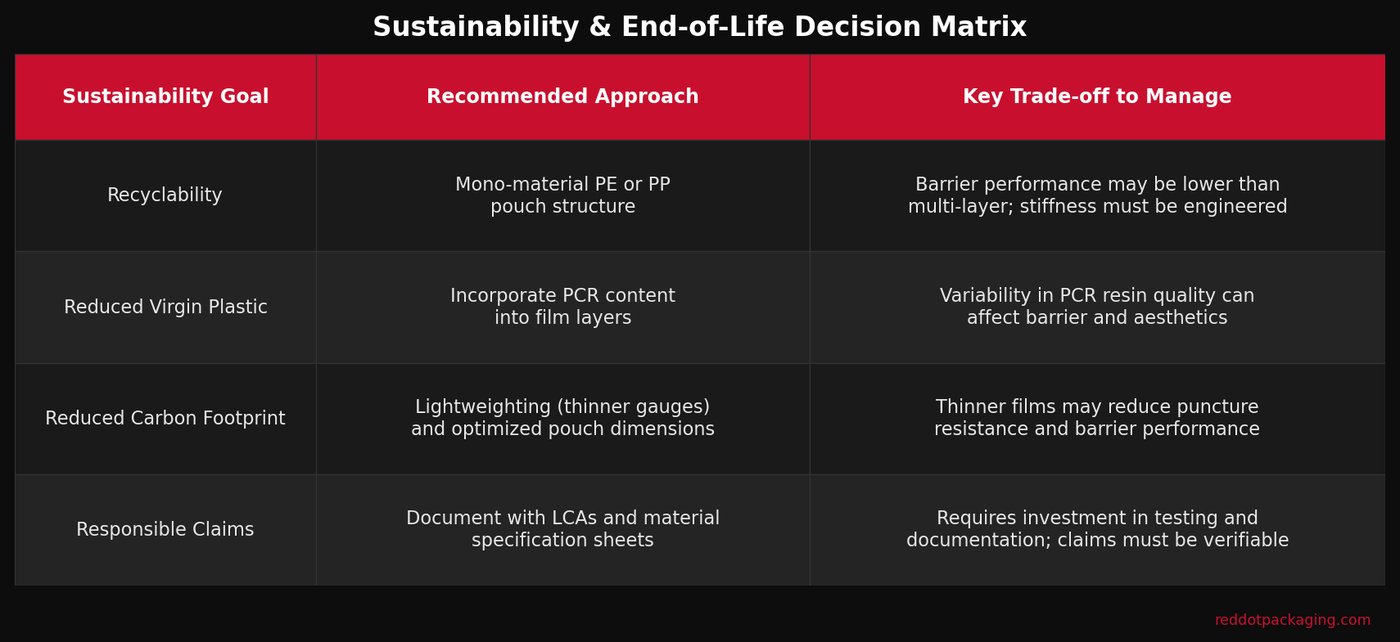
Sustainability is no longer a peripheral concern in packaging development; it is a core business requirement for brands operating in the health and wellness space. Consumers of protein powders are often environmentally conscious, and the packaging choices a brand makes are increasingly scrutinized. Making credible, defensible environmental decisions requires a clear-eyed evaluation of the trade-offs involved.
The development of mono-material flexible pouches is one of the most significant advances in sustainable packaging. By constructing the entire pouch from a single polymer family, such as all-PE or all-PP, the package can be recycled through established flexible film collection programs, such as store drop-off. However, brands must navigate the realities of recycling infrastructure, which varies significantly by region. Curbside collection of flexible films is not universally available, and the practical recyclability of a package depends on the availability of appropriate collection and processing infrastructure in the markets where the product is sold.
Incorporating Post-Consumer Recycled (PCR) content into films is another meaningful lever for reducing environmental impact. Packaging engineers must carefully assess how PCR content affects the barrier properties, optical clarity, and processing performance of the film, as recycled resins can introduce variability that requires careful management. The trade-off between achieving adequate light protection and maintaining a recyclable structure is a persistent challenge. Metallized films provide excellent light and moisture barriers but are not recyclable in most current systems. Strategies such as using minimal ink coverage, employing water-based inks, and designing removable labels can improve the recyclability profile of the package without sacrificing performance. Any environmental claims made on the packaging must be substantiated by accurate documentation, including Life Cycle Assessments (LCAs) and material specification sheets, to avoid the risk of greenwashing.
Bringing It All Together: Protein Powder Packaging as an Integrated System
Effective protein powder packaging is not the result of making a series of independent decisions about film, closures, printing, and filling. It is the result of treating the entire packaging system as an integrated whole, where every component is selected and validated in the context of every other component. The film structure must be compatible with the sealing equipment. The zipper must be tolerant of the powder's particle size. The desiccant must be sized for the film's MVTR. The print method must be appropriate for the production volume. And the sustainability strategy must be grounded in the actual barrier requirements of the formula.
The path from concept to market-ready protein powder packaging follows a logical sequence: define the product's sensitivities and performance requirements, select the pouch format that serves the target channel, specify the barrier structure that meets those requirements, engineer the closure and opening features for a superior user experience, implement freshness controls to achieve the target shelf life, design compliant and compelling artwork, validate the filling and sealing process, and make informed sustainability decisions. Small changes at any point in this process can have outsized effects on the final outcome. A different zipper profile can mean the difference between a clean reseal and a powder-contaminated track. A slightly wider seal window can prevent the micro-leaks that cause premature spoilage. A carefully sized desiccant can extend shelf life by months.
Red Dot Packaging brings over 40 years of combined experience to this process, supporting brands at every stage from initial concept through high-volume production. Whether you are launching a new protein powder SKU and need custom nutritional supplement packaging with low minimum order quantities, or scaling an established brand to national retail distribution, the team at Red Dot provides the technical expertise and production capabilities to deliver packaging that protects, performs, and builds your brand. To begin the conversation about your specific requirements, request a quote or sample today.
Frequently Asked Questions About Protein Powder Packaging
What Is the Best Pouch Material for Protein Powder If Moisture Is the Main Risk?
If moisture is the primary concern, a high-barrier laminate such as PET/VMPET/PE (Metallized PET) or a structure incorporating aluminum foil provides the most robust defense against moisture vapor transmission. These structures significantly reduce the MVTR of the package, preventing the moisture ingress that causes protein powders to cake and clump. For brands also concerned about light degradation, a metallized or foil structure provides the additional benefit of a complete light barrier. The specific structure should be validated through shelf-life testing with the actual formulation to confirm that the barrier performance meets the target. Explore the full range of custom flexible pouch options available for protein powder.
How Much Desiccant Should Be Used in a 1 kg Protein Powder Pouch?
The required desiccant size for a 1 kg protein powder pouch cannot be determined by a simple rule of thumb; it must be calculated based on the MVTR of the chosen film structure, the hygroscopicity of the specific powder formulation, the target relative humidity (RH) inside the pouch, the expected shelf life, and the storage and distribution conditions the package will encounter. A packaging engineer or desiccant supplier can perform this calculation using established models. Undersizing the desiccant risks moisture accumulation and caking; oversizing can excessively dry the powder. This calculation is a critical step in the shelf-life validation process for any moisture-sensitive protein powder.
Do Protein Powders Need Oxygen Absorbers or Just Nitrogen Flushing?
For the majority of protein powder formulations, nitrogen flushing is sufficient to achieve the required reduction in headspace oxygen and extend shelf life. Nitrogen flushing displaces oxygen with an inert gas prior to sealing, reducing oxidative reactions that cause flavor degradation and rancidity. Oxygen absorbers are typically reserved for extremely sensitive formulations where even trace amounts of residual oxygen post-flushing could cause measurable degradation, or where the packaging line does not support nitrogen flushing. The choice between these approaches should be informed by the specific oxidative sensitivity of the formula and validated through accelerated shelf-life studies. For more on how VFFS and HFFS systems integrate with nitrogen flushing, see our detailed guide.
Stand-Up Vs. Flat-Bottom Pouches for 30 to 40 Servings: Which Is More Stable on Shelf?
For volumes in the 30-40 serving range, flat-bottom box pouches generally offer superior shelf stability compared to stand-up pouches. Their box-like base provides a wider, flatter footprint that prevents the pouch from tipping over as the product is consumed and the fill level drops. Stand-up pouches can become less stable as they empty, which can be a concern in retail environments. That said, stand-up pouches offer a larger, more visible front panel for branding and are often preferred for their familiar, consumer-friendly format. The right choice depends on the specific retail environment, the brand's shelf presentation goals, and the eCommerce shipping requirements. A detailed comparison of stand-up, flat, and quad-seal pouch formats can help inform this decision.
How Do You Prevent Powder Contamination in Zipper Seals?
Preventing powder contamination in zipper seals requires a combination of equipment design and pouch engineering. On the production line, auger fillers with enclosed filling stations and active dust extraction systems minimize the amount of airborne powder that settles in the seal zone. In the pouch design, specifying a hook-to-hook zipper profile that is tolerant of powder dust in the tracks provides a more reliable reseal than standard press-to-close profiles. Some designs also incorporate a fold or crease above the zipper to create a physical barrier that deflects powder away from the closure during filling. Seal integrity testing, including vacuum decay and burst testing, should be performed regularly to confirm that the zipper seal is performing as specified. For more on quality control in flexible packaging production, see our guide on strategic fundamentals for custom packaging buyers.
What Are Typical OTR and MVTR Targets for Protein Powder Packaging?
While targets vary by formulation and shelf-life goal, a high-barrier specification for sensitive protein powders typically aims for an OTR and MVTR of less than 1.0 (cc or g /100in²/24hr). Highly sensitive products, such as those with high fat content or delicate flavor profiles, may require targets below 0.1 in both metrics. Less sensitive formulations with shorter shelf-life targets or rapid turnover may be adequately served by structures with OTR and MVTR values in the 1.0-3.0 range. These targets should be established during the product development phase and validated through real-time and accelerated shelf-life studies. The table in the product requirements section of this article provides a general reference framework for planning purposes.
Can Recyclable Mono-Material Pouches Achieve Adequate Barrier for Protein Powders?
Yes, advanced mono-material PE or PP structures can be engineered with specialized coatings or coextruded barrier layers, such as EVOH, to achieve adequate moisture and oxygen barriers for many protein powder formulations. However, these structures generally cannot match the absolute barrier performance of aluminum foil laminates, and their suitability must be validated against the specific barrier requirements of the formula and the target shelf life. For formulations with moderate sensitivity and shelf-life targets of 12-18 months, well-engineered mono-material structures are a viable and increasingly attractive option. Brands pursuing this path should work closely with their packaging supplier to select the appropriate structure and validate its performance. Explore custom protein powder packaging solutions that include sustainable film options.
What Print Method Should a New Protein Powder Brand Use for Its First Run?
For a new protein powder brand launching its first SKU, digital printing is almost always the right choice. Digital printing requires no printing plates, which eliminates a significant upfront cost and allows for rapid artwork changes and flavor variations without additional tooling expense. It supports short runs, making it possible to launch with a manageable inventory commitment and test the market before scaling. As the brand grows and production volumes increase, transitioning to flexographic or rotogravure printing for the core SKUs becomes economically advantageous. Understanding the full spectrum of printing technologies for packaging helps brands plan their print strategy across the product lifecycle.
How Does Pouch Design Affect the eCommerce Performance of Protein Powder Packaging?
eCommerce places unique demands on protein powder packaging that are not present in traditional retail environments. Packages must survive individual parcel shipping, which subjects them to repeated drops, vibration, compression, and temperature variation without the protection of a retail display case. This means that the film structure must provide adequate puncture resistance, the seals must be strong enough to withstand impact, and the zipper must remain closed under vibration. Nylon/PE laminates are often favored for eCommerce applications because of Nylon's superior puncture resistance. Drop and vibration testing, conducted according to ASTM or ISTA protocols, should be part of the packaging validation process for any brand selling direct-to-consumer. The custom packaging design guide covers how design decisions influence both shelf and online performance.